
Pristina Mayor Shpend Ahmeti says he will run again for mayor of Pristina in the municipal elections so as not to jeopardize the project for the capital’s development. In an interview with the Ekonomia Online News Agency, Pristina’s mayor, Ahmeti, said that no one should fear democracy and that they have established a new accountability system in the municipality […]
Ahmeti: I will run for re-election to save the capital

Pristina Mayor Shpend Ahmeti says he will run again for mayor of Pristina in the municipal elections so as not to jeopardize the project for the capital’s development.
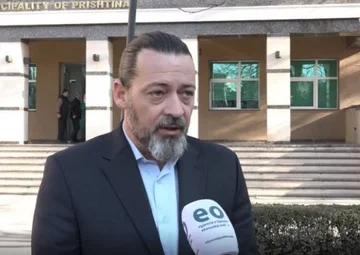
In an interview with the Ekonomia Online News Agency, Pristina’s mayor, Ahmeti, said that no one should fear democracy and that they have established a new accountability system in the municipality.
“The readiness of the political entity is, of course, for me to run once again, but this remains to be decided again during the summer, as we get closer to the elections. I have said before that we will not jeopardize the Pristina project, and if it is thought that it is at risk in any way, then I will definitely be the candidate…,” Ahmeti said, adding that they are awaiting the citizens’ verdict in the elections, “you never know who it will be.”
In the last elections in Pristina, he said they had no agreement with any other political entity, but stressed that it was the citizens who decided to vote for Shpend Ahmeti and bring about change.
He also spoke about the bus project for the capital, accusing the Government of deliberately delaying the project for a year by not signing the agreement…
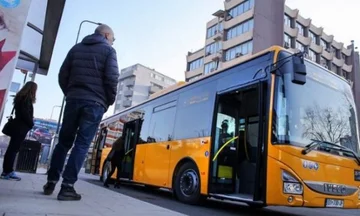
With the new buses in operation, he said, an increase in passenger numbers and revenue has been observed so far. Ahmeti promises to add new bus routes through neighborhoods that are not covered by urban transit.
Parking spaces in Pristina continue to be a problem, but Mayor Ahmeti says that the main obstacle has been the Municipal Assembly.
“We have identified 4,700 parking spaces in Center 1, and all that remains is to establish the enterprise, but these problems in the assembly have made it unclear who is doing what. We have now begun taking over parking areas such as the one behind the Youth Palace, and we will first do this with ‘Horti Kultura’, after which it will all be transferred to ‘Prishtina Parking’ when it is ready,” Ahmeti said.
In this interview, he also spoke about workers employed under service contracts and the absence of a Law on Pristina, which he accused the Government of failing to pass.
“It is strange how a municipal mayor who complained for about six years that there was no law for Pristina, then became prime minister and, for three years, did not submit the law he himself had complained about for six years,” Ahmeti said.
“There have been disagreements between us and the Government of Kosovo; nevertheless, there is a draft. What they have done now is put it on the legislative agenda for June 30, 2017. Why? So that September and October pass without this law applying to this term at all. When they thought of the law, they were thinking of me. Just imagine: a law is designed for specific individuals, not for the capital…,” Ahmeti said.
FULL INTERVIEW

EO: The new elections are expected to be held in November this year. Is it certain that you will be Vetëvendosje’s candidate for another term in Pristina?
Ahmeti: The Vetëvendosje Movement has its own procedures for selecting candidates for municipal mayors. We have a system, I would say, similar to the US, with primaries (Fribes/Frajbes), where you are nominated first. But, of course, the political entity is ready for me to run once again; this remains to be decided during the summer, as we get closer to the elections. I have said before that we will not jeopardize the Pristina project, and if it is thought that it is at risk in any way, then I will definitely be the candidate.
EO: Why should the citizens of Pristina elect you again as their municipal mayor?
Ahmeti: That is a question for the citizens of Pristina, because ultimately no one in politics should fear democracy. We have established a new accountability system. Three years ago, I gave citizens my 12 promises and told them: keep them in your wallets, too. During the election campaigns, we bring out those promises and see which ones we have fulfilled and which we have not. We believe that the main thing we have done is put an end to the bad things and started doing good things. Now Pristina continues to develop further, and along the way, of course, we have greatly improved communication with citizens, accountability and transparency; we have digitized the administration, improved services, especially in healthcare, bought buses for public transport, doubled the number of kindergartens, and after March 17 this year, Pristina will also have water 24 hours a day.
EO: Which party do you consider your main rival in the upcoming elections, the LDK or the PDK?
Ahmeti: I don’t think we should talk about which one is a rival and which one isn’t. We don’t know the names of any political candidates from any party so far; names are being discussed, but it’s speculation. I’m not someone who talks with my hands in my pockets or anything like that. I’ll say it again: we are awaiting the citizens’ verdict; you never know who it will be. In general, I think that, from discussions with the citizens of Pristina, there is a desire for me to run again, but what will happen in the elections, as I said earlier, is in the hands of the citizens of Pristina.
EO: In the last elections, PDK officials publicly said that they helped you win the runoff?
Ahmeti: Citizens and voters do not belong to any party. That is to say, you can’t say this party’s voters did this or that. It is true that in the second round there was a general coming together of voters, and there was a desire for change. We had no agreement with any political party in the second round. If it was in the interest of any members of the Democratic Party to weaken Isa Mustafa, and that was their reason, that is for them to decide. But I think most of the voters who voted for the PDK in the first round then saw me as the option for change and chose me. But we had no agreement with the political entity.
EO: You said there was a force of voters coming together. Do you think the Vetëvendosje Movement can win the elections without this force, or this coming together of voters?
Ahmeti: We still consider the citizens of Pristina to be the ones who make the decision, and we never say that these are Vetëvendosje voters or the voters of one political entity. I’m saying that those who voted for me and those who did not still have those promises and accountability at the end of this term, and will assess whether I should continue or not. We will once again go forward with a new platform that seeks the votes of the citizens of Pristina. Every poll shows that Vetëvendosje has gained support in Pristina. For me, it is extremely important, and we will emphasize during the campaign the need for the vote for mayor to be accompanied by a vote for the Municipal Assembly. Given the problems we have had with the Municipal Assembly, it is extremely important for the citizens of Pristina to understand that if they give someone a mandate—in this case, if they give us another mandate—it is important that we also receive support in the Municipal Assembly so that we can carry out the reforms we have started as quickly as possible. We might have had the buses in Pristina a year ago if there had not been a blockade in the Municipal Assembly; we would have had many regulatory plans if there had not been a blockade in the Municipal Assembly. So they should understand that, although a mayor has a lot of power, they should also understand that faster reforms are needed.
EO: Since you mentioned the buses, one of your main promises was to fix the urban transit system. 51 new buses have already been purchased. But is the problem solved just by buying new buses, given that traffic congestion in Pristina is known to be a major problem?
Ahmeti: Yes, a large part of it is solved. Pristina needs 160 buses, and our urban transit reform plan provides for half to be publicly owned and half privately owned. That means we need 80 buses in the public sector and 80 in the private sector, but it will not be possible to tell which bus belongs to the municipality and which is private, because in the end they will all operate under one umbrella. The 51 buses have taken care of the public-sector requirement; this is immediately evident from the number of passengers using these new buses. They are punctual, they are clean, citizens are using them a lot, and we have immediately seen an increase in revenue. We found urban transit with 7 buses; for 30 years, the Municipality of Pristina had not bought buses. The last time it bought buses was in 1987. So in 2017 we bought 51 buses. When we took over, the workers had not been paid; they had gone 20 months without a salary, there was a debt of one and a half million euros, and the land was parceled out. So what have we done? Now the workers receive salaries, their wages have been increased, 80 new workers are on the job, and the number will eventually reach 300. We received a 700,000-euro grant from the EBRD to develop the mobility plan and tell us when the new routes should be in place. Now that we are also conducting a survey with citizens, we will ask 3,700 citizens about their movements around the city to better understand where and at what times they travel, so that we can provide the best possible service. I’ll say it again: if it weren’t for the signature of the Minister of Finance, we would have had the buses a year ago. We waited a year for that signature on matters I consider malicious, because we may disagree about how to reach a goal, but we have the same goal. But if someone thinks this is not the goal, and thinks about how to hinder you so citizens can say that Shpend didn’t do this or that, I think that is very bad and it hurts us—not me, because in the end we come and go; tomorrow I may not be mayor—but the citizens of Pristina do not deserve such a blockade by the Government.
EO: Why did you choose to take out a loan to buy the buses?
Ahmeti: Well, it’s the best way, because those who use the buses repay the loan. Public policy—which I have also taught—offers two options: either the whole city pays for the buses through taxes, meaning that even those who do not use the bus pay, or you take out a loan. We managed to persuade the EBRD to give us a loan, and this loan has an interest rate of 0.5%, which is almost negative now because of the interest rates in Europe, with a two-year grace period, a 10-year loan term, and 700,000 euros in grants. This means we can’t really call it a loan, because we are paying neither interest nor anything else. The idea is that the company is building the service, buying the new buses, and will repay the money through its operations.
EO: Do you have plans for new urban bus lanes?
Ahmeti: This is being done through the mobility plan. The company “Mod Macdonald” has been contracted; it is a well-known British company, known for mobility and urban planning. As we speak, they are here on their second mission. The report is expected to be completed by April or May, and they will design the new routes together with us according to need. There are many parts of the city that have no bus routes, and these will be included after we survey the citizens. For example, we have Velania, Kalabria, and many neighborhoods in the city that are not covered, as well as villages. With this mobility plan, we will design the system in a way that meets all citizens’ needs. One of the EBRD’s conditions is that we have a dedicated bus lane in the center, and in all likelihood we will see that happen. The main central ring road, the one running from the Student Canteen to the municipality and the Youth Palace, will become a one-way street, while one lane will be reserved exclusively for buses. That is my layman’s opinion for now, because the study may call for something else, but a dedicated bus lane is a loan condition.
EO: Parking spaces in Pristina continue to be a problem. What is happening with the “Prishtina Parking” project?
Ahmeti: Yes, the main blockage is with the Municipal Assembly. That has been the problem here, because we are ready: we have identified 4,700 parking spaces in Center 1, and all that remains is to establish the enterprise. But these problems in the assembly have made it unclear who is doing what. We have now begun taking over parking areas such as the one behind the Youth Palace, and we will first do this with “Horti Kultura”, after which it will all be transferred to “Prishtina Parking” when it is ready. We also have the agreements ready with mobile phone operators so that payments can be made by SMS. There are simply two or three small steps left, related to the software, before it can start. But I’ll say it: the main problem we have had is with the Municipal Assembly.
EO: One of your promises, perhaps a little “populist,” was that when you came to power you would sell Mustafa’s Q7. Why haven’t you put it up for auction, for example, and sold it at “market price”?
Ahmeti: That car is expensive. I would say it is a disaster for the Municipality of Pristina, because it was bought for around 80,000 euros and consumes 26 liters per 100 kilometers. When we put it up for sale under the law, it was valued at around 42,000 euros, and we couldn’t find anyone, or there were no interested people. The moment I said on television that we were looking, people came forward—not because they needed a Q7, but out of goodwill, because they wanted to help and knew it would be good to buy the car, with that money going to charity. So now we are in procurement procedures and will put it up for auction once again; I’ll put it on the square for a week. It goes to auction through procurement procedures, but under the Procurement Law you have to set a minimum value, and if no one offers more than that value, you can’t sell it. Its price has dropped a little now, so I’ll say it again: perhaps we’ll find more interested citizens. We have also had interesting proposals. Dardan Islami of Pristina has asked to buy it and wants to travel all over Kosovo taking selfies, raising money for charity by collecting 1 euro each time. It’s an interesting idea, but I don’t know if the law allows it.
EO: Another issue for which the Municipality of Pristina has been criticized is workers employed under service contracts. Many parties have criticized you, saying the municipality is keeping or hiring LVV loyalists. Has this problem been resolved?
Ahmeti: I have said this many times, but they keep repeating it. We have 55 workers in the kindergartens, in the kindergarten kitchens; they are not party loyalists and have worked for the municipality for 30 years. But during Isa Mustafa’s time, they privatized it and gave it to “Beni Dona”. When I came to power, the workers came to me and said they were living in very bad conditions and were being made to do work unrelated to the children’s kindergartens. They said, “We want to work where we worked in the municipality for 20, 25 years.” We brought them back, but they won’t let us put them on regular contracts, so we have to use service contracts. Then the legalization law says we have to hire additional workers. We send requests to the Ministry of Finance, and they won’t let us hire even one additional worker. How can we legalize 46,000 buildings built without permits with these workers, when from 1999 to 2013 only 1,000 permits were issued, and now you’re telling us to issue another 46,000 permits with the same workers? They have also been trained in legalization; they are architecture students and master’s graduates who are part of the legalization process. But at the same time, we must understand that to complete certain processes and move faster, we need to hire one or two additional workers, because this is now permitted by law. When we hired artists to sing for New Year’s, they were on service contracts. I don’t know—I’ve said that perhaps Xuxi and the others are Vetëvendosje supporters, but I know they are not. In other words, when we look at all this, perhaps there are engagements to provide better services. But you are the media; you can go to the kindergarten kitchens and ask them: how many years have you worked for the municipality, what kind of contracts do you have, are you party loyalists, who do you work for? It is strange that this is the only thing they bring up, because there is nothing else they can say. Regarding those contracts, they have sent me for 100,000 investigations; I am investigated every day, every signature of mine is checked 15 times. If they investigated the files I sent to the Prosecutor’s Office in the same way they investigate the Municipality of Pristina, some people would have gone to prison long ago.
EO: The Municipality of Pristina operates under the same law as the other municipalities. How much is the capital being harmed by the failure to pass the Law on Pristina?
Ahmeti: Well, we are the capital, but in reality, under the law, we are no longer the capital, because we have no additional powers. In fact, to put it bluntly, the mayor of Leposaviq has more powers than the mayor of Pristina, because he is also given the reserved powers relating to municipalities with a Serb majority. The draft law has now been completed; it was prepared with the Swiss DEMOS program. There have been disagreements between us and the Government of Kosovo, but a draft exists. What they have done now is put it on the legislative agenda for June 30, 2017. Why? So that September and October pass without this law applying to this term at all, because they want that; when they thought of the law, they were thinking of me. Just imagine: a law is designed for specific individuals, not for the capital. One of the requests came from the Deputy Minister of Local Government, Bajram Gecaj. He said that the Law on Pristina should be postponed so that the government could remove the mayor who grants permits for tents in the square. He was thinking of the protests that took place back then over Hashim Thaçi’s presidency, and I had to tell him that Pristina has many specific characteristics, but one of them is not that Shpend Ahmeti is mayor. Pristina’s defining characteristic is that it is the capital—not that a particular person is its mayor or someone in the central government. Our insistence will be that the law be good for the capital and not designed around a specific name, nor around who might be in government, but that it be considered in terms of how to make the law better. All of us are hosts to 70,000 public administration workers and 70,000 students who spend nine months in Pristina, and to tell us that the city of Pristina has 197,000 residents is absurd, because we provide services to everyone, we collect the garbage for everyone—including those who form governments, students, and citizens who are here seven days a week. We provide healthcare services to all the surrounding municipalities, even though these should strictly be for Pristina, but since we are the capital—and we are happy to be the capital—we should also have additional funding, build our own hospital, and have municipal police for inspections, regulation, and order. With 20 traffic police officers, I have no way of controlling the major traffic or parking problems that can arise, because those officers do not report to me. And secondly, 20 traffic police officers on one shift are not enough for the Municipality of Pristina.
EO: Are you saying that partisan grudges are blocking the Law on Pristina?
Ahmeti: I’m saying it is strange how a municipal mayor who complained for about six years that there was no law for Pristina, then became prime minister and, for three years, did not submit the law he himself had complained about for six years. Tell me, why? Isa Mustafa was municipal mayor for six years and complained that the PDK was blocking the Law on Pristina. He went and became prime minister, and now it has been almost three years that he has been prime minister, but he has not moved it forward. He is waiting for this term to end, hoping that they will then become the mayor. But I’ll say it again: naturally, it is partisan grudges, more than personal ones.
EO: You are very active on social media, especially Facebook. You have often been criticized by ‘analysts’ for dealing only with ‘big’ issues instead of dealing with municipal matters. How would you respond to these criticisms?
Ahmeti: Well, I will never reduce myself to an administrative being. First of all, I am a politician, not an administrator. My job is here in the municipality, and it is my priority, but my positions and opinions are another matter. First, I was also deputy leader of the Vetëvendosje Movement, and I am a political figure. As a citizen of this country, I will always react to decisions that are unjust. The Government would like me never to speak badly about them, to shut me up. And now, when I talk about buses, the buses bother them. Now I talk about water, and water bothers them. So of course I will speak; I will speak out against corruption and always in the interests of the state, as long as I believe this is my opinion, at least. Besides that, I also represent an electorate; we have a constituency that we represent. Neither as a political entity nor as an individual will I ever stop commenting. And to those analysts who criticize me, I ask the same question: Why are you talking about the issue? Why do you have more right than I do? Are you more qualified, do you have more rights, or do you represent more people? Or, because someone is mayor of Pristina, are they not allowed to deal with anything else at all, but only with the Municipality of Pristina? After all, we live in the Republic of Kosovo. The citizens of Pristina whom I represent are affected every day by this Government’s decisions, and when we are affected, when we engage in dialogue with Serbia, and when the mayor of Leposaviq has more rights than I do as mayor of Pristina, the citizens of Pristina are affected. Naturally, I will speak, and I will never stop, because first and foremost I am a political person.
EO: Given all your activity, have you ever thought about becoming prime minister, or is that post reserved only for Albin Kurti?
Ahmeti: No, positions are not reserved for anyone, either in the municipality or in government. But we have started a job in Pristina, and I would like to complete it to the best of my ability. That means the time may come when someone can offer more for Pristina than I can. But I think it is best for me now to focus on the Municipality of Pristina, and for us to focus on and continue all these projects we have started. That is to say, in the first term we faced many difficulties, but despite that we are fulfilling the 12 promises we made. I think the second term will be easier and more dynamic, and I’m saying that if the citizens give us their trust, along with the Municipal Assembly, I believe the reforms will be even faster.
Interviewed by: Kaltrina Zymberi
Related
Communists
Sveçla: Ombudsperson finds that the constitutional rights of residents in the Kalabria neighborhood have been violated
Communists
The villages of Graboc and Lismir connected to Pristina by a new bus route
Communists
The Municipality of Prishtina invites farmers to submit requests for the assessment of damage to greenhouses caused by strong winds
Communists
AKK opposes SBASHK: Municipalities will not bear the financial burden of collective agreements
Communists
Rama accuses the Government of sabotaging Pristina: They continue with blockades and lies, I hope they reflect
Communists
After the network fault was repaired, water supply restored to several villages in Gjakova

Communists
Peja Municipality publishes Social Work Center clarification following Inspectorate report on the case of Arlinda Zekaj

Communists
Water main damaged in Hajvali, water supply cut off in several areas of Pristina
Communists
Safety measures not respected, work halted at a construction site in Drenas.
Communists
The Municipality of Mitrovica appeals for increased caution due to strong winds
Communists
Strong winds cause damage at several locations in Drenas; firefighters expected to intervene
Communists
Warnings of strong winds, Pristina Municipality: Be careful during the afternoon and evening hours





