
Interview with Kosovo President Hashim Thaçi for the Croatian weekly “Nacional”. “Nacional”: In recent days, your statements and those of Albanian Prime Minister Edi Rama, saying that if the EU continues to prolong the integration process, you will create a common market and “soft borders” between Albania, Kosovo and three municipalities in southern Serbia, have been interpreted as calls for the creation of a Greater Albania. Do such ambitions exist, as the Serbian side continually accuses you of, as does a part of Macedonian politics? […]
Thaçi: Serbia is waiting for the right moment to take the North

Interview with Kosovo President Hashim Thaçi for the Croatian weekly “Nacional”.
“Nacional”: In recent days, your statements and those of Albanian Prime Minister Edi Rama, saying that if the EU continues to prolong the integration process, you will create a common market and “soft borders” between Albania, Kosovo and three municipalities in southern Serbia, have been interpreted as calls for the creation of a Greater Albania. Do such ambitions exist, as the Serbian side continually accuses you of, as does a part of Macedonian politics?
Thaçi: I strive and work for us to have multiethnic states throughout the Balkans, not monoethnic ones. Kosovo is a new state, but I emphasize once again—Kosovo is Kosovo, and Albania is Albania. The propaganda about a Greater Albania comes from Serbia, which uses it to justify its own ambitions to create a Greater Serbia. Wherever there are ethnic Serbs, Serbia tries to destabilize that state. We see this in Montenegro, where they tried to overthrow the government; they do this in the north of Kosovo, in Republika Srpska, and as much as they can in Croatia as well. As you know, we are striving for the Republic of Kosovo to become a member of NATO and the European Union. I am in favor of having borders like those within the EU, not creating borders again. Belgrade is once again the place where the causes of destabilization and evil in the Balkans should be sought. If you read the Belgrade press for just one day, especially the headlines dictated by the government, you will immediately get an impression of how they view the region and their neighbors. Those headlines are just like in Milošević’s time. They constantly claim that their neighbors are the problem, but in reality they are still talking about war with everyone—with the Croats, Montenegro, Bosnia and Herzegovina, and Kosovo.
“Nacional”: So, was your message a warning to the European Union, which you have called on not to delay the processes in the Western Balkans?
Thaçi: It is nothing new to say that the European Union has been late in dealing with the Western Balkans, especially with regard to Kosovo. The example is visa liberalization, for which Kosovo fulfilled all the criteria and conditions two years ago, and then bureaucrats from Brussels came up with a new idea: adding a new condition. That is how they added demarcation, that is, verification of the border with Montenegro. This is a problem that EU members themselves are still facing today—some borders are not fully defined. Whether it is Croatia and Slovenia or Germany and Denmark. And when we ask them, “Why have you done this?”, they answer, “We have learned from our mistakes and don’t want them to be repeated.” Why Kosovo should pay for past mistakes is not clear to me. I think this is completely unfair.
“Nacional”: Not long ago, EU High Representative for Foreign Affairs Federica Mogherini emphasized in a conversation with Kosovo’s Minister of Foreign Affairs, Enver Hoxhaj, that it is of vital importance for Pristina to continue constructive dialogue with Belgrade, including the implementation of the agreements reached. How do you comment on this?
Thaçi: I believe in the mission of the European Union, but I am not convinced that it has vision and leadership at this moment. They either do not understand or do not want to understand how important and sensitive the Western Balkans are. They see this entire region as a technical issue, not as a geostrategic matter. The fact that the European Union has failed in the Western Balkans has contributed to the increased influence of radical Islam in this area, the rise of nationalism, and a lack of interethnic tolerance. As a result, Russia’s influence and mediation in the Western Balkans have also increased. And the peoples of the Western Balkans will pay the price. So, such visits to Brussels produce no results. Only words.
“Nacional”: But cooperation with Belgrade will be a condition for further integration—for both Kosovo and Serbia. Are you ready for this?
President Thaçi: How the dialogue with Belgrade will progress is another matter. We have been at war with one another, but we are neither the first nor the last to sit down at a table after a war to reach an agreement. We fought to create a state independent of Serbia, and Kosovo won that war. I have always championed the idea of having good neighborly cooperation. I fought against Serbia, but I took part in establishing peace and building good neighborly relations. We are working toward normalization and reconciliation, and I believe we can achieve this. It will not be easy, but I am certain that dialogue has no alternative. We will work toward this until Serbia recognizes Kosovo. But, of course, dialogue with Serbia is not easy.
“Nacional”: Kosovo has announced that it will sue Serbia for genocide. Will that affect this dialogue? At the beginning of the year, it seemed that war would break out in this area; former president Tomislav Nikolić was threatening to send the army to Kosovo to protect the Serb population. With Brussels mediating, tempers calmed, so most people interpreted these threats as part of the election campaign. Do you expect tensions with Serbia to ease after Vučić’s victory in the presidential election?
Thaçi: I would not say that all of that was just an election campaign. We know that Serbia is still working to take the northern part of Kosovo and is merely waiting for the right moment. But I emphasize once again—this moment will never come. That is why we had that provocation with the train bought in Russia, which was covered in the words “Kosovo is Serbia.” The second provocation was the construction of the wall in Mitrovica, and then they brought armed paramilitary units into the northern part of Kosovo. They wanted to create tensions and a new reality on the ground that would lead to the partition of Kosovo. But we reacted immediately and showed resolve, and that is why the train was stopped before it reached the border. Perhaps we are talking about wars; from history we know that Serbia knows how to start a war, but does not know how to win one. As for President Vučić, we will certainly meet at international forums. In all the discussions we have had so far in Brussels, President Vučić has been constructive. I personally have no prejudice about meeting any leader. He was democratically elected by the citizens of his country. Besides, when I speak with political leaders from Serbia, all of them privately acknowledge that Kosovo is independent. They know that Kosovo will be part of NATO and the EU, but they are trying to save face in domestic politics. I am certain that the day will come when Serbia recognizes Kosovo, but once again the role of the European Union is called into question. The more the EU hesitates and the more lenient it is toward Serbia, the more recognition will be delayed. That is why it is important for the EU to act on principle.
“Nacional”: The latest controversy also stems from the decision of the French court not to hand Ramush Haradinaj, who is accused of war crimes, over to Serbia, but to release him pending the final decision. Serbia responded by recalling its ambassador to Belgrade for consultations, and relations in general deteriorated—not only with Kosovo, but also with France. What outcome do you expect, given that Haradinaj enjoys the status of a national hero in Kosovo?
President Thaçi: This is another victory for international justice over propaganda and labeling, which date back to the time of Milošević. The KLA soldiers and generals fought a just war and did not commit crimes. We are proud of the war we fought. Serbia may be willing to swallow its losses in Croatia and Bosnia and Herzegovina, but it can never accept losing the war in Kosovo.
“Nacional”: Nevertheless, some crimes did occur, as they did in Croatia’s defensive war. You made the decision to establish the Special Court, which will be located in The Hague and will deal with charges against Kosovo leaders and commanders of the Kosovo Liberation Army. Will this court also issue a verdict on Haradinaj?
Thaçi: I would not like to talk about individual cases. I only believe that the Chief Prosecutor of the Special Court has the names of those who may possibly be indicted. Kosovo is the first state in this region to establish such a Special Court itself. No one else has done this so far. Moreover, I think this is a matter of historical injustice. But, in order to preserve cooperation with the US and NATO, we agreed to establish this court. Even though our position is that the KLA waged a just war of liberation.
“Nacional”: When you won the presidential election last year, some international media, such as Die Welt and the Guardian, made accusations against you, claiming that you were at the head of a mafia involved in human organ trafficking during the 1990s. Are you afraid that you too could find yourself in the dock of this court? How do you comment on these allegations?
Thaçi: The source of these speculations, which are pure science fiction, is once again Belgrade. We believe in international justice. I am the President of Kosovo and I do not want to make comments that could in any way affect the work of the Court and its proceedings. I want to emphasize that I personally led the process of establishing the Special Court, and our position is not to comment on anything related to this court. Besides, according to the headlines in the Serbian media, I have been a terrorist and a mafia boss for thirty years. They even made up the story that I brought Ante Gotovina to Kosovo to train our soldiers. The opposite happened—our generals were in Croatia fighting against Serbian aggression.
“Nacional”: But why did the international media write such things, then? Does this mean Serbia is still powerful at lobbying?
Thaçi: Unfortunately, “useful idiots” can always be found in the world. Kosovo is a target of anti-Western propaganda and “hybrid” warfare. Sometimes, unfortunately, fake news about Kosovo is also present in the mainstream media. This is also one of the reasons why we agreed to establish the Special Court, in order to provide a definitive answer to all these speculations and lies about Kosovo.
“Nacional”: Vučić strongly opposes the new law under which the Kosovo Security Force would be transformed into an army. Do you stand by this decision?
Thaçi: Kosovo must have its own army. Our wish is for this to be achieved through consensus with all communities in Kosovo. However, we cannot allow actors outside Kosovo to influence this matter, let alone have veto power over it. Serbia controls some of the Serb representatives in the Kosovo Assembly. We cannot allow them to block the creation of the army. The justification of reaching consensus cannot be used as a reason to postpone the creation of the Kosovo Armed Forces indefinitely. The Serb minority, and even journalists, complain that their rights are not respected. Such as the right to education in Serbian, the right to have their own television media, and so on. The Constitution of Kosovo refers to all important international documents that protect and promote human rights and freedoms, especially those of non-majority communities. Within the Assembly, we have reserved seats for non-majority communities to ensure that they are always represented in political institutions. We have also set quotas for the employment of non-majority communities in the public sector. The RTK 2 television channel broadcasts only in Serbian. There are dozens of radio and television stations broadcasting in Serbian in Kosovo. Serbian is one of the two official languages, and education for students in Kosovo is provided in both languages.
“Nacional”: At present, Macedonia is the biggest problem and the greatest source of destabilization in the region. After President Ivanov refused to give the mandate to Socialist leader Zaev, you stated that Albanians in Macedonia should take their fate into their own hands. How do you explain this?
Thaçi: That is what has happened. After all the events, Talat Xhaferi, who is Albanian, was elected Speaker of Parliament. But first of all, I want to emphasize that I believe Macedonia is a multiethnic and European state, where no one can discriminate against the Albanian community. They have their own political leaders, who act in accordance with Macedonian law. To make a comparison—Serbs in Kosovo, who make up only 3%, have more rights in Kosovo than Albanians in Macedonia, who make up around 30%. I am proud of the rights enjoyed by members of the Serb community in Kosovo. We live in the 21st century, in an age of democracy, and it is unacceptable for such a discriminatory policy as the one directed against the Albanian community in Macedonia to exist. I am not a spokesperson for Albanians in the region, but I am proud that Albanians have played a constructive role in Macedonia, preserving the stability and European spirit of the multiethnic state.
“Nacional”: After the bloody clashes in the Macedonian Parliament, the newly elected Speaker, Talat Xhaferi, took office, and his first interlocutor was the Head of the EU Delegation in Skopje, Samuel Žbogar. Do you think this is the end of the crisis, or will former Prime Minister Gruevski and his party continue to obstruct the formation of the newly elected government?
Thaçi: I think this is only the beginning of resolving the crisis. Kosovo, for its part, has very good relations with Macedonia. I think the crisis there is political, not ethnic. More than 30% of citizens are of Albanian origin. Most of them expressed their support for membership in NATO and the European Union. After all, Xhaferi’s election as Speaker of the Macedonian Parliament is entirely legitimate. The source of that political crisis is in Skopje, not in Kosovo or somewhere outside Macedonia, just as the solution is in Skopje. I emphasize that no one from outside has influenced the situation. We offer full support for Macedonia’s membership in NATO and the European Union, and we will always work to build good neighborly relations.
“Nacional”: Are you afraid there will be an escalation of violence when, and if, Gruevski hands power over to Zoran Zaev?
Thaçi: It is up to Macedonia to decide how it will move forward, but I believe that, despite the difficulties, a new government will be formed. I hope there will be no violence.
“Nacional”: These days, many governments in the region have been shaken. In Croatia, there is a parliamentary crisis in which the government does not have a majority, while the opposition is calling for its resignation and new elections. It is similar in Kosovo. The opposition is gathering signatures and has a chance of collecting enough signatures for a vote of no confidence in the government, and its condition is ratification of the agreement on demarcation with Montenegro. Do you expect early parliamentary elections?
Thaçi: I would certainly not want to comment on developments in Croatia, and I would not want to draw any parallels. I am the President of Kosovo, and I will act in accordance with my legal powers. I will respect every decision of the Assembly. The only thing that matters to me is that everything be within the legal framework and that there be no violence. This is a democratic process and the will of the citizens. When I was prime minister, I too faced a vote of confidence several times. For me, this is entirely normal in a democratic system. But I do not think the government can fall because of demarcation. Besides, we have a strategic partnership with Croatia and the best possible cooperation, regardless of who is in power, and have done so for twenty years now. We will continue to develop this cooperation. For us, it really does not matter which political option is in power in Croatia. Besides, I will soon come for an official visit to your president.
Related
Policy
The Alliance convenes its Presidium, with organizational issues and political developments in focus
Policy
Foreign Ministry Signs $50,000-a-Month Contract for Lobbying in the U.S.
Policy
President Shiroka Pula receives Slovenian ambassador; bilateral cooperation and Euro-Atlantic integration in focus
Policy
Çitaku: PDK will enter a regular election cycle to elect a new leader
Policy
Gola on Thaçi’s sentence: We express regret
Policy
Çitaku after Thaçi’s sentence: A shameful and unacceptable decision
Policy
Government after Thaçi’s sentence: Our reservations about the Specialist Chambers’ ability to ensure a fair trial remain steadfast
Policy
Tahiri insists that Thursday’s session be held and the president’s decree on the Law on the Specialist Chambers be returned to the Assembly
Policy
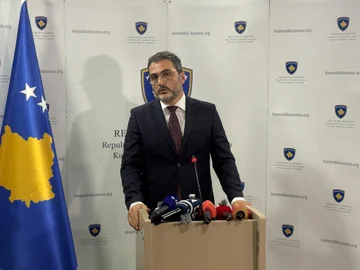
Presidium meeting fails
Policy
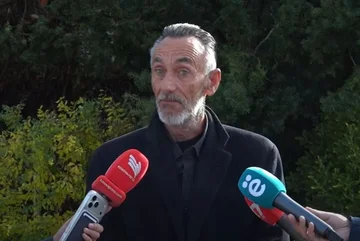
“The whole people should rise to their feet,” an outraged citizen after Thaçi’s sentencing
Policy
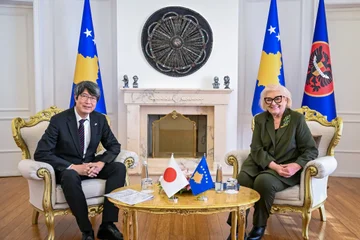
Shiroka Pula meets Japanese ambassador, discusses deepening cooperation between the two countries
Policy
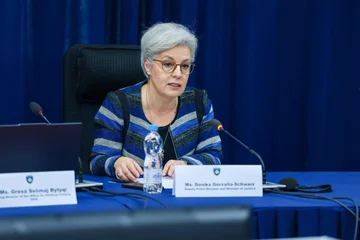
Serbian nationalist song, Gërvalla at meeting with the EU: Kosovo’s independence cannot be denied





