
The Government of Kosovo has approved a draft decision to ban electricity trading with companies from Serbia, namely purchases, reports Ekonomia Online.
Government approves decision, electricity trading with companies from Serbia halted
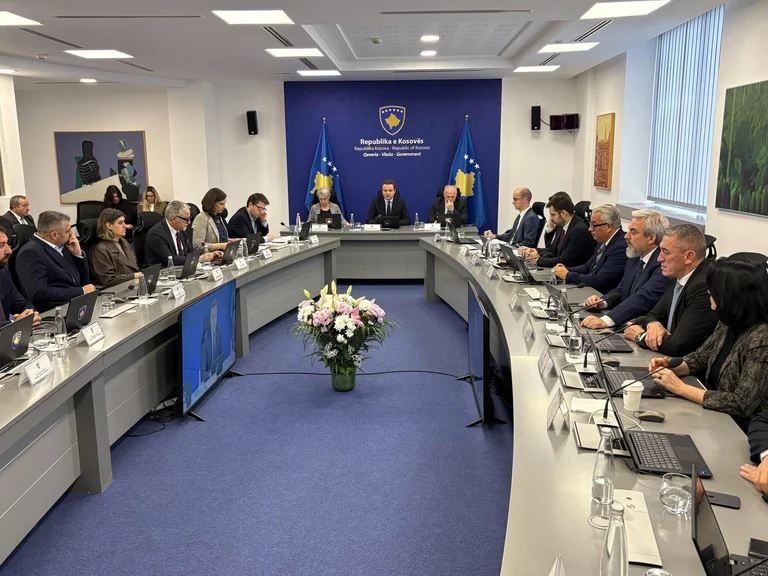
The government cabinet voted in favor of this proposal.
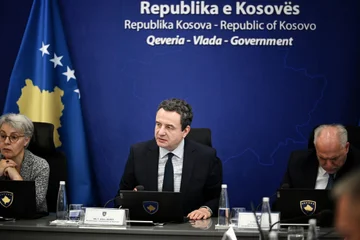
At the beginning of the meeting, Kurti said this measure comes in response to Serbia's blocking of cross-border lines for energy trading.
“First, we will stop electricity trading with Serbian companies as the first measure against Serbia for blocking cross-border trading lines, which may be escalated in the future if there is no change. Also, to address the difficulties in the energy sector arising from the blocking of these 400-kilovolt interconnection lines and other internal and external factors, today we are imposing a public service obligation on KEK to secure a certain amount of cross-border capacity for the month of December, and we are also imposing emergency measures in energy, which include Ibër-Lepenc's obligation to sell energy for the supply of the public service,” he said.
Two other decisions related to the electricity sector were also approved at the Government meeting. These are the Draft Decision on declaring emergency measures for energy supply, as well as the Draft Decision on imposing a public service obligation on the Kosovo Energy Corporation (KEK) to secure cross-border transmission capacity. These three decisions are part of the Government's measures to address challenges in the electricity sector and ensure energy supply in the country.
Prime Minister Albin Kurti said that the blocking of two 400-kilovolt interconnection lines by Serbia does not prevent Kosovo from buying electricity from that country, but makes it impossible to use this infrastructure to transit energy from other countries.
“Serbia's blocking of the lines does not hinder us because we want to buy energy from Serbia, but it makes it impossible to use this critical infrastructure to bring in energy in transit from other countries. So, the two 400-kilovolt interconnection lines that Serbia has blocked do not need to be open for us to import from it, but so that they can be used for transit, for the free circulation of electricity, which Serbia's blocking has turned into a wall instead of distribution wires. As a result of this blocking by Serbia over the years, there have been days when congestion on the lines with other countries, particularly Montenegro and North Macedonia, has caused dizzying price increases, to the extent that on January 14 and 20 of this year it was impossible to secure sufficient energy, forcing KOSTT to introduce reductions in electricity supply. Since taking office in the previous term, in March 2021, we have made every effort to secure the support of international partners to exert pressure on Serbia to unblock the lines. Finally, in December of last year, the Ministerial Council of the Energy Community confirmed Serbia's breach of the Energy Community Treaty and required it to unblock the lines no later than July 1, 2026,” Kurti said.
He emphasized that although the deadline set by the Ministerial Council of the Energy Community has passed, Serbia has not unblocked the lines. According to him, the Government tried to find a solution through the European Union, but since this effort did not yield results, it decided to take legal countermeasures.
“By July 1, 2026—and now, as we speak, it is November 16, 2026. Since this has still not happened, and four and a half months have passed without this decision of the Ministerial Council of the Energy Community being implemented, we made another effort to resolve this issue through the European Union. Seeing that this effort, too, has not produced results, today we are taking legal countermeasures to ban electricity trading with enterprises registered in Serbia or owned by Serbian citizens. At this stage, an exception will be made for the supplier established on the basis of the Brussels Energy Agreement. However, the Ministry of Economy is obliged to monitor the situation and, if there is no change on the part of the official authorities in Belgrade, we will consider escalating the measures in the future, including measures that could also affect this supplier, as well as a comprehensive review of the implementation of the Brussels Energy Agreement,” Kurti added.
Meanwhile, Deputy Minister of Industry, Entrepreneurship, Trade and Innovation Fatban Bunjaku presented the rationale for the draft decision, saying that obstacles from Serbia have been present since December 2020, when KOSTT began operating as a separate control area.
“This challenge has been present since December 2020, when KOSTT began operating as a separate control area. Since then, Serbia, through its transmission system operator, EMS, has continued to obstruct the determination and allocation of cross-border capacity with Kosovo, making commercial use of the interconnections impossible. As a result, up to 600 megawatts of transmission capacity remain unused, limiting cross-border electricity trading and increasing pressure on import capacity from other neighboring countries. Kosovo's public institutions, namely KOSTT, had brought this issue to the attention of the Energy Community Secretariat as early as February 2021. The complaint submitted by Kosovo was confirmed as well-founded by the Ministerial Council through decision 202502MC-ENC dated December 18, 2025, which found that Serbia had breached its obligations arising from the Energy Community Treaty and Articles 6, 10 and 11 of the Treaty. Furthermore, through this decision, the Ministerial Council had called on Serbia to immediately remedy the breach, while also providing for the initiation of proceedings under Article 92 of the Treaty if the breach was not remedied by July 1, 2026,” Bunjaku said.
Bunjaku said Serbia had not taken the necessary corrective measures and that the obstacles continued. He also referred to the European Commission's 2026 reports, which, according to him, highlight the impact of the non-allocation of cross-border capacity on security of supply, competition and electricity import prices.
“Serbia has not taken the necessary corrective measures and the obstacles remain. This issue is also noted in the European Commission's 2026 report on Kosovo, which states that the non-allocation of cross-border capacity negatively affects security of supply, competition and electricity import prices. In the same report, the European Commission's 2026 report on Serbia notes that the Serbian transmission system operator, EMS, has still not allocated capacity for electricity trading across all interconnections, including those with Kosovo. Therefore, in view of the above, taking into account the situation that has arisen, the ongoing blockages and Serbia's failure to take the necessary corrective measures, MINT, pursuant to Article 92, paragraph 4, and Article 93, paragraph 4, of the Constitution of the Republic of Kosovo, Article 7, paragraph 3, of Law No. 08/L-021 on Foreign Trade, as well as other relevant laws and regulations, today proposes the approval of a decision to impose countermeasures on enterprises identified as originating from Serbia. These countermeasures include banning electricity trading with enterprises identified as originating from Serbia, namely the purchase, sale, import and export of electricity, either directly or through transit or resale,” Bunjaku emphasized.
Related
Policy
The Alliance convenes its Presidium, with organizational issues and political developments in focus
Policy
Foreign Ministry Signs $50,000-a-Month Contract for Lobbying in the U.S.
Policy
President Shiroka Pula receives Slovenian ambassador; bilateral cooperation and Euro-Atlantic integration in focus
Policy
Çitaku: PDK will enter a regular election cycle to elect a new leader
Policy
Gola on Thaçi’s sentence: We express regret
Policy
Çitaku after Thaçi’s sentence: A shameful and unacceptable decision
Policy
Government after Thaçi’s sentence: Our reservations about the Specialist Chambers’ ability to ensure a fair trial remain steadfast
Policy
Tahiri insists that Thursday’s session be held and the president’s decree on the Law on the Specialist Chambers be returned to the Assembly
Policy
Presidium meeting fails
Policy
“The whole people should rise to their feet,” an outraged citizen after Thaçi’s sentencing
Policy
Shiroka Pula meets Japanese ambassador, discusses deepening cooperation between the two countries
Policy
Serbian nationalist song, Gërvalla at meeting with the EU: Kosovo’s independence cannot be denied





