
The Government of Kosovo has declared emergency measures for the supply of electricity, which will remain in force for 60 days from the entry into force of the decision.
Government says electricity supply is also at risk due to the failure to complete work on Unit B1 on time; project funded by the EU
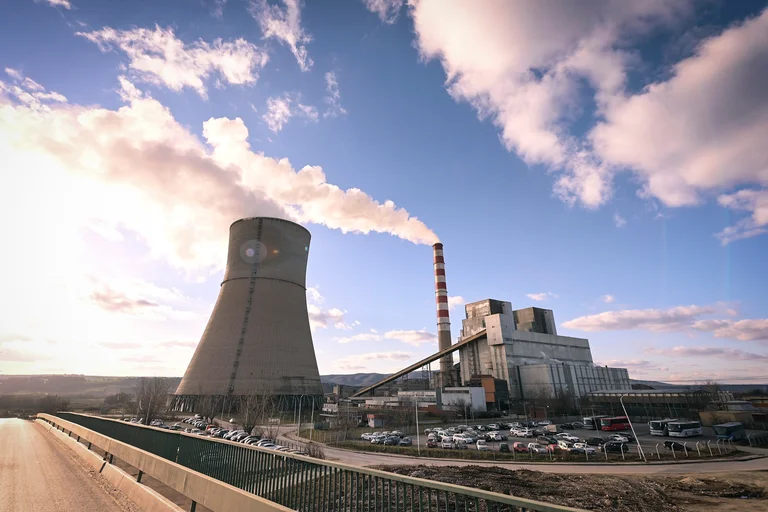
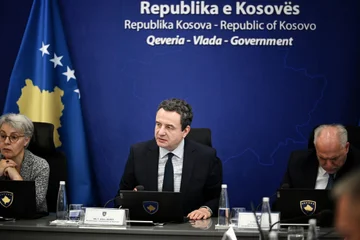
The decision was made at the meeting of November 16, 2026, and will be sent to the Assembly of Kosovo for approval within three days.
As part of these measures, the hydroeconomic enterprise “Ibër-Lepenci” has been obliged to produce electricity from its generating capacities, in accordance with the instructions of the Transmission System and Market Operator (KOSTT).
According to the decision, KOSTT will instruct “Ibër-Lepenci” to produce as much electricity as is technically possible, particularly during peak consumption hours. Production must also be directed to periods when it can have the greatest impact on reducing system costs or when it is necessary for security of supply.
In addition, the Government has required the hydroeconomic enterprise “Ibër-Lepenci” to produce electricity from the Ujman Hydropower Plant to supply consumers who are entitled to universal service. The Universal Service Supplier will compensate the enterprise for the electricity produced, in accordance with the reference price set by the Energy Regulatory Office (ERO).
Another measure provides for the establishment of an Emergency Technical Committee, which will be led by the Ministry of Economy and consist of representatives of the relevant institutions and enterprises. The committee will be tasked with recommending additional measures, including special commercial terms, to manage the emergency situation.
The committee will monitor the overall state of security of electricity supply and report to the Ministry of Economy every two weeks. The reports will cover the availability of generating capacities, the level of supply and demand, and the state of the country’s electricity grid. Meanwhile, all public institutions have been obliged to take measures to save electricity.
In its rationale for the decision, the Government cited several factors that, it said, had affected security of supply. These include high electricity import prices and instability in international markets as a result of the conflict in Iran and disruptions to shipping through the Strait of Hormuz, which have put pressure on oil, natural gas and electricity prices in European and regional markets.
The non-operation of Unit B1 at the “Kosova B” Thermal Power Plant, due to work to install new electrostatic precipitators and a nitrogen oxide (NOx) reduction system, was cited as another factor.
The Government emphasized that delays in carrying out this project and uncertainty over the unit’s return to operation had affected the country’s energy balance. According to the document, the unit was scheduled to return to operation on November 25, 2026. The rationale also mentions Serbia’s blocking of the commercial commissioning of cross-border capacities, which, according to the Government, limits opportunities to import electricity.
Related
Policy
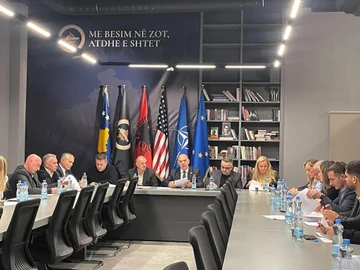
The Alliance convenes its Presidium, with organizational issues and political developments in focus
Policy
Foreign Ministry Signs $50,000-a-Month Contract for Lobbying in the U.S.
Policy
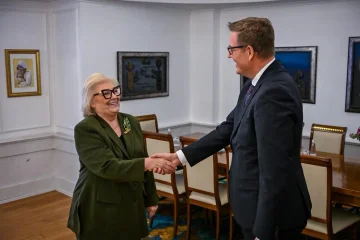
President Shiroka Pula receives Slovenian ambassador; bilateral cooperation and Euro-Atlantic integration in focus
Policy
Çitaku: PDK will enter a regular election cycle to elect a new leader
Policy
Gola on Thaçi’s sentence: We express regret
Policy
Çitaku after Thaçi’s sentence: A shameful and unacceptable decision
Policy
Government after Thaçi’s sentence: Our reservations about the Specialist Chambers’ ability to ensure a fair trial remain steadfast
Policy
Tahiri insists that Thursday’s session be held and the president’s decree on the Law on the Specialist Chambers be returned to the Assembly
Policy
Presidium meeting fails
Policy
“The whole people should rise to their feet,” an outraged citizen after Thaçi’s sentencing
Policy
Shiroka Pula meets Japanese ambassador, discusses deepening cooperation between the two countries
Policy
Serbian nationalist song, Gërvalla at meeting with the EU: Kosovo’s independence cannot be denied





