
Former President Hashim Thaçi is due to hear another judgment in The Hague today, this time on charges that the defense disputes as unproven and legally flawed.
Judgment against Thaçi and four others in the case of obstruction of justice to be announced today
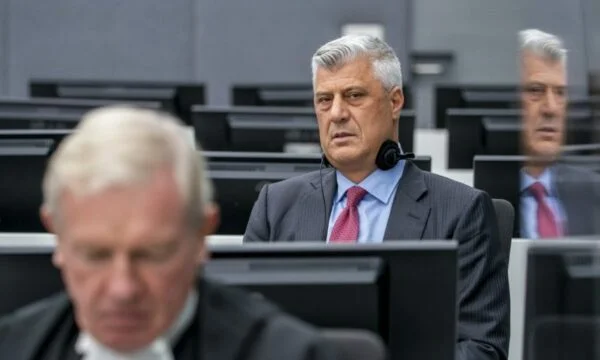
Judge Christopher Gosnell has scheduled the announcement of the verdict for today at 10:00, ordering all five accused to appear.
Alongside the former president, the verdict will be heard by former KIA director Bashkim Smakaj, former mayor of Malisheva Isni Kilaj, former minister Hajredin Kuçi, and Fadil Fazliu.
At the center of the dispute between the parties are conversations recorded during visits to detention: what was said, who spoke, and what they prove.
The prosecution interprets these materials as evidence of efforts to interfere with witnesses. Thaçi’s lawyers dispute both the interpretation and the credibility of the transcripts.
In its final submission, the defense argues that the investigations failed to secure evidence of improper contact with witnesses on behalf of the former president.
According to the lawyers, parts of the conversations were unintelligible, while transcription by prosecution staff risked being influenced by the investigators’ own expectations.
The defense also disputes the treatment as confidential of information that, it says, was publicly known or constituted shared memories of Thaçi and his visitors.
The lawyers also argue that the criminal provisions have been interpreted beyond their meaning in Kosovo’s judicial practice. These remain defense arguments, still awaiting final judicial assessment.
Expert Helen Fraser, called by the defense, testified on the issue of transcription. She assessed the transcripts’ credibility as low.
However, Fraser clarified that she could not say the transcripts were incorrect. She also acknowledged the limitation arising from her lack of knowledge of Albanian.
Her criticism concerned the method used and the lack of sufficient safeguards for the accuracy of the material presented.
The prosecution disputes this assessment. It relies on the recordings, documents that it claims corroborate them, and verification by the court’s language unit.
In his closing statement, prosecutor Joshua Hafetz cited around 28 hours of recorded conversations during nine visits, spread over four months.
Related
National
A person with victim status in the Hague trial dies; the Specialist Chambers allow a family member to continue the proceedings
National
Gërvalla visits the Office for Victim Protection and Assistance, urges reporting violence to 0800 11112
National
KPMM Asked to Account for Delays in Licensing Investors
National
Ireland-Kosovo Match, Irish Ambassador: Historic Moment, We Expect a Great Match

National
VITA calls for an investigation by the Prosecution, saying more than 650 samples have been taken since July without the results being provided
National
Çitaku after failure of Presidency meeting: We expect the law on the Specialist Chambers to be voted on this week
National
Indictment against three people for selling around two kilograms of heroin
National
Klestor Veseli calls for an institutional response after The Hague decision
National
He killed him three years ago after a property dispute in Podujeva; sentenced to 24 years in prison
National
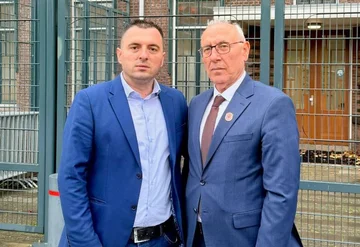
Fadil Fazliu’s son: My father and the others should have been acquitted
National
Supreme Court fully repeals the CEC Regulation, lawyer Ardian Bajraktari: No institution is above the law
National
Supreme Court annuls in its entirety the CEC Regulation on amendments to the internal organization and job classification





