
In December, it will be almost two years since the agreement was signed between the Government of Kosovo and Turkey’s state-owned defense industry manufacturer MKE to establish an ammunition factory in Kosovo. However, construction work has only recently begun, while the Ministry of Defense’s promise that initial test production will start by the end of 2026 is being met with skepticism by lawmakers and security experts.
“Just talk” – skepticism over the start of ammunition production within this year
Member of the Democratic Party of Kosovo Besa Kabashaj-Ramaj and Alliance member Burim Ramadani have voiced concerns over these delays, criticizing the lack of transparency surrounding investments in the project. Meanwhile, security expert Nuredin Ibishi considers production by the end of this year difficult to achieve, predicting that it could begin early next year.
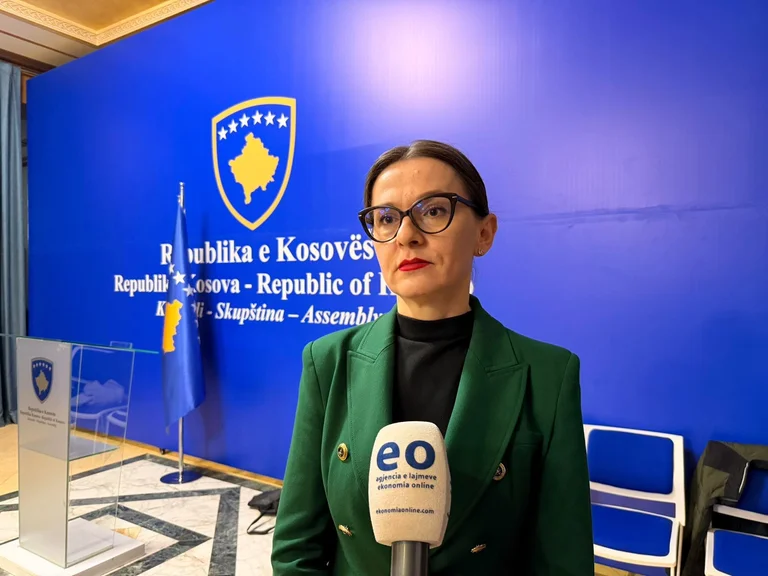
In a statement to Ekonomia Online, MP Besa Kabashaj-Ramaj said that Prime Minister Albin Kurti’s promises concerning the ammunition factory and the production of “Made in Kosova” drones had been mentioned in his policy addresses, but, according to her, were not reflected in the budgets for the respective years.
“Unfortunately, they were reflected in neither budget. And of course, to build them, there also have to be serious capital investments in this case, which must be reflected transparently in the budget of the Republic of Kosovo. That did not happen last time; this time, that is, in fact, the parliamentary questions I had for the prime minister today—but the prime minister was not at the session, and I expect him to provide written answers,” Kabashaj-Ramaj said.
She stressed that her parliamentary questions concern the transparency of investments in the ammunition factory and drone production, noting that both projects represent important capabilities for the country.
“Both are important capabilities for the country, and the Assembly of the Republic of Kosovo has a responsibility to transparently oversee such serious investments in the defense sector. Unfortunately, at present, neither one nor the other is reflected at all in the budget that has been submitted, and this is concerning because it does not create transparency for oversight,” she said.
Kabashaj-Ramaj said that through her parliamentary questions she had also requested the relevant documentation and information on these projects, calling for it to be made public in accordance with its classification level.
“All the components and documents required in the parliamentary question were requested in writing, and we expect the information to be provided as soon as possible, naturally bearing in mind that there are two types of requests: requests for information that is publicly accessible and can be shared with the public, and information that may be classified and shared through the respective official channels,” the PDK MP stressed.
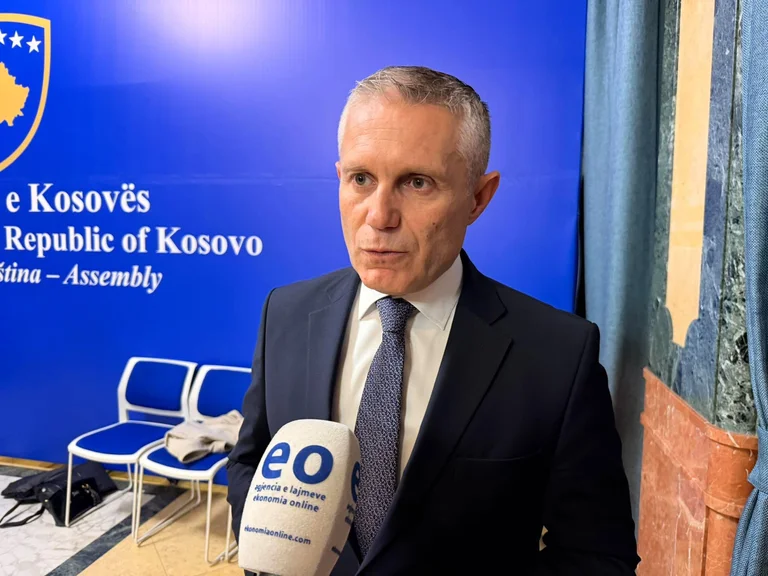
Alliance MP Burim Ramadani also criticized the delays in starting construction work in an interview with EO, saying that the agreement signed in December 2024 should have been followed by concrete steps much earlier.
“First, it must be made clear that the start of construction work on the ammunition factory is late—indeed, it is already two years late. The agreement was signed in December 2024, and until now there has only been a meadow; that is, there has been no construction,” Ramadani stressed.
He also expressed pessimism about the possibility of the work proceeding quickly, given when it began and the approach of the winter season.
“The start of construction work, unfortunately, at this pace under the government is not promising, because we are at the end of the year and the period when winter may be harsher is already upon us. That means there are only a few working days, and then we have to wait for spring to end,” he said.
Ramadani said that the promise to produce ammunition by the end of 2026 could not be fulfilled while the facility had yet to be built.
“And consequently, everything the prime minister and the minister of defense have told us so far—that ammunition would be produced in Gjakova by the end of 2026—has turned out to be untrue; it has turned out to be just talk and no work,” he added.
The Alliance lawmaker has called on the institutions to explain the delays and take responsibility for failing to meet the announced deadlines.
“Absolutely, just as it has been delayed by two years, there is no time, but they should provide explanations—not excuses, but clarifications—and take responsibility for these delays. I don’t know how they can still say they expect production to begin at the end of the year when the building has not even been built. Consequently, this is just talk, lots of words, no action whatsoever, and a very obvious failure,” Ramadani said.
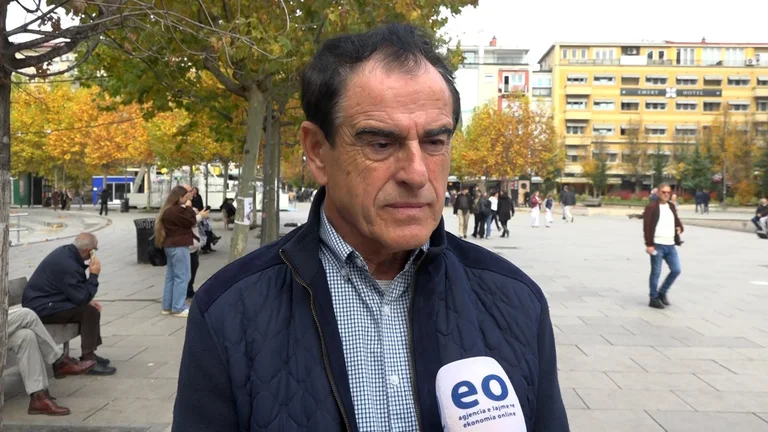
Meanwhile, security expert Nuredin Ibishi described the construction of the ammunition factory as an extremely important project for Kosovo, since, he said, domestic production would reduce dependence on imports and also create opportunities for exports.
He pointed out that the factory is expected to produce 5.56 and 7.62 caliber ammunition, used by weapons in accordance with NATO standards.
“First of all, I consider this an extremely important project because production of 5.56 and 7.62 ammunition is beginning, which means it will reduce our dependence on imports, while also creating the possibility of exporting abroad,” Ibishi stressed.
However, he does not expect production to begin by the end of this year, since, he said, in addition to constructing the facility, machinery must be installed and personnel prepared.
“It started a short while ago, and I would say I don’t believe production can begin this quickly, by the end of the year. But it is expected to become possible early next year, because it requires the structure of the building and the infrastructure, then the installation of the machinery and the personnel, all of that. I think it will still take time, but in any case I expect this to get underway sometime early next year, and I hope that, in addition to meeting domestic needs, we will also have the opportunity to export abroad,” he said.
Ibishi also mentioned the problems Kosovo has faced in the past when procuring ammunition because of its dependence on imports and the shortage of certain calibers on the market.
“There have been many problems with imports; sometimes the market is also short of supply, and you have had problems with certain calibers—for example, shortages of 9x19. But now I hope we will no longer have that problem. Not only will we no longer have that problem, but there will also be an opportunity, since around 20 million rounds of these two calibers are expected to be produced domestically per year. We hope the capacity will also be expanded to include other calibers. And it is good that these are NATO-standard calibers. That is also good because our weapons are in accordance with NATO standards,” Ibishi said.
Last year, Kosovo’s caretaker Prime Minister Albin Kurti said the first ammunition from the factory to be built in Gjakova would be produced at the end of 2026.
On November 27, the Government of Kosovo approved a request to expropriate the properties of the former Ereniku agricultural combine for the construction of an industrial zone in Jahoc, Gjakova, where the ammunition factory will be built.
Related
Policy
The Alliance convenes its Presidium, with organizational issues and political developments in focus
Policy
Foreign Ministry Signs $50,000-a-Month Contract for Lobbying in the U.S.
Policy
President Shiroka Pula receives Slovenian ambassador; bilateral cooperation and Euro-Atlantic integration in focus
Policy
Çitaku: PDK will enter a regular election cycle to elect a new leader
Policy
Gola on Thaçi’s sentence: We express regret
Policy
Çitaku after Thaçi’s sentence: A shameful and unacceptable decision
Policy
Government after Thaçi’s sentence: Our reservations about the Specialist Chambers’ ability to ensure a fair trial remain steadfast
Policy
Tahiri insists that Thursday’s session be held and the president’s decree on the Law on the Specialist Chambers be returned to the Assembly
Policy
Presidium meeting fails
Policy
“The whole people should rise to their feet,” an outraged citizen after Thaçi’s sentencing
Policy
Shiroka Pula meets Japanese ambassador, discusses deepening cooperation between the two countries
Policy
Serbian nationalist song, Gërvalla at meeting with the EU: Kosovo’s independence cannot be denied





