
The program manager at the Kosovo Democratic Institute (KDI), Eugen Cakolli, has assessed that the full results of the June 7 elections provide a clear picture of the political weight candidates carry within their respective entities. In a social media post, Cakolli said the results show not only the number of votes […]
Cakolli: Kurti leads in percentage of preferential votes; position on the list no longer guarantees votes
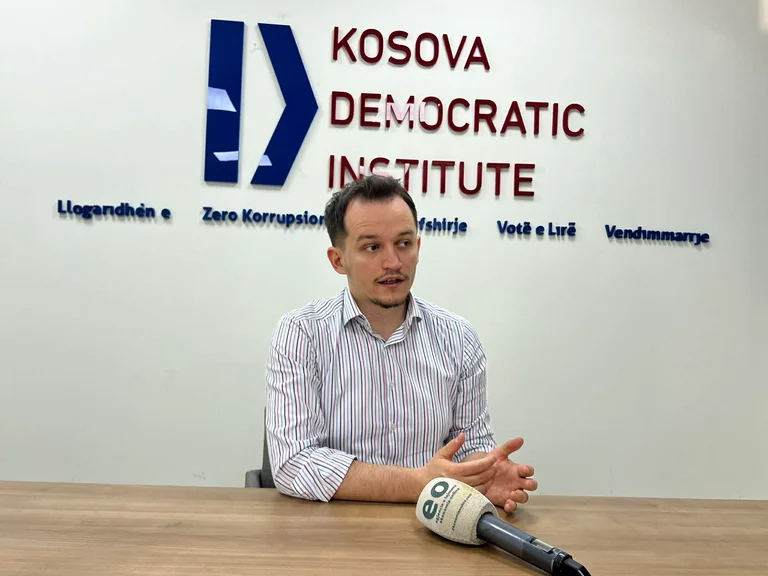
The program manager at the Kosovo Democratic Institute (KDI), Eugen Cakolli, has assessed that the full results of the June 7 elections provide a clear picture of the political weight candidates carry within their respective entities.
In a social media post, Cakolli said the results show not only the number of votes won by candidates, but also the level of support they received from voters of their respective parties.
“The full results of the June 7 elections also reveal a great deal about the political weight of candidates within their respective entities. That is, not only in terms of the absolute number of votes, but also in terms of how many voters from the respective entity chose to vote for the candidate on the list,” Cakolli wrote.
According to him, when the leading candidates on the electoral lists are compared with the total votes won by their parties, caretaker Prime Minister Albin Kurti emerges as the candidate with the highest percentage of preferential votes.
“As for the leading candidates on the lists, in relation to the total votes won by their parties, Albin Kurti emerges as the candidate with the highest percentage of preferential votes, followed by Ardian Gjini, Bedri Hamza and Vjosa Osmani,” he said.
Cakolli also highlighted a phenomenon that, according to him, has been evident among the most-voted candidates of political parties, where placement on the list has not necessarily been reflected in the final vote result.
“As for the top five most-voted candidates within each party, an interesting situation can be observed: being ranked higher on the list has not necessarily and strictly translated into a higher ranking in terms of citizens’ preferential votes,” he wrote.
According to Cakolli, this demonstrates that candidates’ individual influence is becoming increasingly important in elections.
“In some cases, candidates placed lower on the list have received more votes, which shows that political weight, public performance, recognition among citizens and personal mobilization are becoming increasingly important, alongside formal position on the list,” Cakolli added.
Related

Policy
The Alliance convenes its Presidium, with organizational issues and political developments in focus

Policy
Foreign Ministry Signs $50,000-a-Month Contract for Lobbying in the U.S.
Policy
President Shiroka Pula receives Slovenian ambassador; bilateral cooperation and Euro-Atlantic integration in focus
Policy
Çitaku: PDK will enter a regular election cycle to elect a new leader
Policy
Gola on Thaçi’s sentence: We express regret

Policy
Çitaku after Thaçi’s sentence: A shameful and unacceptable decision
Policy
Government after Thaçi’s sentence: Our reservations about the Specialist Chambers’ ability to ensure a fair trial remain steadfast

Policy
Tahiri insists that Thursday’s session be held and the president’s decree on the Law on the Specialist Chambers be returned to the Assembly

Policy
Presidium meeting fails

Policy
“The whole people should rise to their feet,” an outraged citizen after Thaçi’s sentencing
Policy
Shiroka Pula meets Japanese ambassador, discusses deepening cooperation between the two countries
Policy
Serbian nationalist song, Gërvalla at meeting with the EU: Kosovo’s independence cannot be denied





