
After the election results are certified, the country enters an important constitutional and political process to form new institutions. The constitution of the Assembly, the election of the Government and the President are considered key steps for the functioning of the state, while securing a parliamentary majority of 61 MPs remains the decisive factor in forming the new government. Experts […]
After the elections, the battle for power begins – Baraliu outlines the constitutional scenarios
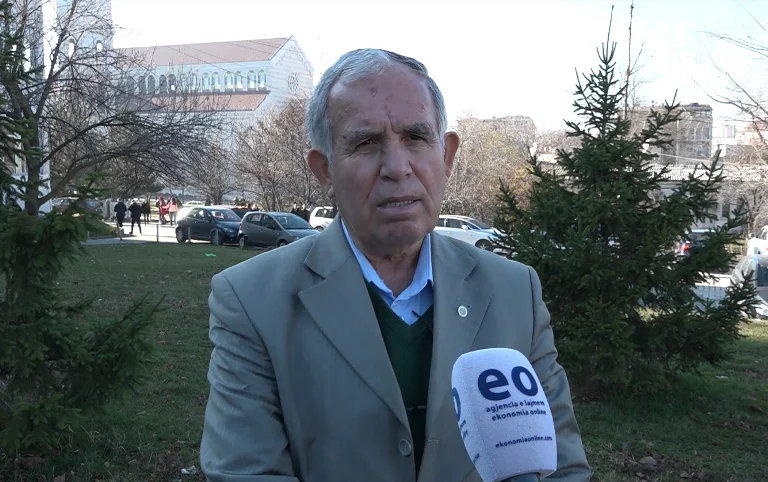
After the election results are certified, the country enters an important constitutional and political process to form new institutions.
The constitution of the Assembly, the election of the Government and the President are considered key steps for the functioning of the state, while securing a parliamentary majority of 61 MPs remains the decisive factor in forming the new government.
Constitutional experts warn that the lack of political agreements could lead to an institutional deadlock and that, if a majority cannot be formed, the country could also face new elections.
Constitutional expert Mazllum Baraliu has explained the procedures that follow the certification of the election results, saying that the priority of the new institutions should be the election of the president, due to constitutional deadlines.
According to Baraliu, after the results are certified, the list of candidates who have secured the necessary votes to become MPs is sent to the Assembly. Then, within the constitutional deadline of 30 days, the acting president must convene the constitutive session of the Assembly. If this does not happen, MPs may take the initiative themselves to hold it.
“Once the results are certified, the list of candidates for MPs who received enough votes to become members of the Assembly is sent; the Assembly prepares the deadlines set by law and the Constitution, and within 30 days the acting president must convene the constitutive session. If she does not, the MPs do so on their own initiative,” Baraliu told FrontOnline.
Baraliu explained that the first session includes the verification of mandates and the swearing-in of MPs, after which the election of the Speaker of the Assembly and deputy speakers must be carried out. Once the Assembly is constituted, parliamentary groups are also formed.
“At the first session, the mandates are verified and the MPs are sworn in; then proposals should follow for the election of the Speaker of the Assembly and the Assembly Presidency. Once this is done, the parliamentary groups are also constituted, declared by the political parties, and that is all,” Baraliu said.
Baraliu believes that under the current circumstances, electing the president should be the priority, given the constitutional deadline of 60 days. According to him, the mandate to form the executive initially goes to the election winner, but if that party fails, it may be given to another political entity.
“In this case, we should prioritize electing the president before the government because we have a limited 60-day deadline, and the government comes later, of course. The mandate to form it is given to the election winner; if they cannot do it the first time, it is given to someone else the second time, and so it is formed,” Professor Baraliu said.
Baraliu warned that a new institutional deadlock would be a serious blow to the political class, but said he did not believe this would happen, given that voters had strongly boycotted these snap elections.
“If there is another institutional deadlock, it would be the end of this political class in terms of its responsibilities. I do not believe this will happen, because they have seen that voters seriously boycotted these elections and they must understand the message: not to play political games, but to form the institutions,” Baraliu concluded.
Related
Policy
The Alliance convenes its Presidium, with organizational issues and political developments in focus
Policy
Foreign Ministry Signs $50,000-a-Month Contract for Lobbying in the U.S.
Policy
President Shiroka Pula receives Slovenian ambassador; bilateral cooperation and Euro-Atlantic integration in focus
Policy
Çitaku: PDK will enter a regular election cycle to elect a new leader
Policy
Gola on Thaçi’s sentence: We express regret
Policy
Çitaku after Thaçi’s sentence: A shameful and unacceptable decision
Policy
Government after Thaçi’s sentence: Our reservations about the Specialist Chambers’ ability to ensure a fair trial remain steadfast
Policy
Tahiri insists that Thursday’s session be held and the president’s decree on the Law on the Specialist Chambers be returned to the Assembly
Policy
Presidium meeting fails
Policy
“The whole people should rise to their feet,” an outraged citizen after Thaçi’s sentencing
Policy
Shiroka Pula meets Japanese ambassador, discusses deepening cooperation between the two countries
Policy
Serbian nationalist song, Gërvalla at meeting with the EU: Kosovo’s independence cannot be denied





