
Analyst Veton Surroi has offered several suggestions to political parties following the June 7 elections. Surroi, in a post on his Facebook profile, listed five suggestions for the parties, also mentioning the issue of the president. His full post: Some suggestions for political parties after the June 7 elections […]
June 7 elections, Surroi offers suggestions to political parties
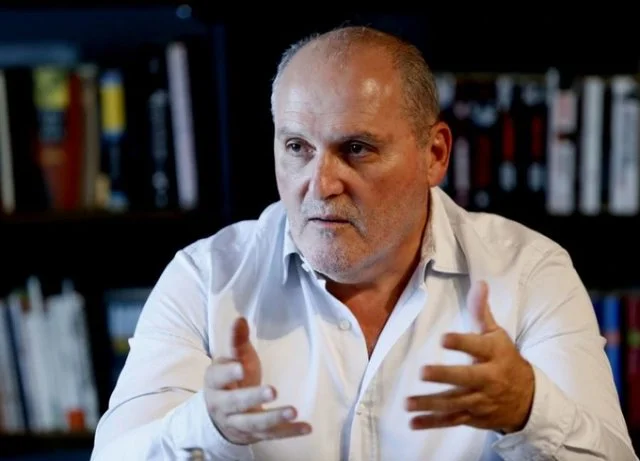
Analyst Veton Surroi has offered several suggestions to political parties following the June 7 elections.
Surroi, in a post on his Facebook profile, listed five suggestions for the parties, also mentioning the issue of the president.
His full post:
Some suggestions for political parties after the June 7 elections
1. Kosovo entered a political crisis after the February 2025 elections, and the attempt to resolve it by changing the balance of power through elections was unsuccessful. The balance of power remained in roughly the same range as at the start of the crisis. This suggests that Kosovo now has a consolidated political scene, which is not expected to change radically through frequent elections.
2. Frequent elections have produced a measurable democratic cost. Compared with the February 2025 elections, around 100,000 fewer citizens took part in the vote. The parties that have been in opposition lost proportionally the most, nearly one-fifth of their electorate. By comparison, the party in power lost only around 3.5 percent of its electorate.
3. The June 7 elections should put an end to the illusion that dramatic political changes can be brought about through frequent elections or by keeping the country in a state of continual crisis. The experience of the past year and a half shows that the crisis has not changed the ranking of political forces; it has only depleted institutional energy and civic participation.
4. The election results brought new clarity to future governance. The leading political entity received more electoral support than the next three parties combined and, consequently, it is its responsibility to form the government. At the same time, this support does not eliminate the need for institutional compromise and for building a culture of shared governance on issues that require broader consensus.
5. The election of the President of the Republic should establish a balance between two fundamental democratic principles:
• The entity that has won the most support does not have the right to impose the choice of President solely by relying on the mandate it received to govern the country.
• Entities that have won less support do not have the right to impose the choice of President by relying solely on their blocking capacity, which stems from the constitutional requirement for the participation of two-thirds of the MPs.
Related

Policy
The Alliance convenes its Presidium, with organizational issues and political developments in focus

Policy
Foreign Ministry Signs $50,000-a-Month Contract for Lobbying in the U.S.

Policy
President Shiroka Pula receives Slovenian ambassador; bilateral cooperation and Euro-Atlantic integration in focus
Policy
Çitaku: PDK will enter a regular election cycle to elect a new leader
Policy
Gola on Thaçi’s sentence: We express regret
Policy
Çitaku after Thaçi’s sentence: A shameful and unacceptable decision
Policy
Government after Thaçi’s sentence: Our reservations about the Specialist Chambers’ ability to ensure a fair trial remain steadfast
Policy
Tahiri insists that Thursday’s session be held and the president’s decree on the Law on the Specialist Chambers be returned to the Assembly
Policy
Presidium meeting fails

Policy
“The whole people should rise to their feet,” an outraged citizen after Thaçi’s sentencing
Policy
Shiroka Pula meets Japanese ambassador, discusses deepening cooperation between the two countries
Policy
Serbian nationalist song, Gërvalla at meeting with the EU: Kosovo’s independence cannot be denied





