
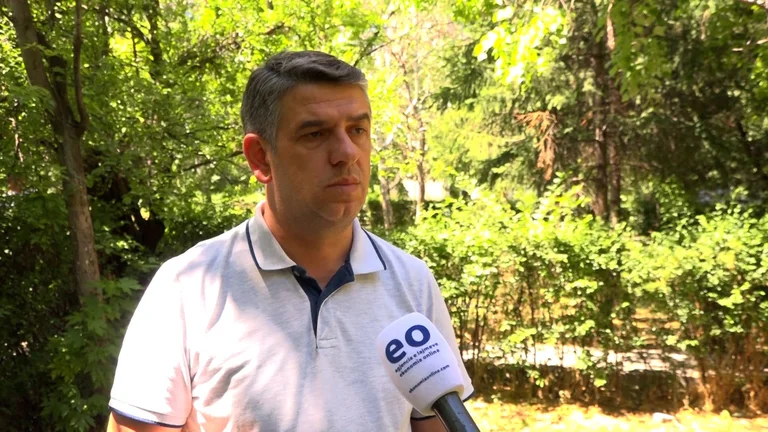
Political scientist Albinot Maloku has assessed that the citizens of Kosovo sent a clear message in the June 7 elections calling for political compromise and the functioning of institutions, reports Ekonomia Online. Maloku said citizens demonstrated democratic culture and called on political leaders to show greater seriousness in post-election processes. “The first thing is that the citizens of the Republic of […]
Maloku: Citizens called for political compromise, not autocracy
Political scientist Albinot Maloku has assessed that the citizens of Kosovo sent a clear message in the June 7 elections calling for political compromise and the functioning of institutions, reports Ekonomia Online.
Maloku said citizens demonstrated democratic culture and called on political leaders to show greater seriousness in post-election processes.
“First of all, the citizens of the Republic of Kosovo showed that Kosovo must, by all means, belong to the countries, the family of countries with vibrant democracies, because they certainly demonstrated good civic culture and consequently sent a powerful message to the political spectrum, and especially to their leaders, to be more serious after the election processes. For me, ‘serious’ means understanding that Kosovo is a parliamentary democracy and that in a parliamentary democracy the key is compromise, a political agreement. Consequently, the citizens said: ‘We don’t want autocracy; we want a political agreement, we want democracy, and we want compromise between the parties.’ Ultimately, they are all—I am speaking about the largest political entities in the country—all Albanian, and they have no specific reason to reject one another to the point that relations between them become intolerable,” he said.
Maloku said the elections had changed the political balance within the Assembly of Kosovo and that political entities should read the result as a call for a political agreement.
“The balance of power among political entities in the Assembly of the Republic has changed. Regardless of explanations that turnout was somewhat low, and so on, political entities now have different positions in the Assembly of the Republic. The Alliance for the Future of Kosovo had one position; now it has a very different and much better one. Consequently, the Democratic League of Kosovo, as well as the Democratic Party of Kosovo, have also shown that they have stability even amid this crisis caused by a lack of votes. And the Vetëvendosje Movement, which has seen the greatest decline in the number of its deputies in the Assembly of the Republic, despite the vote being concentrated on this political entity. The process itself should be taken as an essential message: compromise, a political agreement. Whether there will be compromise and a political agreement, and whether the political spectrum—and especially its leaders—have received this message, remains to be seen,” he said.
According to him, the political crisis in the country stems from the lack of compromise after the 2025 elections.
“In fact, a narrative was created claiming that the June 7, 2026 elections came about because the head of state had not been elected. But the source of the disagreements, the source of the political crises, dates back to February 9, 2025, and this is a consequence of the unwillingness to accept the reality in the Republic of Kosovo and its political system, which is based on agreement, compromise, agreement, and moving toward the formation of institutions. If there had been a genuine willingness, the citizens, both on February 9 and especially on December 28, 2025, gave the largest entities in the country the privilege of responsibility to move forward. That willingness was not there (I am speaking about the Vetëvendosje Movement), and consequently they brought about political, diplomatic, and economic crises, as well as an additional election process, which I very much hope will be the last. This ‘very much hope’ is based on the need for the largest entity in the country to understand that it has the privilege and the responsibility to form the institutions,” he said.
Maloku stressed that the first-place entity is guaranteed only the position of Assembly Speaker, and that everything else must be the result of political agreements.
“Now the formation of institutions starts entirely from the beginning. The only thing guaranteed to the entity that comes first in the June 7 election process is the position of Speaker of the Assembly of the Republic, and all other options can be part of a specific political agreement among the actors on the political scene in the Republic of Kosovo. I very much hope that this happens and that we do not have any more election processes. In other words, a full term should be completed, because the Republic of Kosovo faces many commitments and citizens have many needs. Election processes should no longer be an alternative for solving problems in the Republic of Kosovo,” he said.
He added that political agreements should be reached before the constitution of the Assembly and the election of new institutions.
“Now, after December 28, 2025, the largest entity dominated the Assembly of the Republic of Kosovo and, consequently, could do everything on its own, yet once again it failed to recognize the reality of the need for compromise. And things unfolded as they did: it acted in accordance with the power it had in the Assembly of the Republic of Kosovo, but failed to remember that the issue of the head of state was also on the table. It is now highly advisable that everything begin—that is, that agreements be reached before the constitution of the Assembly and, ultimately, based on the practice we have had, that there be a political agreement preceding the formation—specifically, the constitution of the Assembly, the formation of the government, and the election of the head of state. This would be the healthiest approach; it would demonstrate political culture on the part of a political entity, especially the one that comes first in the election process, and allow things to move forward. Otherwise, if there is an attempt to play tactical games by specifically constituting the Assembly and electing its Speaker, and then forming the government without also considering the issue of the head of state, it will come at a cost; things will go down this path, and I hope that Kosovo will have to go to another election process,” he said.
Related
Policy
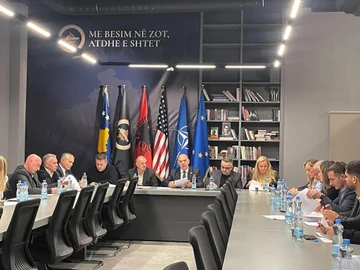
The Alliance convenes its Presidium, with organizational issues and political developments in focus
Policy
Foreign Ministry Signs $50,000-a-Month Contract for Lobbying in the U.S.
Policy
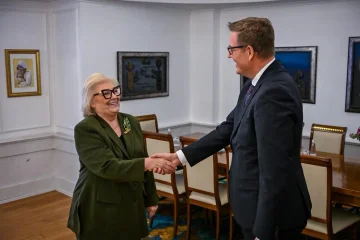
President Shiroka Pula receives Slovenian ambassador; bilateral cooperation and Euro-Atlantic integration in focus
Policy
Çitaku: PDK will enter a regular election cycle to elect a new leader
Policy
Gola on Thaçi’s sentence: We express regret
Policy
Çitaku after Thaçi’s sentence: A shameful and unacceptable decision
Policy
Government after Thaçi’s sentence: Our reservations about the Specialist Chambers’ ability to ensure a fair trial remain steadfast
Policy
Tahiri insists that Thursday’s session be held and the president’s decree on the Law on the Specialist Chambers be returned to the Assembly
Policy
Presidium meeting fails
Policy
“The whole people should rise to their feet,” an outraged citizen after Thaçi’s sentencing
Policy
Shiroka Pula meets Japanese ambassador, discusses deepening cooperation between the two countries
Policy
Serbian nationalist song, Gërvalla at meeting with the EU: Kosovo’s independence cannot be denied





