
The panel of the Supreme Court of Kosovo has dismissed as inadmissible the appeal filed by Violeta Salihu, a member of the Central Election Commission (KQZ), against the decision of the Election Complaints and Appeals Panel (PZAP), ZP.Anr.19/2026. In its decision dated June 5, 2026, the PZAP upheld the appeal of the Democratic Institute […]
Supreme Court dismisses KQZ member’s appeal concerning voting with expired documents
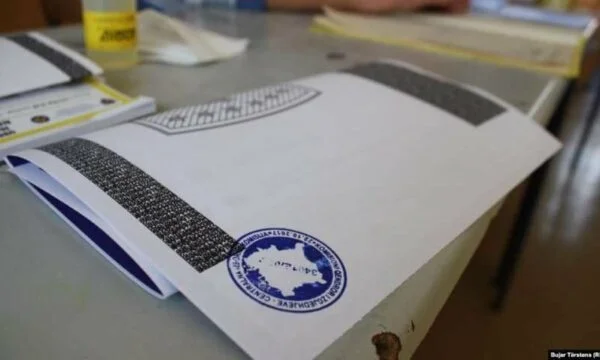
The panel of the Supreme Court of Kosovo has dismissed as inadmissible the appeal filed by Violeta Salihu, a member of the Central Election Commission (KQZ), against the decision of the Election Complaints and Appeals Panel (PZAP), ZP.Anr.19/2026.
In its decision dated June 5, 2026, the PZAP upheld the appeal of the Democratic Institute of Kosovo (KDI), annulling KQZ Decision No. 01/1198/2026 of June 3, 2026, which allowed voting at diplomatic missions using Republic of Kosovo identity documents whose validity had expired.
The PZAP had found that the KQZ had no legal authority to allow voting with expired documents through an administrative decision, since Article 90 of Law No. 08/L-228 on General Elections expressly requires valid identity documents to be presented in order to exercise the right to vote, both within the country and at diplomatic missions.
Against this decision, KQZ member Violeta Salihu filed an appeal with the Supreme Court, arguing that the KQZ decision was intended to guarantee the effective exercise of the constitutional right to vote for citizens registered to vote abroad, and that the PZAP had misinterpreted the relevant legal provisions.
After reviewing the case file and the legal provisions in force, the panel of the Supreme Court found that the appeal was inadmissible due to the appellant’s lack of active procedural standing.
The Court emphasized that the right to appeal PZAP decisions is expressly regulated by the Law on General Elections, and that an individual member of the KQZ does not have an independent procedural right to pursue legal remedies in their personal capacity against PZAP decisions, unless they are a direct party to the proceedings and demonstrate that a personal and direct legal interest has been infringed.
In the panel’s assessment, the KQZ exercises its powers as a collegial body, while members’ participation in the decision-making process does not automatically confer party status in judicial proceedings or the right to act individually on behalf of the institution.
The Court also found that the PZAP decision does not have direct legal consequences for the appellant’s individual status, rights or obligations, but concerns the assessment of the legality of an institutional KQZ decision.
For these reasons, the panel of the Supreme Court decided to dismiss the appeal as inadmissible, without proceeding to a substantive review of the claims concerning the legality of the contested PZAP decision.
Related

Policy
The Alliance convenes its Presidium, with organizational issues and political developments in focus

Policy
Foreign Ministry Signs $50,000-a-Month Contract for Lobbying in the U.S.

Policy
President Shiroka Pula receives Slovenian ambassador; bilateral cooperation and Euro-Atlantic integration in focus

Policy
Çitaku: PDK will enter a regular election cycle to elect a new leader
Policy
Gola on Thaçi’s sentence: We express regret

Policy
Çitaku after Thaçi’s sentence: A shameful and unacceptable decision
Policy
Government after Thaçi’s sentence: Our reservations about the Specialist Chambers’ ability to ensure a fair trial remain steadfast
Policy
Tahiri insists that Thursday’s session be held and the president’s decree on the Law on the Specialist Chambers be returned to the Assembly
Policy
Presidium meeting fails

Policy
“The whole people should rise to their feet,” an outraged citizen after Thaçi’s sentencing

Policy
Shiroka Pula meets Japanese ambassador, discusses deepening cooperation between the two countries

Policy
Serbian nationalist song, Gërvalla at meeting with the EU: Kosovo’s independence cannot be denied





