
Bill Gates has warned of the profound changes that Artificial Intelligence is expected to bring to society, describing the approaching period as one of the most “turbulent” in modern history. In a lengthy essay and an interview with The New York Times, the Microsoft co-founder argues that AI is not simply […]
Bill Gates: The world is not prepared for what is coming
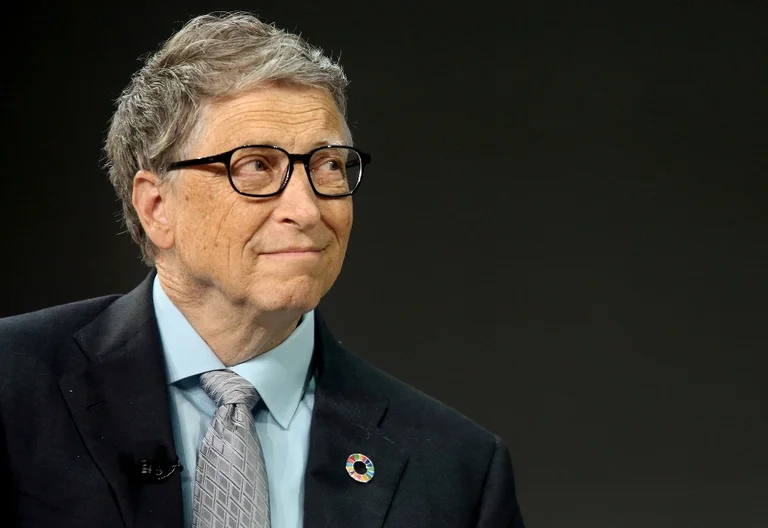
Bill Gates has warned of the profound changes that Artificial Intelligence is expected to bring to society, describing the approaching period as one of the most “turbulent” in modern history. In a lengthy essay and an interview with The New York Times, the Microsoft co-founder argues that AI is not just another technological revolution. In his view, the speed at which it is developing, its ability to perform tasks that previously required human judgment, and its rapid integration into everyday life are creating an unprecedented situation. Gates has also directed criticism at the Artificial Intelligence industry itself. He claims that people who know this technology best are more concerned about its risks than they publicly acknowledge.
In his view, the major financial interests tied to AI development can influence how the technology’s risks are presented. Gates emphasizes that the main difference compared with previous technological revolutions is speed. While personal computers and the internet gradually changed the labor market over the course of decades, AI could transform entire professions and processes within just a few years.
Another distinctive feature is the way people interact with it. People no longer need to learn complicated systems, since AI can communicate through natural language and adapt to the user. One of the greatest risks, according to Gates, is related to the labor market. Entry- and mid-level positions in sectors such as sales, customer service, software development, and legal support could be among the first to face pressure from automation.
But the impact will not be limited to office jobs. With the development of more flexible and affordable robots, even jobs that are currently considered less exposed to automation could change. Entry-level positions may be particularly at risk, as they serve as the first point of entry into the labor market for many young people. Gates also warns about the malicious use of AI. The technology could be used for cyberattacks, fraud, and the creation of increasingly convincing and manipulative content. But his most serious concern is biosecurity.
According to Gates, advances in AI models could lower the barriers to developing dangerous biological agents, giving small groups capabilities that once required far greater resources and expertise.
The problem, he says, is that the same tools can be used both to defend against threats and to exploit vulnerabilities. Another concern for Gates is people’s relationship with chatbots. Systems that are available 24 hours a day, communicate continuously, and can offer users a form of “companionship” could, in his view, create strong emotional dependencies. He expresses particular concern for children and young people, as well as for the impact this technology could have on critical thinking.
At a time when deepfakes and personalized disinformation can become increasingly convincing, the ability to verify information and question what we see becomes even more important. Despite his warnings, Gates does not believe Artificial Intelligence should be stopped.
On the contrary, he sees great potential in its use in science, health care, education, and agriculture, especially in poorer countries. But, in his view, these benefits will not emerge automatically. New policies, oversight institutions, and rules are needed to ensure that the benefits of the technology are distributed as widely as possible. One of Gates’s ideas is to impose a tax on the use of AI and robots.
His argument is that the current tax system may favor automation: human labor is subject to payroll taxes, while investment in machinery may be more advantageous from a tax perspective. He has also proposed that some activities be considered fundamentally human, through a concept he calls “Reserved Humanity,” while calling for national and international institutions to oversee the development of Artificial Intelligence. Gates’s warnings carry weight in light of his experience in the technology industry.
He has acknowledged that recent developments in AI have surprised him too, particularly in fields he knows well, such as programming. Referring to new AI coding tools, he has described as astonishing the fact that modern systems can surpass human abilities in certain tasks.
His position marks a shift from the optimism of previous years, when AI was seen primarily as a tool that would help people work less and have more time for other activities.
Today, Gates is considerably more cautious. The debate, in his view, is no longer whether Artificial Intelligence will change the world, but how quickly it will do so, who will benefit, who will lose, and whether institutions will manage to establish the necessary rules before technology moves much faster than society.
Related
Technology
GTA 6 is launching this week, here are the date and details you need to know

Technology
YouTube, Facebook or TikTok? Here’s which social network Americans use most

Technology
Microsoft says its services have fully recovered after a day-long global outage
Technology
Microsoft outage paralyzes businesses, schools and government institutions around the world

Technology
Microsoft Platforms Face a Global Outage
Technology
Robot Takes on Humans in Antarctica Marathon, but Gives Up After 3 Kilometers

Technology
Google will add a dictionary to Gboard that saves words corrected during voice dictation

Technology
WhatsApp introduces “Events Home,” making it easier to organize get-togethers

Technology
Honda puts revolutionary V3 engine into production
Technology
WhatsApp tests a new feature
Technology
DokuTech 13, Kurti: Technology, the most dynamic sector of the economy
Technology
Windows 11 Gets Significantly Faster





