
At first glance, the video might look like a scene created with computer-generated effects from a science-fiction film. But the humanoid robot shown in it is real. Called “Origin-F1,” the robot was developed by the Chinese company AheadForm and has attracted attention for its movements and facial expressions, which are remarkably similar to those of humans. […]
Humanoid Robot Amazes with Human-Like Expressions; Price Could Exceed $170,000
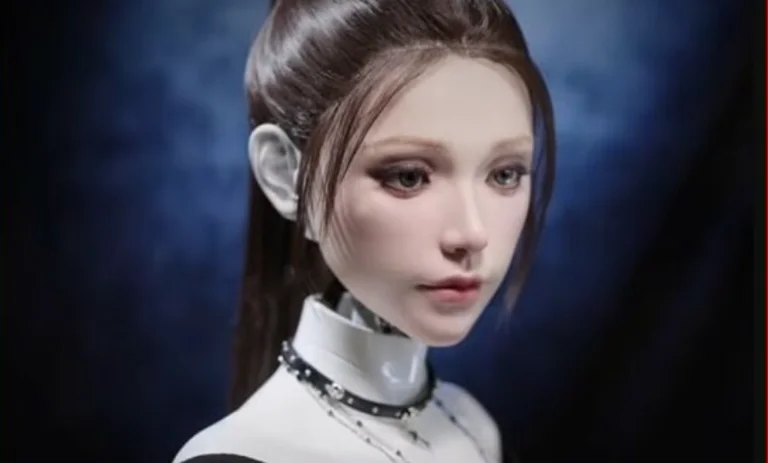
At first glance, the video might look like a scene created with computer-generated effects from a science-fiction film. But the humanoid robot shown in it is real.
Called “Origin-F1,” the robot was developed by the Chinese company AheadForm and has attracted attention for its movements and facial expressions, which are remarkably similar to those of humans.
Thanks to artificial intelligence algorithms that control facial expressions, eye movements and coordination with speech, the company aims to make interaction with the robot appear as natural as possible and avoid the so-called “uncanny valley” effect—the unsettling feeling that arises when a robot looks almost, but not quite, human.https://www.dailymail.com/embed/video/3691491.html
However, the technology comes at a high price.
According to published estimates, an Origin-F1 could cost from around $50,000 to $173,000, depending on its configuration.
Despite the price, images of the robot have sparked many reactions on social media.
One user joked that while his father was saving to buy a house, he was saving for his “dream robot girl.”
Another commented that in the future people might have “a robot girlfriend way out of their league,” while others expressed a willingness to pay large sums as soon as the device goes on sale.
26 degrees of freedom for more realistic expressions
AheadForm describes Origin-F1 as an “ultra-bionic humanoid robot for real-life interactions with people.”
On the software side, the system uses artificial intelligence algorithms to coordinate facial expressions, eye movements and speech.

Mechanically, the robot has 26 degrees of freedom, allowing it to produce even very subtle micro-expressions.
According to the company, combining bionic mechanical design with multimodal artificial intelligence creates interactions that are more natural, lifelike and capable of evolving over time.
Two appearance options
On the company’s website, Origin-F1 is currently presented in two versions.
The “Black” variant has the appearance of a female humanoid with black hair, while the “White” variant is shown with light blonde hair.
However, AheadForm claims that in the future the system could offer a much greater range of appearances and characters.
The company says it uses three-dimensional reconstruction and a type of high-precision “biomimetic skin” to reproduce virtual faces as faithfully as possible in physical form.
Eye movements amaze users
What has attracted the most attention online is the realism of the eyes and facial expressions.
On YouTube, one user wrote that the way the robot blinked was the most realistic they had ever seen in a robot.
Others praised the blinking rhythm and the side-to-side and up-and-down movement of the eyes, saying the technology seems to have moved beyond the “uncanny valley.”

One commenter called Origin-F1 a “turning point” for humanoid robotics, while others reacted humorously, calling the robot “the wife of the future.”
However, these are reactions from users online, not functions that the company has officially presented as the robot’s purpose.
The race for humanoid robots is intensifying
Origin-F1 is not the only project seeking to create robots with increasingly human-like appearances and movements.
Recently, UBTech Robotics also unveiled a new generation of humanoid robots in its Uworld U1 series, designed for interaction and long-term companionship.
These robots also use “biomimetic skin,” which is intended to imitate the appearance and feel of human skin.
The company claims that a special spinal system enables the robots to reproduce up to 90 percent of human movements.
The male and female versions are approximately 183 and 169 centimeters tall, respectively, and weigh considerably less than an average person of similar stature.

The robots are available in torso-only versions as well as full-body configurations with more advanced functions.
Prices for Uworld U1 models start at around 119,000 yuan and can reach up to 990,000 yuan for the more advanced versions.
While the release date for Origin-F1 remains unclear, the interest it has generated shows that humanoid robots are drawing ever closer to a level of realism that, until just a few years ago, seemed possible only in science-fiction films. /GazetaExpress/
Related

Technology
GTA 6 is launching this week, here are the date and details you need to know

Technology
YouTube, Facebook or TikTok? Here’s which social network Americans use most

Technology
Microsoft says its services have fully recovered after a day-long global outage

Technology
Microsoft outage paralyzes businesses, schools and government institutions around the world

Technology
Microsoft Platforms Face a Global Outage

Technology
Robot Takes on Humans in Antarctica Marathon, but Gives Up After 3 Kilometers

Technology
Google will add a dictionary to Gboard that saves words corrected during voice dictation

Technology
WhatsApp introduces “Events Home,” making it easier to organize get-togethers
Technology
Honda puts revolutionary V3 engine into production

Technology
WhatsApp tests a new feature

Technology
DokuTech 13, Kurti: Technology, the most dynamic sector of the economy

Technology
Windows 11 Gets Significantly Faster





