
Many people try to remove them using different methods, but the reason they keep coming back may be something else entirely. Many people deal with acne and blackheads, common skin problems that can occur at any age. They often cause discomfort and affect self-confidence, especially when they appear in visible areas such as the face, neck […]
Have black dots on your nose? They may not be blackheads – here’s what could be behind them
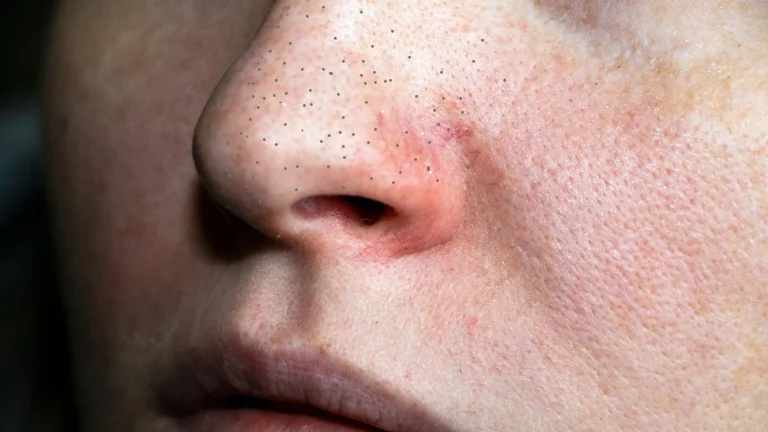
Many people try to remove them using different methods, but the reason they keep coming back may be something else entirely.
Many people deal with acne and blackheads, common skin problems that can occur at any age. They often cause discomfort and affect self-confidence, especially when they appear in visible areas such as the face, neck, or back.
Although they are most commonly associated with puberty, acne and blackheads can continue into adulthood, making skincare a long and sometimes frustrating process.
But the tiny black dots on your nose may not be blackheads at all.
If you have looked closely at the skin on your nose, you have probably noticed very small, dark or brown dots. The first reaction is usually to think they are blackheads, which form when pores become clogged with oil and dead skin cells.
However, dermatologist and researcher Dr. Neera Nathan of Massachusetts General Hospital explains that this is not always the case.
They may be sebaceous filaments
If common methods for removing blackheads have not worked, it may be something entirely normal: sebaceous filaments.
According to Dr. Nathan, these tiny dots are a normal part of the skin’s structure, and everyone has them. They are found inside pores and help transport sebum—the natural oil produced by the skin—to its surface.
Unlike blackheads, sebaceous filaments are not considered a skin problem and do not need to be removed. However, they can be more visible for some people, especially on the nose and in the T-zone of the face, Telegrafi reports.

How to make them less visible
The dermatologist mentions several ingredients that may help make them less visible.
One of them is sulfur, which is used in certain skincare products for oily and acne-prone skin. Dr. Nathan suggests applying a sulfur treatment to the problem area and leaving it on for a short time, following the product’s instructions.
Another useful ingredient is salicylic acid. It penetrates pores and helps remove excess oil and the residue that builds up inside them. Salicylic acid cleansers are often used for oily and acne-prone skin.
According to the dermatologist, another option is adapalene, a retinoid that helps normalize skin cell turnover and may improve skin texture with regular use.
However, adapalene can cause irritation, redness, or dryness, especially at first, so use should begin gradually and follow the advice of a dermatologist or pharmacist.
Why they are more visible for some people
Sebaceous filaments are a normal part of the mechanism by which the skin distributes its natural oil to the surface. They may become more visible when the sebaceous glands produce more sebum.
Oily skin can be affected by many factors, including genetics, age, environmental conditions, stress, and dietary habits.
Although not all of these factors can be changed, a gentle and regular skincare routine can help control excess oil and reduce the visibility of pores and sebaceous filaments.
It is important not to keep trying to squeeze them, as this can irritate the skin and make the pores even more visible. /Telegrafi/
Related

Women
Does your hair get staticky and lose its shape in winter? This viral method may help
Women
Three Hair Colors That Add Years and Three That Make You Look Younger

Women
A jacket that works with many styles: Practical, elegant and easy to pair

Women
Jeans with this detail look much more elegant and visually lengthen the legs

Women
What Do Women Really Want in a Relationship?

Women
Milk, vanilla and cashmere scent – the new perfume promising to become the perfect winter fragrance

Women
Hairdressers recommend this haircut for women who don’t want to spend half an hour in front of the mirror

Women
This color is outshining all the others—even the simplest outfits look expensive in it
Women
The nails dominating this fall, elegant colors are back in trend

Women
Bomber Jackets and Peplum Style – The Return of Past Trends This Winter

Women
Eye-Catching Coats: Styles for Fall 2026 and Spring 2027

Women
Messy Hair and Flushed Cheeks: Six Beauty Trends That Will Dominate Fall and Winter





