
They created Siri with an idea far bigger than an assistant that sets alarms or plays music. Nearly two decades later, its creators believe technology is finally approaching the original vision – an artificial intelligence that not only provides answers, but performs actions on the user’s behalf. Dag […]
They created Siri before Apple, but their vision has yet to be realized
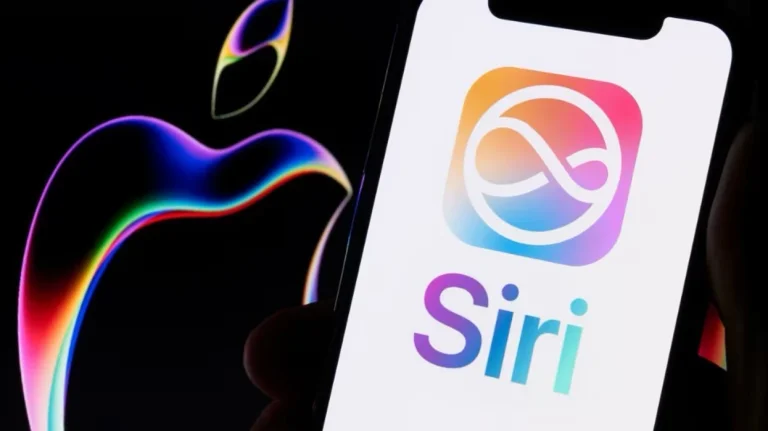
They created Siri with an idea far bigger than an assistant that sets alarms or plays music. Nearly two decades later, its creators believe technology is finally approaching the original vision – an artificial intelligence that not only provides answers, but performs actions on the user’s behalf.
Dag Kittlaus and Adam Cheyer, two of Siri’s creators, have for years been thinking about what might come after traditional search engines. Together with Tom Gruber, they founded the Siri startup in 2007, based on a concept developed by Kittlaus and Cheyer at the Stanford Research Institute.
From the beginning, their idea was not simply to create another search engine. They aimed to build a “do engine” – an engine that performs actions.
“We used to say: if you want to find a website, go to a search engine like Google. If you want to do something, go to a ‘do engine: Siri’”, Cheyer told CNN.
Apple bought Siri for more than $200 million, according to reports at the time, and introduced the assistant on the iPhone 4S in 2011.
Since then, Siri has become an integral part of the Apple ecosystem and has been integrated into billions of devices, Telegrafi reports.
However, its use by most consumers has remained relatively basic: setting alarms, playing music, sending messages or controlling smart devices.
That is expected to change with the new version of Siri, built for the age of artificial intelligence.
Apple is bringing a completely redesigned Siri as part of iOS 27. The new version of the assistant can analyze what is displayed on the iPhone screen, interact with apps and use information from the calendar, messages and other apps to provide more personal answers.
This is exactly what Kittlaus and Cheyer see as a step toward their original vision.
Both men, who are no longer involved in Siri’s development and left Apple some time after the company was acquired, believe Apple has several important advantages in the AI race.
These include the huge App Store ecosystem, the widespread use of the iPhone and Apple Watch, and Apple’s focus on privacy.
One of the most significant changes is Siri’s ability to use information stored on users’ devices.
While testing a beta version, CNN found that Siri could locate an upcoming dentist appointment using a confirmation message in the Messages app.
The assistant was also able to find more information about a band a friend had recommended in a message and save a kale salad recipe sent from Instagram to Siri, so it could be found later.
This shifts Siri from an assistant that answers general questions to a system that understands the user’s personal context and interacts with their apps.
Google, with Android, Gmail and Google Maps, has a similar advantage in this regard.
Apple is trying to use privacy as one of its main advantages over rivals such as ChatGPT and Gemini.
For AI tasks that require more computing power than the device can provide, Apple uses its Private Cloud Compute system. According to the company, only the data needed for a specific task is sent to its servers.
Apple has extended this approach to Google Cloud as well, since it uses Gemini for some of its artificial intelligence features.
This could be particularly important at a time when consumers are becoming increasingly cautious about how AI systems use personal data.
For many years, the main problem was technological. Virtual assistants such as Siri, Alexa and Google Assistant often struggled to understand naturally phrased requests. For more complex actions, users had to manually connect assistants to different apps.
Today, the situation has changed significantly. Large language models have made it easier for AI assistants to understand broad requests, perform multi-step tasks and interact with different apps.
But this is precisely where a new problem emerges – the interests of the companies that own the apps.
If users can ask Siri, Gemini or ChatGPT to buy products, book restaurants or plan trips, they may increasingly have less need to open apps such as Uber, Amazon, OpenTable or Airbnb themselves.
According to Kittlaus, companies may not be willing to let Apple change the way consumers interact with their services.
Apple said during its latest iPhone presentation that Siri AI already works with more than 300,000 apps, although this represents only a fraction of the App Store ecosystem, which had more than 2 million apps a decade ago.
Siri’s creators see this as one of the biggest challenges ahead: if AI agents become the primary intermediaries between users and online services, the traditional way the internet works could change radically.
Kittlaus also said that he left Apple after Steve Jobs’ death, because he was concerned that the vision he had shared with Jobs was not being fully understood by the company’s executives.
Nevertheless, his vision for Siri has not changed.
“That vision hasn’t changed at all. But no one has done it yet”, Kittlaus said.
And that is precisely the new race in artificial intelligence: not simply getting an answer from AI, but telling it what you want and letting the system do it itself. /Telegrafi/
Related

Technology
GTA 6 is launching this week, here are the date and details you need to know
Technology
YouTube, Facebook or TikTok? Here’s which social network Americans use most
Technology
Microsoft says its services have fully recovered after a day-long global outage

Technology
Microsoft outage paralyzes businesses, schools and government institutions around the world

Technology
Microsoft Platforms Face a Global Outage

Technology
Robot Takes on Humans in Antarctica Marathon, but Gives Up After 3 Kilometers
Technology
Google will add a dictionary to Gboard that saves words corrected during voice dictation

Technology
WhatsApp introduces “Events Home,” making it easier to organize get-togethers

Technology
Honda puts revolutionary V3 engine into production
Technology
WhatsApp tests a new feature

Technology
DokuTech 13, Kurti: Technology, the most dynamic sector of the economy

Technology
Windows 11 Gets Significantly Faster





