
They may help with surface-level pimples, but not every type of acne responds to them in the same way. You’re standing in front of the skincare products shelf, looking for something to help with pimples. There are plenty of options around: clear patches, skin-colored patches, or decorative shapes such as stars, butterflies, and hearts. Many of them promise that […]
Do pimple patches really work? Here’s what science says
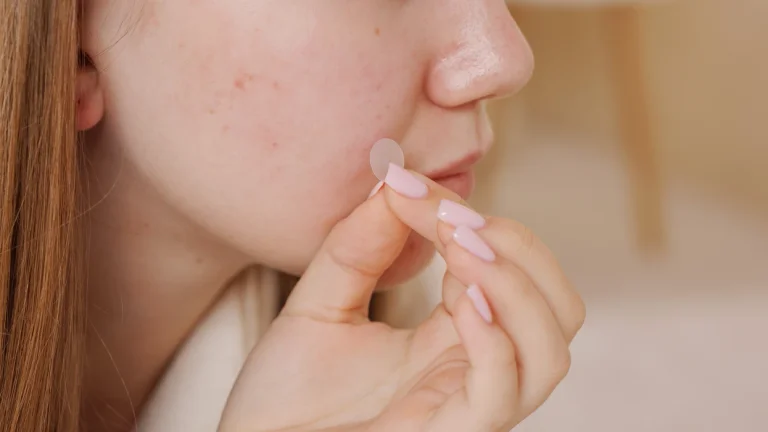
They may help with surface-level pimples, but not every type of acne responds to them in the same way.
You’re standing in front of the skincare products shelf, looking for something to help with pimples. There are plenty of options around: clear patches, skin-colored patches, or decorative shapes such as stars, butterflies, and hearts.
Many of them promise to “dry out” a pimple overnight, while social media is full of videos showing patches being removed and skin looking calmer.
But do these patches really work, and what do they actually do to the skin?
Pimples and acne are not the same thing
Dermatologists point out that a single pimple is not the same as acne.
A pimple forms when a follicle becomes clogged with oil, dead skin cells, and bacteria, causing inflammation, redness, and often a whitehead or a pus-filled tip.
Acne, on the other hand, is a chronic skin condition that recurs and can include blackheads, closed comedones, and inflammatory lesions.
What are pimple patches and how do they work?
Although they may look like a new social media trend, their technology is based on hydrocolloid dressings, developed decades ago for wound care and later adapted for acne as well.
The patch is made of hydrocolloid material that forms a kind of gel when it comes into contact with moisture.
When placed over a pimple with a visible white or yellow head, it can absorb pus, sebum, and fluid from the surface. This is why, after a few hours, the patch often turns white or cloudy.
The outer layer also protects the area from touching, picking, and dirt, reducing the risk of further irritation.
Some products also contain active ingredients such as salicylic acid, niacinamide, tea tree oil, or benzoyl peroxide, Telegrafi reports.

What does the science say?
Studies directly examining pimple patches are still relatively limited and often involve a small number of participants.
However, some early findings suggest that they may have a beneficial effect.
A study involving 41 people showed an improvement in the appearance of a pimple that had already formed and been drained within 24 hours.
Another study involving 37 participants over 10 days reported that, after two days, pimples covered with patches were about 35 percent smaller and 44 percent less inflamed than those left untreated.
By the end of the period, treated lesions were also less likely to leave dark spots after the inflammation.
Patches appear to work best on pimples that already have a white or yellow head, because their contents are close to the skin’s surface.
They are usually applied to clean, dry skin and worn for about six to eight hours or overnight.
When don’t they work?
Patches are not a universal solution.
They do not work well on deep cystic acne or painful pimples beneath the skin, because the hydrocolloid material cannot reach the deep inflammation.
For some people, the adhesive or active ingredients can cause redness, itching, or irritation.
People who are prone to post-inflammatory hyperpigmentation should be particularly careful, because additional irritation can make spots more visible and longer-lasting.
If pimples are deep, painful, leave marks, or do not improve after a few weeks, it is best to seek advice from a doctor or dermatologist.
Patches can be helpful aids for surface-level pimples, but they do not replace treatment for persistent or more severe acne.
Related

Women
Does your hair get staticky and lose its shape in winter? This viral method may help
Women
Three Hair Colors That Add Years and Three That Make You Look Younger

Women
A jacket that works with many styles: Practical, elegant and easy to pair

Women
Jeans with this detail look much more elegant and visually lengthen the legs

Women
What Do Women Really Want in a Relationship?

Women
Milk, vanilla and cashmere scent – the new perfume promising to become the perfect winter fragrance

Women
Hairdressers recommend this haircut for women who don’t want to spend half an hour in front of the mirror

Women
This color is outshining all the others—even the simplest outfits look expensive in it
Women
The nails dominating this fall, elegant colors are back in trend

Women
Bomber Jackets and Peplum Style – The Return of Past Trends This Winter

Women
Eye-Catching Coats: Styles for Fall 2026 and Spring 2027

Women
Messy Hair and Flushed Cheeks: Six Beauty Trends That Will Dominate Fall and Winter





