
At least 13 people have died after a boat carrying migrants sank off the coast of the Greek island of Crete, the BBC reports. The coast guard said it had rescued 18 people, all Sudanese nationals. Four of the survivors were taken to hospital, including a young child. Authorities said it was not yet immediately known […]
13 migrants die after boat sinks near Crete in Greece
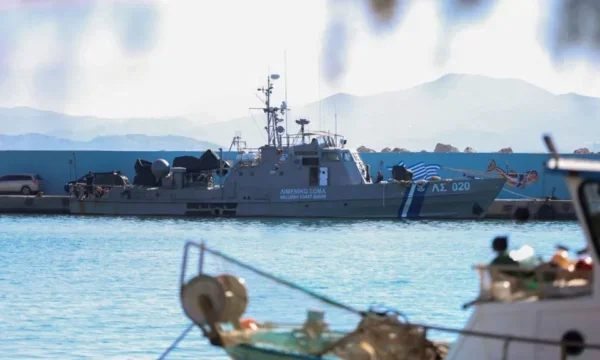
At least 13 people have died after a boat carrying migrants sank off the coast of the Greek island of Crete, the BBC reports.
The coast guard said it had rescued 18 people, all Sudanese nationals. Four of the survivors were taken to hospital, including a young child.
Authorities said it was not yet immediately known what caused the deaths, but they believe the boat had been at sea for several days and had struggled to reach shore because of strong winds.
Crete remains one of several main gateways for migrants trying to reach Europe from the Middle East and North Africa. More than 22,000 of the 86,400 people who have arrived by sea so far this year have landed on Crete alone.
An unidentified coast guard official, who spoke to the Reuters news agency on condition of anonymity, said the survivors “were shivering from the cold”.
The migrant boat was spotted by a Moroccan-flagged container ship, about 15 nautical miles (28 kilometres) off the coast of Crete.
The Greek coast guard also rescued 187 other people in three separate incidents off the coast of Greece on Monday.
According to UN data, more than 37,000 migrants have arrived in Greece so far this year, already exceeding the number who arrived throughout 2025.
The Greek government has announced plans to address the influx, including opening a temporary accommodation complex near Crete’s capital, Heraklion.
Greece was at the centre of Europe’s migration crisis in 2015-2016, when nearly one million people arrived on its islands, mostly from Turkey.
The number of arrivals later fell after border controls were tightened, but crossings from Libya have increased significantly in recent years, particularly by people fleeing conflict in Sudan and seeking better economic opportunities, including people from countries such as Bangladesh.
Related
Globe
16 people lose their lives after an incident at a factory in Turkey

Globe
Peace talks, US official: Russia and Ukraine are showing flexibility on possible territorial exchange

Globe
France raises minimum wage to over €1,500 from December 1

Globe
Ukraine talks in Abu Dhabi, Germany: Russia must be ready to negotiate seriously

Globe
France accuses Iran of cyberattacks on supermarket refrigerators, warns of sanctions at European level

Globe
CNN: US and Iran are negotiating quietly; both sides have several key demands

Globe
Europe joins Ukraine talks, meeting to be held next week

Globe
Israel on the brink of a post-Netanyahu era? Eisenkot gets mandate to form government

Globe
US strikes cargo ship in the Gulf of Oman: It attempted to break the blockade on Iran
Globe
Incident in Krakow, Poland – Prosecutors launch investigation
Globe
At least 33 killed in Saudi airstrikes in Yemen, including women and children

Globe
Bus overturns on Croatia's motorway, two people killed





