
US President Donald Trump has so far given the clearest signal that intensified diplomacy could prevent another major round of fighting with Iran, following his party’s catastrophic results in the midterm elections. Trump told CNN on Sunday that new US military strikes are “very unlikely […]
CNN: US and Iran are negotiating quietly; both sides have several key demands
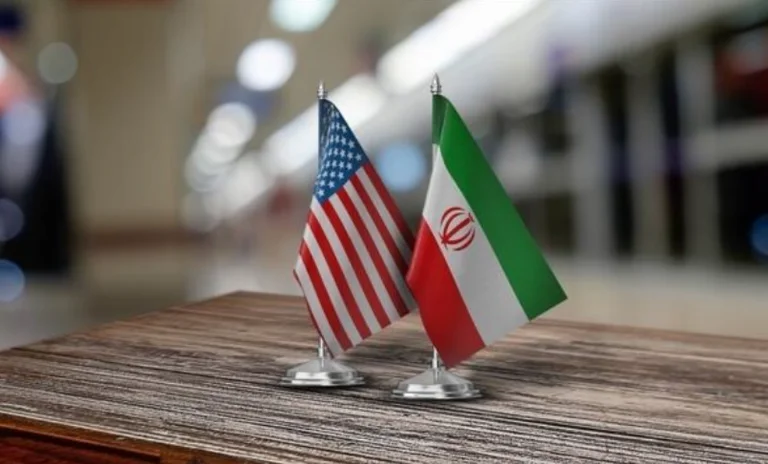
US President Donald Trump has so far given the clearest signal that intensified diplomacy could prevent another major round of fighting with Iran, following his party’s catastrophic results in the midterm elections.
Trump told CNN on Sunday that new US military strikes are “very unlikely” if Tehran makes progress toward an agreement on its nuclear program and reopening the Strait of Hormuz. He also told CBS’s “60 Minutes” that he is “not looking” to escalate the war.
Iran and the United States have been negotiating quietly on a sensitive agreement that could prevent the return of a full-scale war and pave the way for broader talks.
But hopes for an agreement are fading in Washington, where Secretary of State Marco Rubio said on Sunday that “I wouldn’t say that we’re on the cusp of a breakthrough.” Trump has also made clear that the military option remains on the table.
Both sides and Qatar, which is mediating, have revealed little about the discussions, even as diplomatic activity has accelerated since Tuesday’s midterm elections.
What has changed since the midterm elections?
The Republicans’ election losses have added another dimension to the negotiations, after Vice President JD Vance said that the war was among the reasons Republicans lost.
Trump told “60 Minutes” that he disagreed with Vance’s assessment, acknowledging that voters “didn’t like the war.” But he strongly defended the decision to attack Iran, saying that if he had to make that decision again, his answer would be “a resounding yes.”
Meanwhile, Iran has tried to use the election results to strengthen its negotiating position. “American voters have made their choice. It’s time for the White House to make its own,” Foreign Minister Abbas Araghchi said on Sunday.
Trump continues to express confidence in the US military position, while Iran has repeatedly threatened to expand the war geographically if it is attacked again.
What is being discussed?
Both sides have several key demands that, on paper, are unacceptable to the other side.
Trump wants Iran’s nuclear program eliminated, which Tehran considers a matter of national sovereignty.
Publicly, Iran is taking a defiant stance, insisting that it will not negotiate with Washington over its nuclear program or reopen the vital Strait of Hormuz unless seven preconditions are met—including ending the war on “all fronts” and lifting the naval blockade. The details have not yet been made public.
Hundreds of kilograms of enriched uranium—the material needed to produce a nuclear weapon—remain hidden somewhere in Iran. Tehran has used this stockpile as leverage in talks with the US. Reports indicate that Washington wants the uranium to be diluted or transferred to another country for safekeeping. It is not known how far the two sides have progressed on this point.
Iran has insisted that its nuclear program is for energy production, not military purposes.
For Iran, in addition to not yielding on its nuclear program or Hormuz, there are also important economic objectives.
As one of the world’s largest oil producers, Iran has found it increasingly difficult to sell crude oil on global markets because of US sanctions. Billions of dollars in Iranian assets held in foreign banks also remain frozen. Washington appears to be considering easing these restrictions, a move that could help Tehran relieve the severe economic pressure on its population amid record inflation.
Iran is also seeking compensation from the US for the killing of Supreme Leader Ali Khamenei and his senior military commanders by the US and Israel at the start of the war, in February.
Qatar is mediating between the two sides and circulating a framework document, which Washington and Tehran are revising. The process has been underway for weeks, perhaps months, but has intensified in recent days because of fears of renewed attacks.
What is holding up an agreement?
So far, neither side has been willing to back down from its demands.
Before departing on Sunday for the Group of Seven foreign ministers’ meeting in Paris, Secretary of State Marco Rubio suggested that the two sides were still far from an agreement.
“At the moment, the talks haven’t been very productive, because Iran’s demands are not just unacceptable, but in some cases outrageous, ridiculous and truly unrealistic.”
After successive rounds of open conflict, Tehran’s trust in Washington has almost disappeared. Iran has not forgotten that the conflict began while nuclear talks with the US were underway.
Iran is concerned that giving up any leverage could encourage the US and Israel to attack again, leaving it exposed and without effective negotiating tools. If Iran is attacked after opening the Strait of Hormuz and relinquishing control over its enriched uranium, it would be even more exposed and in a weaker negotiating position.
Trump is trying to balance his relationships with Arab partners and Israel—both of which see the Islamic Republic as a threat—and faces criticism if he withdraws from the war without a major concession from Iran. Tehran also wants to protect its proxies and regional allies in Lebanon, Iraq and Yemen. These militias have fought on behalf of the Islamic Republic in the region and are loyal to Tehran, but over the past three years they have faced existential threats.
In September, Iran’s allies in Yemen, the Houthi rebels, launched a surprise offensive, seizing another key maritime chokepoint in the Red Sea—the Bab al-Mandeb—and giving Tehran potential influence over another waterway. Since then, the Houthis have intensified attacks on Saudi Arabia in response to Riyadh’s military support for the Yemeni government.
The US wants Iran to have no capacity to build a nuclear weapon, including the advanced equipment that could enable it to do so.
Iran’s Arab neighbors are divided over any agreement that would give Tehran too much power and consolidate the hegemony it seeks. Iran wants to administer the Strait of Hormuz, the maritime corridor through which wealthy Arab states export most of their oil and gas. Control of this waterway would give Tehran decisive influence over what enters and leaves the region. This too would run counter to US demands: Washington wants the waterways to remain open and would not want to consolidate one of Iran’s main gains from the war.
So, will the war resume?
There have been some attacks, but both sides have played them down, which may be a sign that neither wants to derail the negotiations.
Some media outlets report that talks between the two sides have moved closer to an agreement. “The New York Times” has reported that Iran is prepared to resume nuclear negotiations.
There has been no independent confirmation, but any concession by Iran regarding its nuclear program—or even a willingness to discuss the issue—would be considered a breakthrough.
Nevertheless, despite reports of progress, the risk of a full-scale war remains real. The US still has a significant military presence in the Middle East, which could launch a major attack at Trump’s order.
Ships carrying oil and gas through the Strait of Hormuz continue to be targets of Iranian attacks.
The US is offering a reward of up to $20 million for information about Iran’s nuclear program and has established a task force aimed at preventing Tehran from using land routes to transport advanced weapons and other materials—signs that Washington is intensifying pressure rather than easing it.
Meanwhile, Iran’s hard line is being exploited by those who believe Tehran has already emerged victorious from the war with the US, calling for Trump to pay a higher price to withdraw from the conflict after his midterm election losses. If an agreement is reached by the more reform-minded Iranian leaders involved in the talks, they could face opposition at home.
In recent weeks, Iranian military commanders have intensified their warnings, claiming that Iran possesses weapons capable of hitting more targets and causing even greater damage than before.
So, even if Trump is willing to reach an agreement, it is far from clear whether Iran is willing to accept one.
Related
Globe
16 people lose their lives after an incident at a factory in Turkey
Globe
Peace talks, US official: Russia and Ukraine are showing flexibility on possible territorial exchange

Globe
France raises minimum wage to over €1,500 from December 1
Globe
Ukraine talks in Abu Dhabi, Germany: Russia must be ready to negotiate seriously
Globe
France accuses Iran of cyberattacks on supermarket refrigerators, warns of sanctions at European level
Globe
13 migrants die after boat sinks near Crete in Greece
Globe
Europe joins Ukraine talks, meeting to be held next week
Globe
Israel on the brink of a post-Netanyahu era? Eisenkot gets mandate to form government
Globe
US strikes cargo ship in the Gulf of Oman: It attempted to break the blockade on Iran

Globe
Incident in Krakow, Poland – Prosecutors launch investigation
Globe
At least 33 killed in Saudi airstrikes in Yemen, including women and children

Globe
Bus overturns on Croatia's motorway, two people killed





