
JoseSaramago was one of the most important figures in contemporary European literature, a writer who, through his novels, challenged the way people understand history, power, society and human nature itself. With a distinctive narrative style, rich in irony, allegory and philosophical reflections, he created a body of literary work that transcended Portugal’s borders and became part of the world’s literary heritage, reports KultPlus.
José Saramago, the writer who challenged the world with the power of words
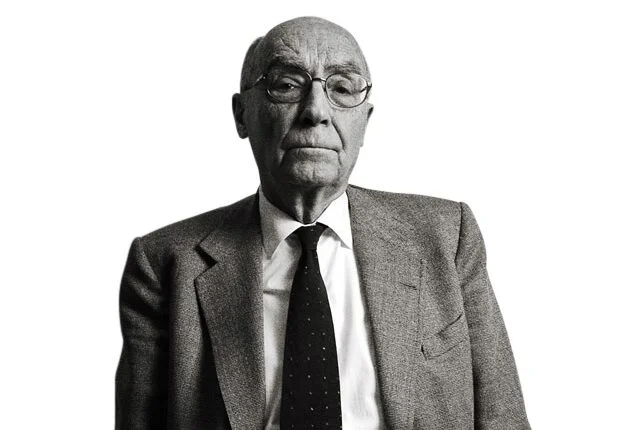
Born on November 16, 1922, in Azinhaga, Portugal, Saramago grew up in a modest farming family. His parents, José de Sousa and Maria da Piedade, had limited financial means, while the writer’s childhood was marked by his closeness to rural life and everyday hardships. The surname Saramago, which in Portuguese refers to a wild plant, was added to his name because of an administrative error when his birth was registered.
Because of his financial circumstances, he was unable to continue his higher education. He enrolled in a technical school, where he trained as a mechanic, while also beginning to develop an interest in books and literature. In the early years of his working life, he held various jobs, including mechanic, administrative clerk and journalist. These experiences, along with his direct observation of social realities, would leave their mark on his later work.
Although he published his first book, Terra do Pecado (Land of Sin), in 1947, Saramago did not immediately gain recognition as a writer. After publishing his first novel, he spent a long period away from prose, during which he devoted himself to poetry, journalism, translation and literary criticism. In the 1950s he worked for publishing houses, and later entered journalism, also holding editorial positions at several Portuguese newspapers.
An important period in his life was the era of the Estado Novo dictatorship in Portugal, when the country was ruled by the authoritarian regime of António de Oliveira Salazar. Saramago became involved in political and social life, joining the Portuguese Communist Party in 1969. Through his writing and public positions, he became a staunch critic of authoritarianism, inequality and social injustice.
After the Carnation Revolution in 1974, which brought an end to the dictatorship in Portugal, Saramago continued his work in journalism. In 1975 he was appointed deputy director of the newspaper Diário de Notícias. However, after political changes and losing his job, he decided to devote himself entirely to literature. This choice would mark the beginning of the most important period of his literary career.
In 1980 he published the novel Levantado do Chão (Raised from the Ground), a work about the lives of agricultural workers and the history of poor rural families in Portugal. The novel also marked the consolidation of his distinctive narrative style, which would characterize most of his later work.
One of the works that established his international reputation was the novel Memorial do Convento (Baltasar and Blimunda), published in 1982. Through a narrative that intertwines history, imagination and social criticism, Saramago portrays life in 18th-century Portugal, creating a story in which love, dreams and the desire for freedom confront power and religious institutions. The characters Baltasar and Blimunda remain among the best-known creations in his literary work.
In 1984 he published the novel O Ano da Morte de Ricardo Reis (The Year of the Death of Ricardo Reis), in which he brings together a character created by the Portuguese poet Fernando Pessoa and an imagined story set in Lisbon in the 1930s. Two years later, he published A Jangada de Pedra (The Stone Raft), an allegorical novel in which the Iberian Peninsula breaks away from the rest of Europe and begins drifting across the ocean. Through this fantastical idea, the author explores the identity and history of Portugal and Spain, and their relationship with the European continent.
Another important work is O Evangelho Segundo Jesus Cristo (The Gospel According to Jesus Christ), published in 1991. In this novel, Saramago reimagines the figure of Jesus Christ through a literary and human interpretation, depicting him as a character caught up in dilemmas, suffering and moral conflicts. The work sparked great controversy in Portugal, and the authorities of the time opposed it because of its content, removing it from consideration for the European Literary Prize. As a result of this decision, Saramago and his wife, the Spanish journalist Pilar del Río, moved to the island of Lanzarote, in the Canary Islands archipelago, where the writer lived until the end of his life.
The year 1995 marked another important moment in his work, with the publication of the novel Ensaio sobre a Cegueira (Blindness), one of the best-known works of contemporary literature. The story begins with a mysterious epidemic of white blindness that spreads through a city and confronts people with a reality in which social rules, morality and human dignity begin to collapse. Through this allegory, Saramago examines brutality, fear, selfishness and the fragility of civilization. The novel became one of the author’s most widely read works and was later adapted into a film.
He went on to publish other important novels, including Todos os Nomes (All the Names), A Caverna (The Cave), O Homem Duplicado (The Double), Ensaio sobre a Lucidez (Seeing), As Intermitências da Morte (Death with Interruptions) and A Viagem do Elefante (The Elephant’s Journey). In these works, the writer continued to explore themes of identity, loneliness, power, death and human relationships, often using unusual situations to reveal the contradictions of society.
What also sets Saramago apart from many other writers is his way of writing. He used long sentences, constructed dialogue without the traditional separation of individual lines, and often avoided conventional punctuation marks. This narrative approach creates an uninterrupted flow of thoughts and voices, making the reader an active participant in interpreting the text. In his prose, irony, allegory and satire intertwine with profound philosophical reflections, while ordinary events become universal questions about human existence.
The greatest international recognition for his work came in 1998, when José Saramago was awarded the Nobel Prize in Literature. The Swedish Academy recognized his ability to make complex reality comprehensible through imagination, compassion and irony. He became the first Portuguese-language writer to win the prize, bringing Portuguese literature into the international spotlight. Earlier, in 1995, he had also received the Camões Prize, the most important literary award in the Portuguese language.
After receiving the Nobel Prize, Saramago continued writing and taking part in public discussions on political, social and humanitarian issues. He remained a critical voice against wars, authoritarianism, inequality and violations of human rights. In 2007, the José Saramago Foundation was established in Lisbon, with the aim of promoting contemporary literature, human rights and environmental protection.
José Saramago died on June 18, 2010, at the age of 87, in Lanzarote, Spain. After his death, his ashes were placed in Lisbon beneath an olive tree near the headquarters of the foundation that bears his name./kultplus
Related

Arts
‘Star Wars’ and ‘James Bond’ actress found dead
Arts
The National Theatre of Kosovo’s “Romeo and Juliet” to be presented at the “Moisiu” Albanian Theatre Festival in Skopje

Arts
The film “DUA,” Kosovo’s Oscar submission, presented to the public in New York

Arts
“All About Eve,” the drama that revealed the ambition and rivalry behind the glamour of the stage

Arts
Creative Europe Opens New Calls for Artists and Cultural Professionals

Arts
“Sacrifice” fills theaters at premiere, story of five brothers moves audience to tears

Arts
This Is What the Kosovo Opera and Ballet Theatre Is Expected to Look Like

Arts
Blerta Rugova presents her first book, “RUGOVISM – The quiet revolution that begins within us”

Arts
Johnny Depp turned down the role in “Titanic” because he couldn’t read 15 pages of the script: I struggled

Arts
“Kadare’s Kosovo” exhibition opens on the 90th anniversary of the writer’s birth
Arts
“Kadare’s Kosovo,” an exhibition dedicated to the 90th anniversary of the great writer’s birth

Arts
Francophone cinema returns to Kosovo, seven days of films from five European countries and Canada





