
The “Kadare’s Kosovo” exhibition, dedicated to the 90th anniversary of the birth of the great Albanian writer Ismail Kadare, has opened at the National Library of Kosovo “Pjetër Bogdani” in Pristina, reports Ekonomia Online. The exhibition presents special materials from the writer’s life and work, including rare letters addressed to world leaders, manuscripts, publications and objects from his collection […]
“Kadare’s Kosovo” exhibition opens on the 90th anniversary of the writer’s birth
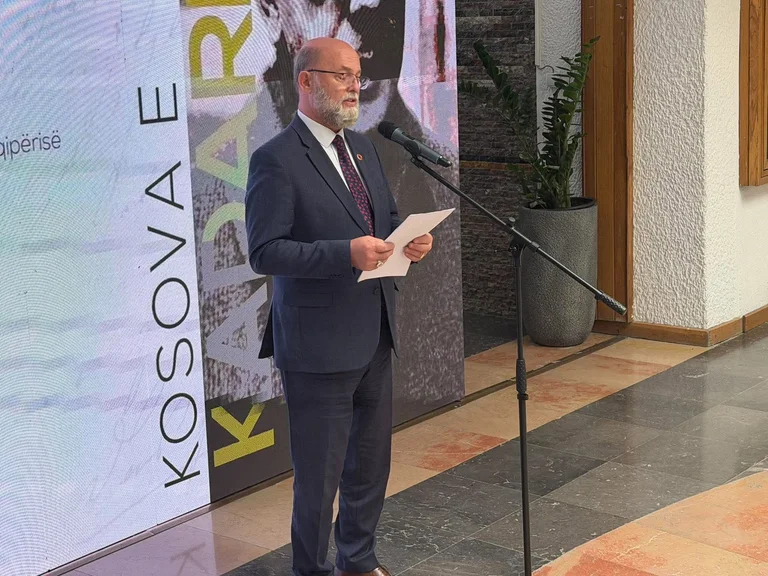
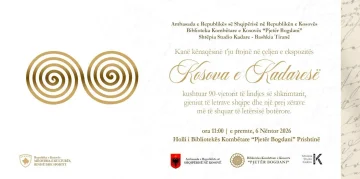
The “Kadare’s Kosovo” exhibition, dedicated to the 90th anniversary of the birth of the great Albanian writer Ismail Kadare, has opened at the National Library of Kosovo “Pjetër Bogdani” in Pristina, reports Ekonomia Online.
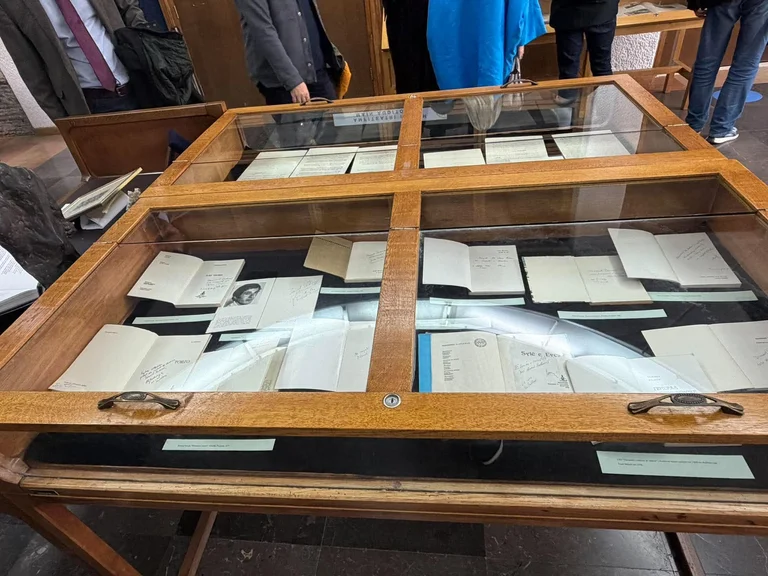
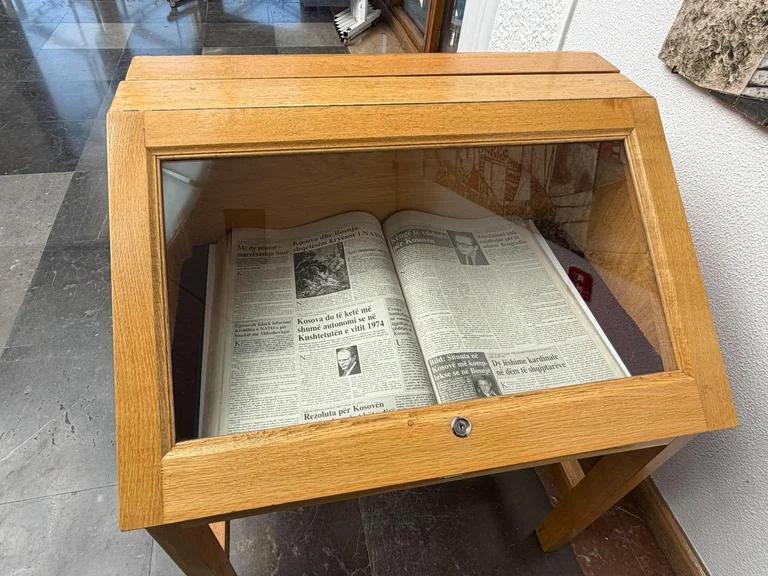
The exhibition presents special materials from the writer’s life and work, including rare letters addressed to world leaders, manuscripts, publications and objects from his personal collection.
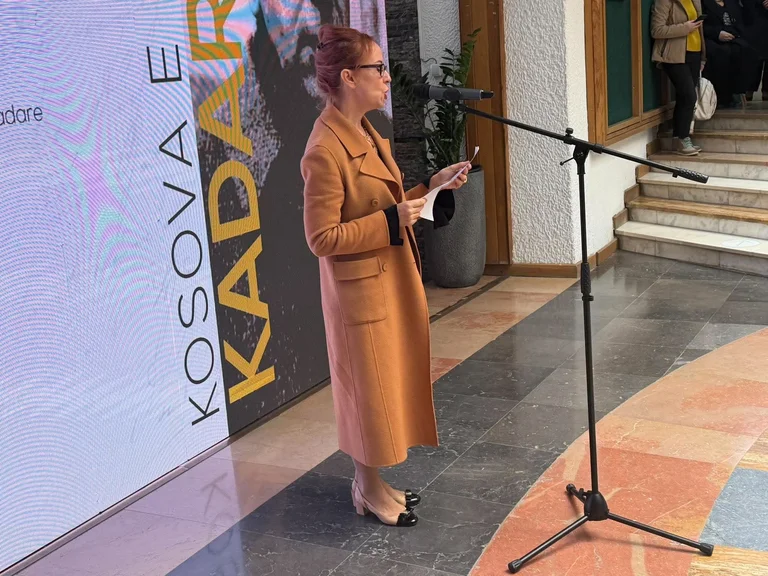
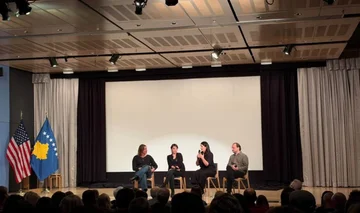
At the opening of the “Kadare’s Kosovo” exhibition, Deputy Minister of Culture and Tourism Nora Arapi Krasniqi highlighted the contribution of the writer Ismail Kadare to Albanian literature and his commitment to defending the cause of Kosovo.
She said that Kadare was more than a great writer for Kosovo, as he put his international standing and fame to work for Kosovo’s liberation and in opposition to discriminatory policies against Albanians in the former Yugoslavia.
“Ismail Kadare made Albanian literature part of world literature. Through his work, the Albanian language became known to the whole world. Meanwhile, our literature gained an important place in universal culture. For us in Kosovo, Kadare was more than a great writer. He was one of the influential intellectual figures on the international stage who put his authority and fame as an eminent writer to work for Kosovo’s liberation and to halt the cleansing and discriminatory policies against Albanians in the former Yugoslavia,” Krasniqi said.
Arapi Krasniqi stressed that the exhibition features letters, photographs, manuscripts, publications and objects from the writer’s personal collection, allowing visitors to become more familiar with his connection to Kosovo.
“The exhibition we are opening today presents letters, photographs, manuscripts, publications and objects from the writer’s personal collection, as well as from the collections of the Museum, the National Library of Kosovo and the National Library of Albania. Through them, visitors will have the opportunity to learn more about Kadare’s connection to Kosovo and the traces this connection left in his life and work,” she emphasized.
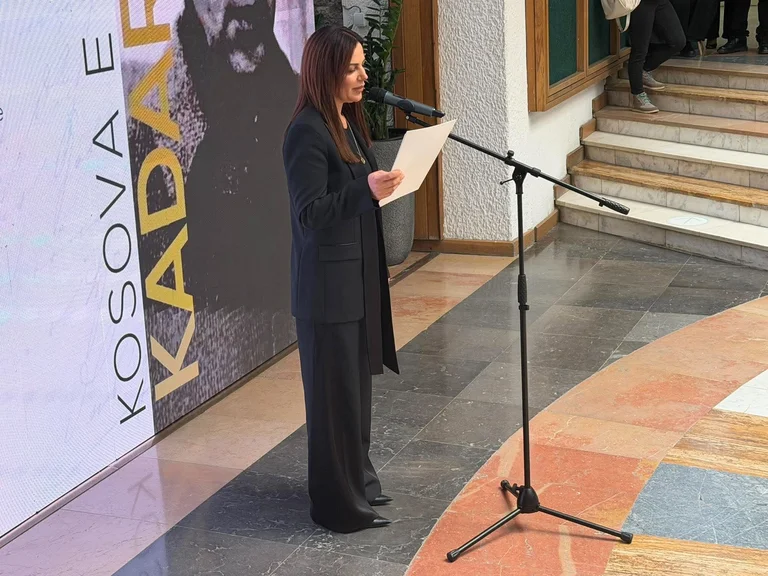
Meanwhile, the director of the National Library of Kosovo “Pjetër Bogdani,” Blerina Rogova Gaxha, at the opening of the “Kadare’s Kosovo” exhibition, praised the contribution of the writer Ismail Kadare to Albanian and world literature.
She said Kadare belongs to the rare category of writers who created a work of universal scope, intertwining history, culture, memory and the human condition.
“There are writers who create literary works and writings, and writers who, in solitude, break through this literary universe. Kadare belongs to this rare category. He is the novelist who created a great text in a great world, in which he tied together Albanian reality, history, culture and ethnicity to create a system of its own. To understand, one must not close one’s eyes; one must read. The image truly is knowledge. Kadare’s work invites us to discover it,” Rugova said.
Albania’s ambassador to Kosovo, Petrit Malaj, at the opening of the “Kadare’s Kosovo” exhibition, dedicated to the 90th anniversary of the birth of the writer Ismail Kadare, praised his connection to Kosovo and his contribution to world literature.
Malaj said Kadare belongs to the rare category of creators who managed to transcend the time and borders of their own country, making the Albanian language part of great world literature.
“Ismail Kadare belongs to that rare category of creators who manage to transcend the time and borders of their country. Through the power of words, he made the Albanian language part of great world literature and the historical experience of Albanians part of universal memory,” Malaj added.
He stressed that Kosovo was not a distant reality or simply a literary subject for Kadare, but part of his historical consciousness and intellectual responsibility.
According to him, Kosovo was present in Kadare’s creative work and public engagement as a matter of dignity, freedom and identity.
“Within this belonging, Kosovo holds a special place. For Kadare, it was not a distant reality, or simply a literary subject. It was part of his historical consciousness and intellectual responsibility. In his creative work, positions and public engagement, Kosovo was present as a matter of dignity, freedom and identity. He was among the voices that helped convey the truth about Kosovo beyond its borders, demonstrating that the freedom and dignity of a people can never be separated from one another,” he emphasized.
The daughter of the writer Ismail Kadare, Besiana Kadare, at the opening of the “Kadare’s Kosovo” exhibition, recounted her father’s connection to Kosovo, which, she said, began in 1966, when the young Albanian poet was sent into exile in Kosovo.
She said Kadare wrote to Kosovo through poems, novels, letters addressed to presidents and the Pope, articles in the world press and interviews.
“Kadare wrote to Kosovo in verse, then with a novel, then with letters addressed to presidents and the Pope, with articles in the world press, with interviews, with questions sent from beyond the bars of a prison. And finally, with a diary,” Kadare said.
Besiana Kadare also recalled her father’s commitment during the years of the war in Kosovo, mentioning the letters he had sent in 1991 to the presidents of the United States, France and Czechoslovakia, as well as to Pope John Paul II, warning them of the danger of a massacre against Albanians.
“In September 1991, from Paris, he sent letters to Pope John Paul II and three presidents: Bush, Mitterrand and Havel. He wrote to them that half of the Albanian nation had escaped dictatorship, while the other half continued to suffer under one of the most brutal dictatorships the world had ever known. And he warned them: a bloody massacre was being prepared against the Albanians,” she said.
She mentioned Kadare’s visit to Pristina in 1980, after the publication of his works in ten volumes by the “Rilindja” publishing house.
Kadare also recalled her father’s response after the 1981 demonstrations, as well as the work “The Wedding Procession Has Frozen,” through which, she said, the voices of Kosovo’s students were carried beyond its borders.
“In the autumn of 1980, the ‘Rilindja’ publishing house published his works in 10 volumes, and he came here. Pristina welcomed him as its own son. The spring that followed was cold: Kosovo’s students took to the streets and were brutally suppressed.
He wrote: ‘The Wedding Procession Has Frozen.’ The book was also published in French and English, and the cries of those students thus crossed the borders that sought to silence them,” Kadare said.
She also recalled that in 2023 Kosovo granted Ismail Kadare citizenship, saying that the man who had once seen Kosovo only from the sky had become its citizen.
“In 2023, Kosovo granted my father citizenship; the man who had once seen it only from the sky became its citizen. When he departed this world, Kosovo mourned.
For nearly 60 years, Kadare wrote to Kosovo. Today, his letters have reached their rightful destination, here in the home of the Albanian book. Once, a funeral brought us together; today, his work brings us together,” she emphasized.
Related
Arts
José Saramago, the writer who challenged the world with the power of words
Arts
‘Star Wars’ and ‘James Bond’ actress found dead
Arts
The National Theatre of Kosovo’s “Romeo and Juliet” to be presented at the “Moisiu” Albanian Theatre Festival in Skopje
Arts
The film “DUA,” Kosovo’s Oscar submission, presented to the public in New York
Arts
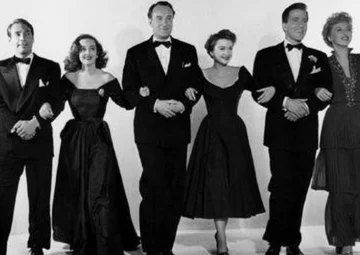
“All About Eve,” the drama that revealed the ambition and rivalry behind the glamour of the stage
Arts
Creative Europe Opens New Calls for Artists and Cultural Professionals
Arts
“Sacrifice” fills theaters at premiere, story of five brothers moves audience to tears

Arts
This Is What the Kosovo Opera and Ballet Theatre Is Expected to Look Like

Arts
Blerta Rugova presents her first book, “RUGOVISM – The quiet revolution that begins within us”

Arts
Johnny Depp turned down the role in “Titanic” because he couldn’t read 15 pages of the script: I struggled
Arts
“Kadare’s Kosovo,” an exhibition dedicated to the 90th anniversary of the great writer’s birth

Arts
Francophone cinema returns to Kosovo, seven days of films from five European countries and Canada





