
The Ministry of Innovation and Entrepreneurship was necessary and was not created just because someone felt like it. That is what the head of this new ministry, Besim Beqaj, says in an interview with Ekonomia Online. According to him, Sweden, which has such a ministry, served as the model for its creation. […]
Beqaj: Ministry of Innovation was created following Sweden’s model and will create jobs
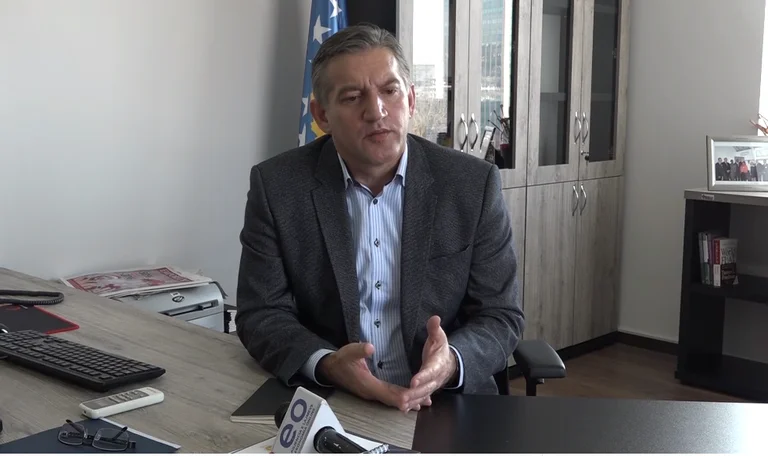
The Ministry of Innovation and Entrepreneurship was necessary and was not created just because someone felt like it.
That is what the head of this new ministry, Besim Beqaj, says in an interview with Ekonomia Online. According to him, Sweden, which has such a ministry, served as the model for its creation.
Beqaj believes that this ministry will contribute to development and the creation of new jobs. Among other things, there are plans to establish innovation centers, initially in the four largest municipalities: Pristina, Prizren, Mitrovica and Peja, which will serve as business incubators.
The Ministry of Innovation and Entrepreneurship (MIN) currently has only 8 employees and several external advisers. But it has a rather impressive budget—10 million euros.
“At the moment, we do not have the full number of staff. We now have an approved budget for 2018; it is around 10 million euros. This budget provides for the staff recruitment process to begin within a certain period. There will be a total of 52 employees during 2018. So, it will not be a large ministry,” Beqaj says.
“Our mission is to change the concept of the economy in Kosovo; so that it is not understood that only the tangible economy is an important element, but that the virtual economy and the digital economy are also included, enabling our products, created by young people who have the knowledge and ideas to improve the process, to have economic effects and increase the number of jobs,” he said.
Responding to some criticism about the large number of ministries, Beqaj says that the Ministry of Innovation and Entrepreneurship was necessary.
“We have looked at different models around the world; Sweden is our model, as it has such a ministry. If we analyze Kosovo, we will see that companies engaged in e-commerce—that is, online activities and sales—such as ‘Gjirafa’ and other companies, are growing eightfold within a year, and this is a very important instrument showing that the state should engage in innovation,” he said.
He said that this ministry has a broad scope of activity. “At the national level, the ministry will work on creating policies in the field of innovation and entrepreneurship, developing legislation, coordinating innovation across government, and coordinating with donors in the fields of innovation and entrepreneurship. Here, we are always dealing with innovation that has positive effects on the economy,” Beqaj said.
As for the first 100 days, he said that it had been a period of institutional consolidation, because, according to him, establishing an institution is not easy.
“During these three months, we have defined the ministry’s scope of activity; established the National Council for Entrepreneurship and Innovation; drafted the internal regulation; prepared the budget; and drawn up the operational plan for 2018. In 2018, we will begin with a basic structure of people in the ministry who have the necessary knowledge.”
“Furthermore, we have communicated with many donors and with the private sector during this period. It is worth noting that external advisers joined the ministry on its very first day. So, we are talking about a structure of people who communicate with businesses every day. It has been a period of institutional consolidation. Establishing an institution is not easy,” Beqaj said.
He explained that the National Council for Innovation and Entrepreneurship will have an advisory role.
“The Council is envisaged in the government’s work plan for next year, and, given the powers the ministry has, the Council’s role is advisory and horizontal within the government. We wanted the National Innovation Council to be a place where each government policy is discussed, where every step in the field of fiscal policy is debated, and where every area requiring investment is discussed, so that we can then provide the government with guidance for such actions.”
Beqaj told Ekonomia Online that 95% of this ministry’s budget will go toward subsidies and capital investments.
“Of the budget of nearly 10 million euros, 9.1 million is for transfer subsidies and capital investments; that is, over 95% of the budget goes to this segment. More than 7 million is allocated solely to transfer subsidies, which means that we will also cover training and education, legal infrastructure, and legal preparation.”
“In the strategy we plan to develop in 2018, we will also include support for innovators, support for startups, and, naturally, support for existing businesses; we are talking about direct support. The remaining two million are for capital investments. We will conduct research, or a feasibility study, on innovation centers and the need for innovation centers,” Beqaj said.
He said he was ready to accept students who wish to do internships at his ministry.
“Students who come to spend a period doing an internship at the Ministry of Innovation are always welcome; we do this without any problem. But I believe the best internship for students is for us to connect with businesses, visit businesses, analyze their work, and become part of productive work in marketing, services, production and technology.”
Beqaj went on to explain the plans to establish innovation and entrepreneurship centers, initially in four municipalities: Pristina, Prizren, Mitrovica and Peja. He says these centers will serve as business incubators.
“When we talk about the first stage of incubation, this is still at the idea stage, and that idea needs to be presented and discussed with people; it needs to be tested to see whether it works or not. From the pre-incubation stage, these centers will give businesses that are established the opportunity to move into incubators, where they will also have the opportunity to receive mentoring, advice, marketing support and other forms of assistance. Then we will move on to the commercial stage, including as start-ups that are registered, and we believe that they will then enter the labor market,” says Besim Beqaj in this interview.
Related
Economy
Ymeri: Government measures on electricity will not solve the situation
Economy
GAP: 87% of Kosovo’s budget expenditures contributed to the Sustainable Development Goals during 2021–2025
Economy
Government links payroll and human resources systems; €8.9 million from the EU expected to be released
Economy
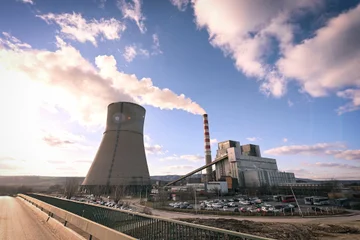
Government says electricity supply is also at risk due to the failure to complete work on Unit B1 on time; project funded by the EU

Economy
Oil prices fall again on international exchanges; in Kosovo, the decrease is being reflected slowly
Economy
Shahini: Investors are becoming more cautious, while Albania risks postponing new investments
Economy
Hoti: The government has apparently stopped electricity imports from Serbia – can something be stopped that, according to government officials, did not exist?
Economy
Tahiri to the Government: Even after 6 years, do you have a plan to start building a new power plant?
Economy
Hoti: During VV’s government, economic growth was lower and inflation higher
Economy
Kraki slams the Government: So we’ve bought electricity from Serbia and still ended up without power — failure twice over
Economy
Rizvanolli explains reasons for decision to ban energy trading with Serbian companies
Economy
Ramadani: The Government admitted it plundered the budget through electricity trading with Serbia





