
THE CASTLE OF DARDANA (KULINA OR GRADISHA) Our centuries-old history once again shows us the creation of our cultural heritage as an inalienable value of our history. Research conducted at various sites throughout Kosovo presents a true picture of our cultural, religious, social and economic life in the country. Among the places that leave a mark […]
Castles – The Historical Identification and Communication of Our People Through the Centuries
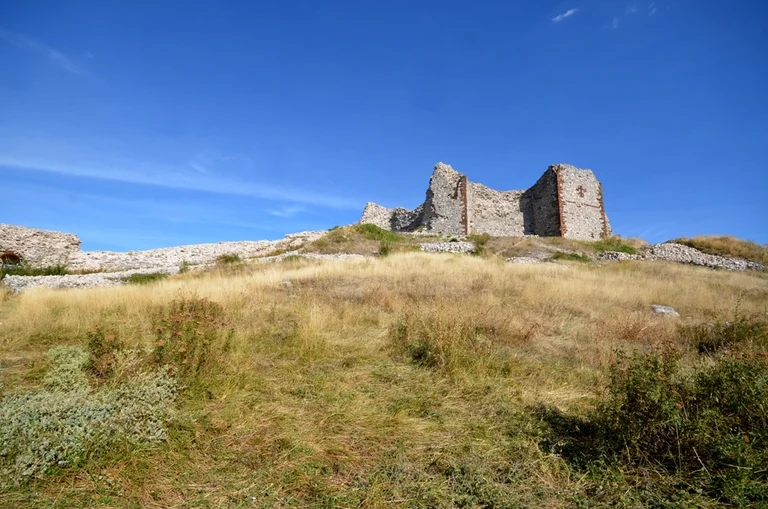
THE CASTLE OF DARDANA (KULINA OR GRADISHA)
Our centuries-old history once again shows us the creation of our cultural heritage as an inalienable value of our history. Research conducted at various sites throughout Kosovo presents a true picture of our cultural, religious, social and economic life in the country. Among the places that leave a mark on our history is Dardana (formerly Kamenica). Located in the eastern part of Kosovo, the city of Dardana is a history in itself. On a hill in the city, through which the city's river also flows, stands THE CASTLE OF DARDANA – KULINA OR GRADISHA. This castle is believed to have been discovered near Bujanoc and Vranjë, specifically in the village of Busavatë. Based on the archaeological materials and finds made in this area, the village of Busavatë dates back to the Paleolithic period. Based on scientific evidence (finds), the Castle of Dardana was built in the second century AD. At the same time, the STELLA plaque was discovered—a stone tombstone. Some other research conducted recently stated that the Castle of Dardana has a history spanning more than 1,400 years. In addition to the Castle, a cave believed to be over 1,400 years old was also discovered in this village. This once again attests to the multicultural history of our country.
THE CASTLE OF PRIZREN
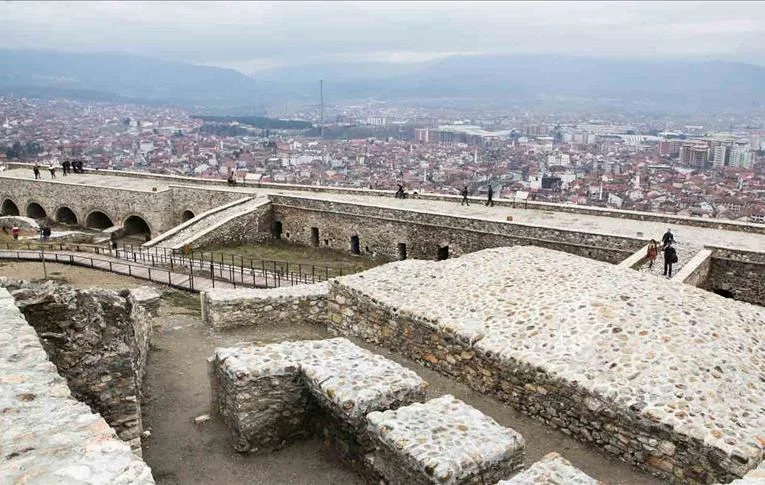
The Castle of Prizren is a cultural heritage monument in Prizren. This structure reflects our national and cultural identity in the country. This monument is considered the symbol of the city and an important element in Kosovo's cultural identity. The Castle of Prizren was built on a high hill, in a picturesque setting and in an exceptionally strategic position. It rises above the city as well as over the deep valley of the Lumbardhi River and the Dukagjin Plain. Its origins (the Castle) can be traced to the earliest period of civilization in this region, in prehistory, with continuous development during the Byzantine and Ottoman periods. During the Ottoman occupation, the Castle was expanded to reinforce and build its walls, and was furnished with other structures serving various purposes, such as hammams and mosques. This structure also served military needs. Architecturally, the Castle is divided into 3 complexes: 1. Upper City – Acropolis. 2. Lower City and 3. Southern City. Initially, this structure was used exclusively as a castle until 1912. The Castle of Prizren encompasses an important part of our history in general. Its geographical position, its dominant location above the city, the highly attractive natural landscape, and its carefully considered architectural layout make this a very substantial structure of undeniable historical, touristic and archaeological value. In conclusion, we can say that the Castle of Prizren is one of the most interesting sites for historical and cultural research in the country. In 2008, the Castle was restored and conserved, and its doors were opened to promote historical values, cultural tourism, interfaith values and architecture in the territory of Kosovo.
THE CASTLE OF MITROVICA
Our centuries-old history has also brought our multicultural heritage to light. As such, our heritage has added cultural and historical colors to our lives. Among these is the Castle of Mitrovica. According to historical evidence, the castle in question was built around 1009–1007. According to oral tradition, the Castle of Mitrovica was built by the Dardanian tribe, and according to this legend, there was an old, magical tree here. It was believed that before going to war, the Dardanian tribe would come here and pray to this tree (place of worship). The legend also says that the tree would reveal whether the war would be won or lost. According to the legend, an old woman lived near this tree. It was said that she had severe facial injuries, and no one had been able to look her straight in the eye. It was thought that the house, together with the tree located there, belonged to this woman. However, this old tree is considered to have been some kind of Dardanian oracle. In 1200, terrible wars took place at the Castle of Mitrovica, involving the Byzantine Empire, and ended in fatalities. However, in the 1500s, Mitrovica became an important center for the Ottoman Empire, considered a key part of the Balkans. From this part of Kosovo, one could see Serbia, Montenegro and the Sanjak of Kosovo. From antiquity to the present day, Mitrovica has been a connecting bridge not only culturally and socially, but also economically and religiously. Until the end of the last war in Kosovo, all cultural sites in general and castles in particular were under the supervision of Kosovo's provincial institutions. Under Serbian occupation and following the end of the war in Kosovo, the Castle of Mitrovica was appropriated by the Serbs, who invoked their false myth. From then on, this castle came to be called the Castle of Zvečan. Meanwhile, many Serbian archaeologists visit this cultural monument, translate all the material concerning Mitrovica's heritage, and falsely gather evidence about the sites and provide various funding, in order to claim a rich heritage of their own.
THE CASTLE OF ARTANA
Built between the 13th and 14th centuries, the Castle of Artana (formerly Novo Brdo) is located on a mountain between the settlements of Përlepnicë and Krivajekë. It is a cultural monument in Kosovo. Based on historical sources and cultural statistics, Artana (formerly Novo Brdo) was mentioned in the first decade of the 14th century under the name Nuvo-Monte. Later, it also came to be known as the Ruins of the Medieval Castle. The settlement of Artana lies 35 km west of the city of Gjilan and 39 km southeast of Prishtina. This cultural monument served a defensive function during various periods of occupation. As such, it remains a cultural monument. The Castle of Artana is a fortification. As a structure, it consists of two parts referred to as castles: the Upper Castle and the Lower Castle. The upper castle has 6 towers. The western tower and the eastern tower. Both towers have rectangular bases, while the others have square bases and shapes. Their area is 0.05 hectares. The upper castle is accessible only from the eastern side. On its other sides, the hill slopes down steeply toward the valley. Also, on the eastern side, the terrain gradually rises, leading to another, smaller hill on the upper plateau. The upper castle has 6 towers. The western tower and the eastern tower. Both towers have rectangular bases, while the others have square bases and shapes. Their area is 0.05 hectares. The upper castle is accessible only from the eastern side. On its other sides, the hill slopes down steeply toward the valley. Also, on the eastern side, the terrain gradually rises, leading to another, smaller hill on the upper plateau. The ruins of a large church are located on this plateau. It is assumed that this church is of the cathedral type and, according to historical accounts, dates from antiquity. After the end of the war in Kosovo, the Castle of Artana was restored and placed under UNESCO protection.
THE CASTLE OF KORISHË
Archaeological work carried out at sites in the village of Korishë (5 km from Prizren) also uncovered the castle of this village. The Castle of Korishë is believed to have been built in the 5th–6th centuries. However, this archaeological work is also linked to the site of the Early Christian church of Saint Peter, which is otherwise known as the MIDDLE BRONZE AGE. At the site of the Castle of Korishë, fragments were found, including various vessels, amphorae, pithoi and jugs. All these finds date back to antiquity. The ruins of the Castle of Korishë play an important role in our national history. Research conducted on the Castle of Korishë yielded the following information: its elevation is 728 meters, and the Castle is located on the southern side of the village. It is believed that the Early Christian Catholic Church of Saint Peter was also built during the period when the village castle was constructed.
THE CASTLE OF POGRAGJË
Gjilan is one of the most important cities in Kosovo. Cultural and historical values are interwoven throughout this area. The Castle of Pogragjë also plays an important role and is one of the cultural structures in this city. The Castle of Pogragjë is located 10 km southeast of Gjilan. The Castle of Pogragjë has particular historical and scientific significance. It was built in 300–400. It is believed that coins such as those of Otacilia Severa (246–249) were also found at this site. After wars and various earthquakes in 518, the Castle of Pogragjë was rebuilt by Emperor Justinian in 527–565. The Castle of Pogragjë belongs to the City-Castle type of construction. Therefore, many historians call this structure an “Early Roman/Byzantine Castle.” The structure in question is of the hilltop type. The Castle of Pogragjë has the following architectural dimensions: its height reaches 13 m, and its walls are built to a height of 44 m. It also has several watchtowers. At present, work is underway to clear vegetation from the walls of this cultural structure. This is being done appropriately and under suitable conditions, specifically in the Morava e Binçës Valley. During the archaeological work carried out at this site, gold coins, arrows and various archaeological objects were found.
The Castle of Pogragjë consists of many components: the first and second perimeter walls. There are also three quadrilateral watchtowers, located on the second wall. The walls are 11.40 m high and 1.80 m thick. It is worth noting that the Central Tower is the best-preserved structure and has endured through the centuries. Unlike the other parts, which are partially destroyed, only the western part of the Castle of Pogragjë remains undestroyed. The southern walls of the central tower are also part of the Castle walls. The main tower is located inside the second perimeter wall. Together with the other three towers, attached one after another, they cover an area of 12.70 ares. The three towers visible on the final perimeter wall usually served to strengthen the citadel in the event of an enemy attack. They also served as watchtowers. The towers are positioned at three locations – corners: southwest, northwest and northeast. Meanwhile, in the southeast corner there is a defensive channel, in front of which stands a natural rock. The three towers of the second perimeter wall have quadrilateral ground plans. This is a result of the terrain's configuration, in contrast to the Central Tower, which has a square base.
THE CASTLE OF VUSHTRRI
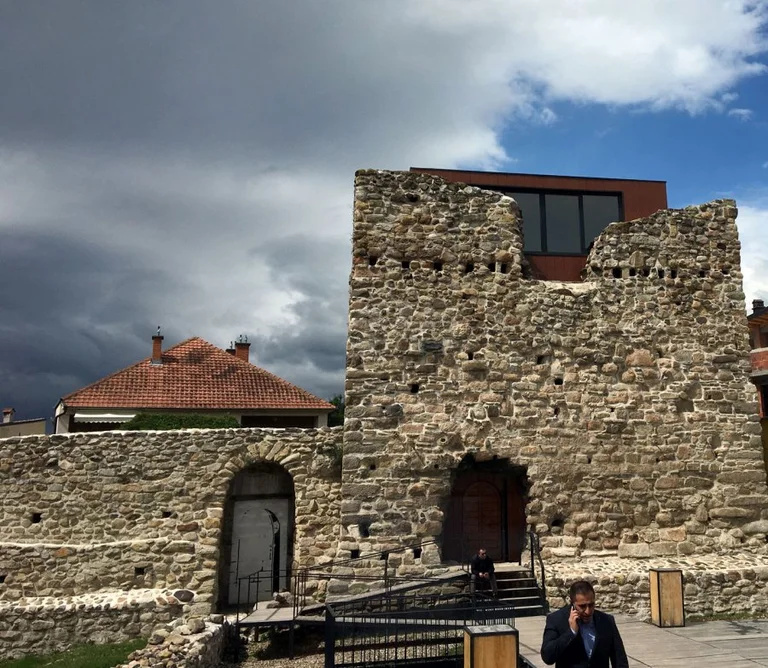
The Castle of Vushtrri was built in the 13th century. The castle in question is located in the center of the city of Vushtrri, which shows that this structure is truly ancient. The history of the Castle of Vushtrri is also discussed in many historical documents. Among other things, the geographer Evliya Çelebi explains in the 17th century that, upon the Ottoman Empire's arrival in Kosovo, Sultan Murad I destroyed the Castle after conquering Kosovo. However, the Castle was rebuilt and has survived to the present day. Various opinions and ideas have been put forward about when this castle was built. According to Albanian historians, the Castle of Vushtrri was built during the Illyrian-Dardanian period. Other thinkers point out that the Castle of Vushtrri was built in the 7th century by the Byzantine emperor Justinian. All these conclusions were based on the foundations discovered in 1980–1981. Initially, the Castle served as an arms depot and a prison, and later was used for other purposes as well. With the arrival of the Ottoman Empire and the Ottoman army's advance into our lands in general, the Castle of Vushtrri passed into the hands of Fatih Sultan Mehmed in 1455. During Ottoman rule in Kosovo, particularly in Vushtrri, the castle in question suffered extensive damage. However, it was rebuilt for the needs of the Ottoman army. At the time it was built, the geographical position of the Castle of Vushtrri played a very important economic and religious role. It was used for the needs of Ottoman soldiers. In 1918–1922, the Castle was used as a prison. During 1935–1944, this structure was used as a cowshed by Shaban Mulla Gërguri. With the arrival of the partisans, and after their departure, the Castle was used as a depot for war debris. In 1955–1958, the Castle of Vushtrri was used for training. In 1960, this structure served as a cinema. The southern side of the Castle, where the film projector booth was located, was covered with a roof.
The Castle's fortification system has a rectangular ground plan. It consists of two parts: a two-storey tower to the east and perimeter walls to the west. The Castle's construction is as follows: it was built from sandstone and river stones bonded with lime mortar. In addition to the ruins of the defensive parapets, which are in a deplorable state, there is also a two-storey tower.
The Castle covers an area of 1,100 square meters. The walls reach a height of 8 meters, and are up to 2 meters wide. The Castle also had drainage pipes, which served to carry away waste and water. It is worth noting that during archaeological excavations, pipes with a thickness of 40 cm were also found. These pipes carried water from the Castle's fountain, or from the Castle itself. There are also several legends about the Castle of Vushtrri. One of them says that inside the Castle there was a cavern that offered protection in case of danger, when the Sitnica River overflowed its banks. In many of the Castle's walls, pairs of stones can be seen set on top of a stone slab; archaeologists have yet to determine what these stones represent. Metal parts can still be seen on the Castle's outer walls, where curtains were hung for summer film screenings. Until 1962, the Castle of Vushtrri was used by residents for various activities. During the communist period, in the 1970s, emergency intervention work was carried out on this Castle. The work was done on the Castle's southern wall (the side facing the bazaar) and the walls facing the main road, in order to protect residents from falling stones. Currently, the Castle of Vushtrri serves as a destination for many local and foreign visitors.
Related
Arts
José Saramago, the writer who challenged the world with the power of words

Arts
‘Star Wars’ and ‘James Bond’ actress found dead
Arts
The National Theatre of Kosovo’s “Romeo and Juliet” to be presented at the “Moisiu” Albanian Theatre Festival in Skopje
Arts
The film “DUA,” Kosovo’s Oscar submission, presented to the public in New York
Arts
“All About Eve,” the drama that revealed the ambition and rivalry behind the glamour of the stage

Arts
Creative Europe Opens New Calls for Artists and Cultural Professionals

Arts
“Sacrifice” fills theaters at premiere, story of five brothers moves audience to tears
Arts
This Is What the Kosovo Opera and Ballet Theatre Is Expected to Look Like

Arts
Blerta Rugova presents her first book, “RUGOVISM – The quiet revolution that begins within us”

Arts
Johnny Depp turned down the role in “Titanic” because he couldn’t read 15 pages of the script: I struggled
Arts
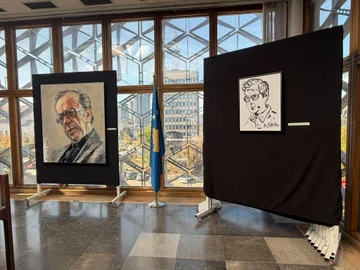
“Kadare’s Kosovo” exhibition opens on the 90th anniversary of the writer’s birth
Arts
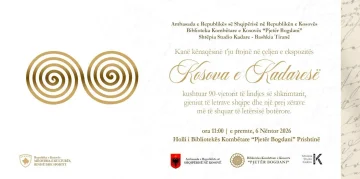
“Kadare’s Kosovo,” an exhibition dedicated to the 90th anniversary of the great writer’s birth





