
The German historian Peter Bartl, from the University of Munich, has conducted historical research and studies on Albania for decades, including, most recently, “Albania Sacra,” about which he says: “I spent a very long time in the Vatican archives in Rome, and the study comes from there, based on church archival documents that contain a great deal about not only the ecclesiastical but also the secular history of the Albanians…”
“Turkish rule was portrayed as Albania’s darkest era, which is not entirely fair”
The German historian Peter Bartl, from the University of Munich, has conducted historical research and studies on Albania for decades, including, most recently, “Albania Sacra,” about which he says: “I spent a very long time in the Vatican archives in Rome, and the study comes from there, based on church archival documents that contain a great deal about not only the ecclesiastical but also the secular history of the Albanians…”
In an interview with Germany’s DW radio, Bartl is asked, among other things, about revisions to Albanian history and whether anything needs to be improved.
Bartl, who was honored in Tirana with the “Medal of Gratitude” by the President, says, among other things:
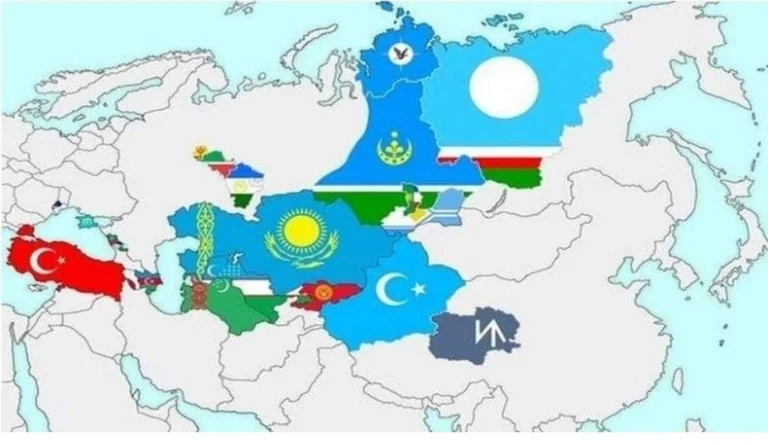
“For example, Turkish rule was portrayed during communist rule, as it had been before, as Albania’s darkest era, which is not entirely fair, and efforts are being made to correct this. An occupation that lasts 450 years is no longer an occupation. Albanians were an integral part of the Ottoman Empire. They also had their own part in Ottoman history.
This representation was considerable in proportion to the size of the Albanian population. More than 30 grand viziers were of Albanian origin. Albanians were also strongly represented in the Ottoman army. They undoubtedly played a role, and in my opinion it is wrong to erase these 450 years from Albania’s history and act as if Albanians did nothing but shake off Turkish rule. That was only partly the case.”
But how did we arrive at what Bartl calls “considerable representation”?
The book entitled “The Chronicles of Tursun Bey” presents, for the first time in Albanian, what happened in the Balkans and Albania in the early period of Ottoman rule (the 15th century), from the perspective of the empire’s official literature.
The author recounts events he witnessed firsthand, and his testimony refutes the thesis held by some European historiography that the conversion of the Balkan peoples to Islam was motivated by pragmatism.
In fact, severe violence was used. Here are some excerpts from the book published by DITA:
“…The reason for this second campaign in Albania was that the Albanian race had become such that disobedience, stubbornness, rebellion, and arrogance had taken root in its character.
(…) Those swine submitted and accepted the chain only out of terror of the Sovereign’s bloodied sword.
(…) Then the order was given to bring those infidel brutes to obedience. For this reason, at every stopping place they brought before the victorious Sovereign the males bound in chains, whom the brave and agile warriors of Islam executed with a single stroke of the sword.
(….) At some stops, as many as three thousand, four thousand, or seven thousand infidels were put to the sword. From the many corpses, deep valleys now looked like hills.
(…) All their boys and girls were captured and made prisoners, while the adult males were gathered and bound in chains.
(…) Driven by fear, the infidels who had survived agreed to become submissive Ottoman subjects and pay the jizya prescribed by Sharia, as well as the customary taxes.”
Related
Arts
José Saramago, the writer who challenged the world with the power of words
Arts
‘Star Wars’ and ‘James Bond’ actress found dead
Arts
The National Theatre of Kosovo’s “Romeo and Juliet” to be presented at the “Moisiu” Albanian Theatre Festival in Skopje
Arts
The film “DUA,” Kosovo’s Oscar submission, presented to the public in New York
Arts
“All About Eve,” the drama that revealed the ambition and rivalry behind the glamour of the stage
Arts
Creative Europe Opens New Calls for Artists and Cultural Professionals
Arts
“Sacrifice” fills theaters at premiere, story of five brothers moves audience to tears

Arts
This Is What the Kosovo Opera and Ballet Theatre Is Expected to Look Like

Arts
Blerta Rugova presents her first book, “RUGOVISM – The quiet revolution that begins within us”

Arts
Johnny Depp turned down the role in “Titanic” because he couldn’t read 15 pages of the script: I struggled
Arts
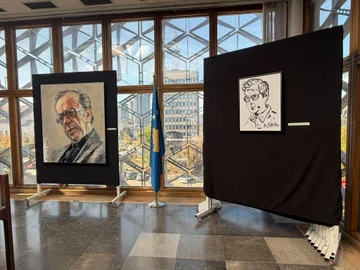
“Kadare’s Kosovo” exhibition opens on the 90th anniversary of the writer’s birth
Arts
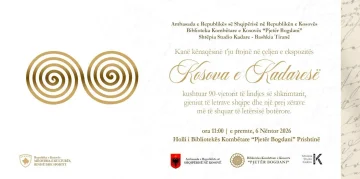
“Kadare’s Kosovo,” an exhibition dedicated to the 90th anniversary of the great writer’s birth





