
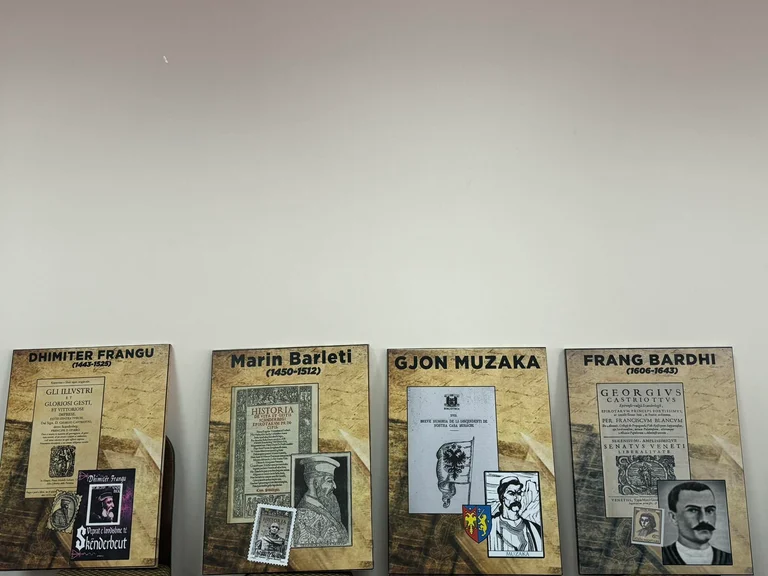
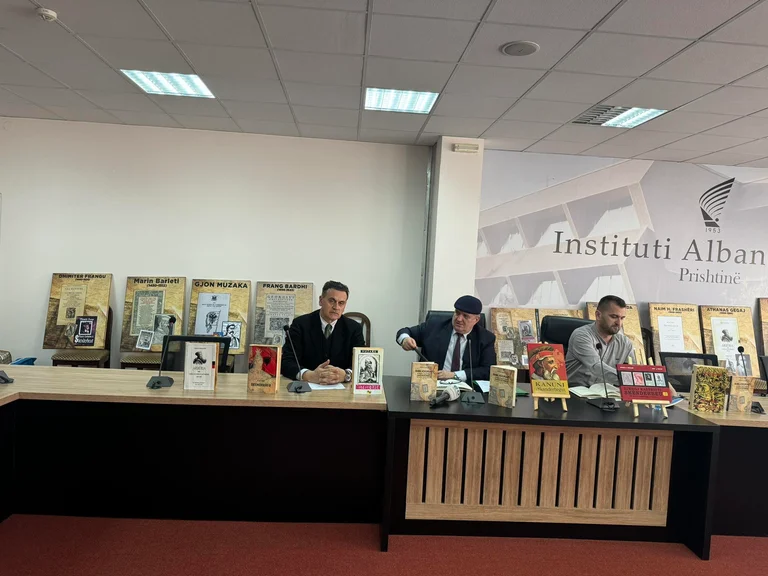
On the occasion of the 580th anniversary of the Assembly of Lezhë, the Albanological Institute presented the book “Gjergj Kastrioti Skanderbeg in the works of Albanian authors (1480–2023)” by author Hysen Dizdari, reports Ekonomia Online. Representatives of the families of Hasan Prishtina, Isa Boletini, Shaban Polluzha and Idriz Seferi were present at the book presentation. Various Albanian historians also took part […]
On the 580th anniversary of the Assembly of Lezhë, the book “Gjergj Kastrioti – Skanderbeg in the works of Albanian authors 1480–2023” is presented

On the occasion of the 580th anniversary of the Assembly of Lezhë, the Albanological Institute presented the book “Gjergj Kastrioti Skanderbeg in the works of Albanian authors (1480–2023)” by author Hysen Dizdari, reports Ekonomia Online.
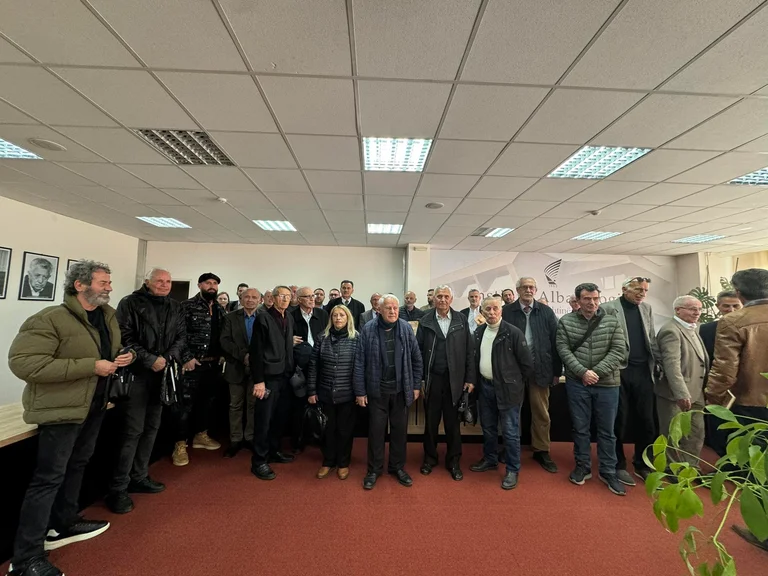
Representatives of the families of Hasan Prishtina, Isa Boletini, Shaban Polluzha and Idriz Seferi were present at the book presentation. Various Albanian historians also took part.
The director of the “Hasan Prishtina” Foundation, Mehmet Prishtina, spoke about the author, saying that he had spent 10 years contributing to the completion of this book, together with 50 different authors.
“Author Hysen Dizdari is a unique author who, on the occasion of the 580th anniversary of the Assembly of Lezhë, presents us today with the bibliographical work ‘Gjergj Kastrioti – Skanderbeg’. He worked for more than 10 years on this book, covering more than 50 different authors who have compiled bibliographies on the life and work of Gjergj Kastrioti – Skanderbeg. One of them is Gjergji Prekazi, the first author to write the first Albanian bibliography with two Austrian authors; he is little known among us, but his work is extremely important. Then there is author Dhimiter Shuteriqi and many other authors,” Prishtina said, also mentioning the Albanian hero’s contribution in the fight against the Ottoman Empire.
“Gjergj Kastrioti Skanderbeg’s quarter-century of heroic struggle against the Ottoman Empire had its origins in the military, financial and regional union of the Albanian princes that took place on 2 March 1444 in Lezhë. In Albanian historiography, this union is known as the Albanian League of Lezhë, or the Assembly of Lezhë, which laid the foundations for coordination and communication among Albanians within the framework of a state-building project, which would become a reality only on 28 November 1912. But without the Albanian League of Lezhë, we would not have had either the Albanian League of Prizren of 1878 or the declaration of Albania’s independence, because the conception of the Albanians’ state-building idea from the Middle Ages onward had to pass through several stages of consolidation.”
“The Assembly of Lezhë was a promoter of the Arbëresh consciousness of state sovereignty, while Gjergj Kastrioti Skanderbeg, as the main inspiration behind this consciousness, united all the princes of Arbër around him and, through his glorious resistance, demonstrated in practice the military prowess of the Albanians, as well as a vision for a European Albania that would break free from Ottoman domination. This was also why the Pope supported Skanderbeg’s sublime cause, while the Republic of Venice, during the Assembly of Lezhë, showed full understanding, also becoming a spokesperson for the Assembly in Western public opinion.
“If we view the Albanian League of Lezhë from today’s perspective, we will see that it still needs to be a source of inspiration for Albanian society, above all for the political class. During our journey as a nation across the difficult terrain of history, we have observed that our successes or failures have always depended on the degree of internal unity. A nation that cannot speak with one voice on major issues can very easily become prey to the predatory ambitions of foreigners. Many times throughout history, we as a nation have paid dearly for our lack of unity, and we need only recall the Albanian League of Lezhë and its effects on Skanderbeg’s military epic to understand clearly that only unity around national ideals makes a people resilient in the face of every storm from outside.”
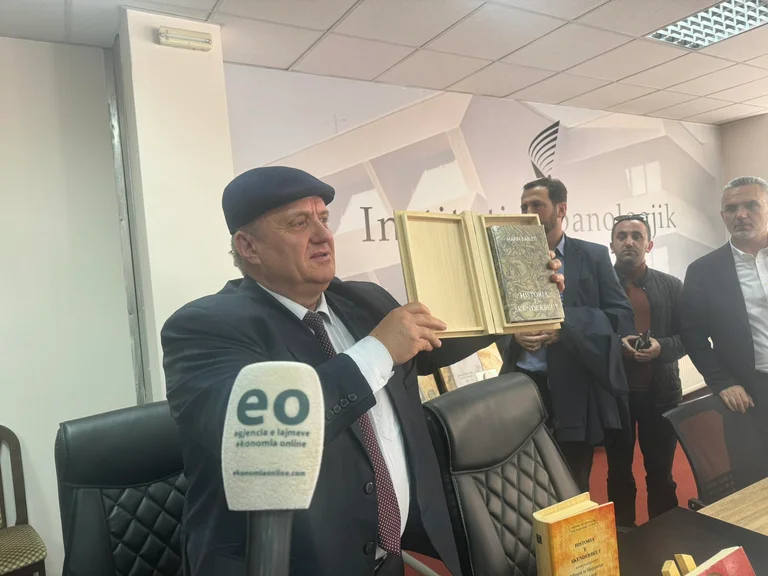
The author of the book himself, Hysen Dizdari, said that the book was published on 28 November 2023, the jubilee year marking the 580th anniversary of the raising of the Albanian national flag by Gjergj Kastrioti – Skanderbeg at Krujë Castle, and that it brings together more than 500 works in various fields of study.
He said that this bibliography begins in 1480 and ends in September 2023.
“The fundamental objective of this bibliography was to describe historical books, literary and artistic books, biographies, albums and various catalogues dedicated to our national hero Gjergj Kastrioti Skanderbeg, written in Albanian and foreign languages by authors of Albanian ethnicity and origin, regardless of where they live and work anywhere in the world. In preparing this bibliography for publication, I based my work on and followed the relevant international cataloguing standards and rules, such as the ISBD (International Standard Bibliographic Description) and the Anglo-American Cataloguing Rules, AACR2 (Anglo-American). However, I also drew on the positive experience of compiling and publishing bibliographies of books in Albanian by the National Libraries in Tirana and Prishtina,” he said.
“While working on the preparation of this bibliography, I relied on all the electronic catalogues of Albanian and foreign libraries and on bibliographies of books in Albanian published by the National Library in Tirana, the National Library of Kosovo in Prishtina, and the National Library of North Macedonia in Skopje. I also conducted specific research in the libraries of Albanian universities in Albania, Kosovo, North Macedonia, Croatia, Calabria, etc.,” the author said.
Meanwhile, university professor Bujar Dugolli said that Gjergj Kastriot Skanderbeg was a symbol of courage and outstanding leadership in the history of the Albanian people.
“It is extremely important that, on the 580th anniversary of the Assembly of Lezhë, we mark this important date in the history of the Albanian people with a cultural event at the Albanological Institute, because even today, 580 years later, the messages of the Assembly of Lezhë and the figure and activities of our national hero Skanderbeg remain highly relevant.
Our Gjergj, Gjergj Kastriot Skanderbeg, was a symbol of courage, determination and outstanding leadership in the history of the Albanian people.
Skanderbeg was a symbol of resistance to occupiers, displaying an unwavering character in the battles against the Ottoman Empire.
This national hero inspired people with a glorious legacy and values that continue to inspire to this day.”
Arianit Buqinca, a researcher at the Albanological Institute, also said that this book brings together more than 500 works from various fields of study, written by Albanian authors and dedicated to Skanderbeg, covering the period from 1940 through last year.”
Finally, the “Hasan Prishtina” Foundation thanked the Albanological Institute for its cooperation.
Related

Arts
José Saramago, the writer who challenged the world with the power of words

Arts
‘Star Wars’ and ‘James Bond’ actress found dead
Arts
The National Theatre of Kosovo’s “Romeo and Juliet” to be presented at the “Moisiu” Albanian Theatre Festival in Skopje
Arts
The film “DUA,” Kosovo’s Oscar submission, presented to the public in New York

Arts
“All About Eve,” the drama that revealed the ambition and rivalry behind the glamour of the stage

Arts
Creative Europe Opens New Calls for Artists and Cultural Professionals

Arts
“Sacrifice” fills theaters at premiere, story of five brothers moves audience to tears

Arts
This Is What the Kosovo Opera and Ballet Theatre Is Expected to Look Like

Arts
Blerta Rugova presents her first book, “RUGOVISM – The quiet revolution that begins within us”

Arts
Johnny Depp turned down the role in “Titanic” because he couldn’t read 15 pages of the script: I struggled

Arts
“Kadare’s Kosovo” exhibition opens on the 90th anniversary of the writer’s birth
Arts
“Kadare’s Kosovo,” an exhibition dedicated to the 90th anniversary of the great writer’s birth





