
The mining sector and critical raw materials represent significant potential for Kosovo’s economic development, attracting American and international investment, and integrating the country into global supply chains. This was said during a discussion on the topic “The Mining Sector and Critical Raw Materials in Kosovo: Investment Opportunities for American Businesses,” […]
American Chamber: Investments in the Mining Sector Require Functional Institutions and the Creation of Added Value Locally
The mining sector and critical raw materials represent significant potential for Kosovo’s economic development, attracting American and international investment, and integrating the country into global supply chains.
This was said during a discussion on the topic “The Mining Sector and Critical Raw Materials in Kosovo: Investment Opportunities for American Businesses,” organized by the American Chamber of Commerce in Kosovo in cooperation with the Women in Energy and Mining Committee.
Opening the forum, Shqipe Vela, Head of the Women in Energy and Mining Committee, emphasized that Kosovo’s natural resources offer an important opportunity for industrial development, job creation, and increased economic competitiveness. She underscored that realizing this potential requires a clear legal framework, stable policies, and a long-term strategy for the sector. Vela also highlighted the importance of cooperation between educational institutions and businesses in developing a skilled workforce, as well as the role of local and international investors in modernizing the industry.
Arben Mustafa, Chair of the Committee on Economy, Industry, Entrepreneurship, Trade and Innovation in the Kosovo Assembly, emphasized that global demand for reliable sources of raw materials creates new opportunities for Kosovo. In his view, turning mining potential into concrete investment requires functional institutions, transparency in decision-making, and the removal of bureaucratic obstacles. He expressed his commitment to reviewing legislation and addressing barriers to investment, noting that American investors can contribute capital, technology, expertise, and access to international markets.
Deputy Minister of Economy Triera Kasumi Berisha emphasized that the development of the mining sector should strengthen local industry and create greater opportunities to process raw materials within Kosovo. She singled out the Trepça enterprise as a strategic asset, whose modernization and improved management are important for increasing production capacity and ensuring long-term sustainability. The Deputy Minister stated that the Ministry aims to advance the assessment of mineral resources, examine the possibilities for coal gasification on the basis of economic, technological, and environmental feasibility, and develop a new mining strategy supported by reliable geological data.
Speaking on behalf of the private sector, Mentor Demi, a representative of Western Tethyan Resources and Chair of the Kosovo Mining Chamber, emphasized that the mining sector is not receiving the attention it deserves in discussions on economic development, even though minerals and raw materials form the basis of the energy transition and the development of new technologies. He noted that Kosovo still lacks a full understanding of the sector’s strategic importance and the long-term nature of mining investments. Recalling that developing a mining project can take an average of up to twenty years, Demi stressed the need for policies and institutional decision-making to look beyond short-term cycles and ensure continuity and predictability for investors. Demi raised specific concerns about the functioning of regulatory institutions, particularly the Independent Commission for Mines and Minerals, noting that delays and a lack of decision-making are hampering the development of private mining projects. He cited cases of international investors who, despite investing millions in exploration activities in Kosovo, have faced project blockages due to institutional inaction. In his view, although Kosovo has a generally favorable and attractive legal framework for foreign investors, its implementation and institutional accountability remain serious challenges. He called for regulatory mechanisms to be made fully operational and for the mining sector to be treated more equitably, with attention not only to public enterprises but also to the investment potential and projects of the private sector.
Speaking about the role of academia, Nurten Deva, Rector of the University of Mitrovica, emphasized that Kosovo’s mineral resources must be accompanied by the development of processing capabilities and modern technologies, as well as the assessment of economic and environmental impacts. She underscored that closer cooperation between universities, public institutions, and private companies is essential for the efficient use of mineral resources. In her view, greater involvement of academia and support for scientific research would contribute to the sustainable development of the industry.
This forum, organized by the American Chamber of Commerce, emphasized the importance of a coordinated approach among institutions, the private sector, and academia to create a competitive and sustainable mining industry.
Related
Economy
Ymeri: Government measures on electricity will not solve the situation
Economy
GAP: 87% of Kosovo’s budget expenditures contributed to the Sustainable Development Goals during 2021–2025
Economy
Government links payroll and human resources systems; €8.9 million from the EU expected to be released
Economy
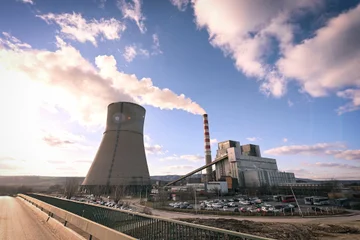
Government says electricity supply is also at risk due to the failure to complete work on Unit B1 on time; project funded by the EU

Economy
Oil prices fall again on international exchanges; in Kosovo, the decrease is being reflected slowly
Economy
Shahini: Investors are becoming more cautious, while Albania risks postponing new investments
Economy
Hoti: The government has apparently stopped electricity imports from Serbia – can something be stopped that, according to government officials, did not exist?
Economy
Tahiri to the Government: Even after 6 years, do you have a plan to start building a new power plant?
Economy
Hoti: During VV’s government, economic growth was lower and inflation higher
Economy
Kraki slams the Government: So we’ve bought electricity from Serbia and still ended up without power — failure twice over
Economy
Rizvanolli explains reasons for decision to ban energy trading with Serbian companies
Economy
Ramadani: The Government admitted it plundered the budget through electricity trading with Serbia





