
Possible election losses for Israeli Prime Minister Benjamin Netanyahu and U.S. President Donald Trump do not guarantee an end to the war with Iran. On the contrary, according to experts’ analyses, their political weakening could push them toward further escalation of the conflict in an effort to achieve a military victory. Although at first glance it may […]
Election losses won’t end the war? Why Trump and Netanyahu could escalate the conflict with Iran
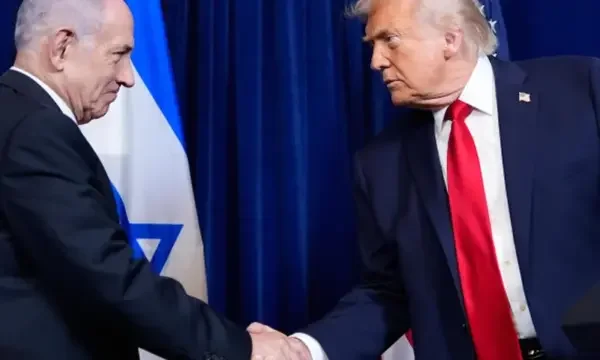
Possible election losses for Israeli Prime Minister Benjamin Netanyahu and U.S. President Donald Trump do not guarantee an end to the war with Iran. On the contrary, according to experts’ analyses, their political weakening could push them toward further escalation of the conflict in an effort to achieve a military victory.
Although at first glance it may seem that an election defeat would force both leaders to back down, the reality may be different. Political calculations, the lack of a clear solution, and a desire not to emerge defeated could prolong the war even further.
In Israel, even if Netanyahu loses the election, he could remain in office for weeks or months until a new government is formed. During this period, he would continue to have the authority to make military decisions.
According to analyst Danny Citrinowicz of the Israeli Institute for National Security Studies, Netanyahu could use the Iranian threat to persuade part of the opposition to join him in a national unity government. He warns that the prime minister could link his political interests to new developments in Iran, presenting them as more serious than they actually are.
Even a heavy election defeat would not necessarily mean that Netanyahu would abandon the goal of weakening Iran. On the contrary, he could try to present this as his most important political mission and as a historic legacy.
Meanwhile, the Israeli opposition has also criticized Netanyahu for failing to achieve the military objective against Iran, despite previous attacks, including the 12-day war in June 2025.
In the United States, the situation is different. The war with Iran is unpopular, and this has increased pressure on Trump. However, if Republicans lose their majority in the House of Representatives or in both chambers of Congress in the midterm elections, the president could face a significant political weakening.
According to analyses, such an outcome could push Trump to show greater resolve in foreign policy, to demonstrate that he remains in control of the situation. His powers as commander in chief of the armed forces would remain in effect even if he lost his majority in Congress.
Moreover, Trump’s relations with Iran have been tense for decades. The hostage crisis at the U.S. embassy in Tehran, following the 1979 revolution, remains one of the events that have shaped relations between the two countries. In 2020, the killing of Iranian General Qassem Suleimani made Trump a possible target of Iranian retaliation, according to U.S. security assessments.
According to reports in U.S. media, new plans for attacks on Iran have also been considered at senior levels of the administration. Potential targets include energy infrastructure and other facilities of importance to the Iranian economy.
Meanwhile, harsh statements and warnings of new attacks have also come from Tehran. U.S. intelligence agencies have also gathered information that, according to reports, indicates Iran may be preparing targeted attacks against U.S. officials, including overseas.
Such an escalation would increase the risk of a strong response from the United States and Israel, taking the conflict into an even more dangerous phase.
Experts warn that a new war could affect not only military targets, but also energy and communications infrastructure in the Persian Gulf region. Iran could attack energy facilities, damage communications networks, and disrupt internet cables running under the Strait of Hormuz.
According to some assessments, Tehran could also consider limited attacks in countries such as Kuwait and Bahrain, where U.S. military bases are located.
One of Iran’s main tools of pressure is the Strait of Hormuz, a maritime corridor vital to international oil transport. Rising tensions and attacks on ships could directly affect global energy supplies and cause prices to rise further.
A report by the Critical Threats Project, in collaboration with the Institute for the Study of War, assesses that Iranian attacks on ships are intended to pressure Washington into accepting Tehran’s demands, including control over the Strait of Hormuz.
After months of confrontation with the United States and Israel, Iran’s leadership appears to continue insisting on its demands to end the war, lift sanctions, and control this strategic corridor.
Karim Sadjadpour, an Iran expert at the Carnegie Endowment for International Peace, says it is unclear what Trump is specifically seeking to achieve through the military campaign. In his view, another powerful attack is unlikely to force Iran to accept an agreement or surrender.
He believes a solution may become possible only if economic pressure on Iran is accompanied by a clear diplomatic path. Otherwise, if Tehran is asked to completely change how it sees and defines itself, compromise will be very difficult.
Analyst Gideon Rachman also believes that Trump and Netanyahu may find it difficult to accept the failure of the military campaign. In his view, both may hope that another heavy blow will force Iran to back down, reopen the Strait of Hormuz unconditionally, and hand over its reserves of highly enriched uranium.
However, so far there are no clear signs that a decisive military solution is near. On the contrary, a possible election defeat could push both leaders to try military force again rather than seek an agreement.
Meanwhile, tensions are also keeping international markets under pressure. According to the article, the price of oil reached $117 per barrel last week, an indication of concerns about a renewed escalation of the conflict and its potential consequences for the global economy.
Related
Globe
16 people lose their lives after an incident at a factory in Turkey
Globe
Peace talks, US official: Russia and Ukraine are showing flexibility on possible territorial exchange

Globe
France raises minimum wage to over €1,500 from December 1
Globe
Ukraine talks in Abu Dhabi, Germany: Russia must be ready to negotiate seriously

Globe
France accuses Iran of cyberattacks on supermarket refrigerators, warns of sanctions at European level
Globe
13 migrants die after boat sinks near Crete in Greece
Globe
CNN: US and Iran are negotiating quietly; both sides have several key demands

Globe
Europe joins Ukraine talks, meeting to be held next week

Globe
Israel on the brink of a post-Netanyahu era? Eisenkot gets mandate to form government
Globe
US strikes cargo ship in the Gulf of Oman: It attempted to break the blockade on Iran

Globe
Incident in Krakow, Poland – Prosecutors launch investigation
Globe
At least 33 killed in Saudi airstrikes in Yemen, including women and children





