
The ongoing rise in prices is weighing more heavily on citizens’ lives and making it harder for businesses in Kosovo to operate, while expectations of a quick easing of the situation remain dim. Annual inflation reached 7.8 percent in September, with transport and housing and energy expenses among the categories recording the largest increases […]
Inflation at 7.8% in September, economists call for urgent measures for citizens and businesses
The ongoing rise in prices is weighing more heavily on citizens’ lives and making it harder for businesses in Kosovo to operate, while expectations of a quick easing of the situation remain dim. Annual inflation reached 7.8 percent in September, with transport and housing and energy expenses among the categories recording the largest increases. In response to this situation, the president of the Kosovo Chamber of Commerce, Lulzim Rafuna, and economist Bashkim Mustafa are calling on the Government to take concrete measures to ease the impact of prices on citizens and the private sector.
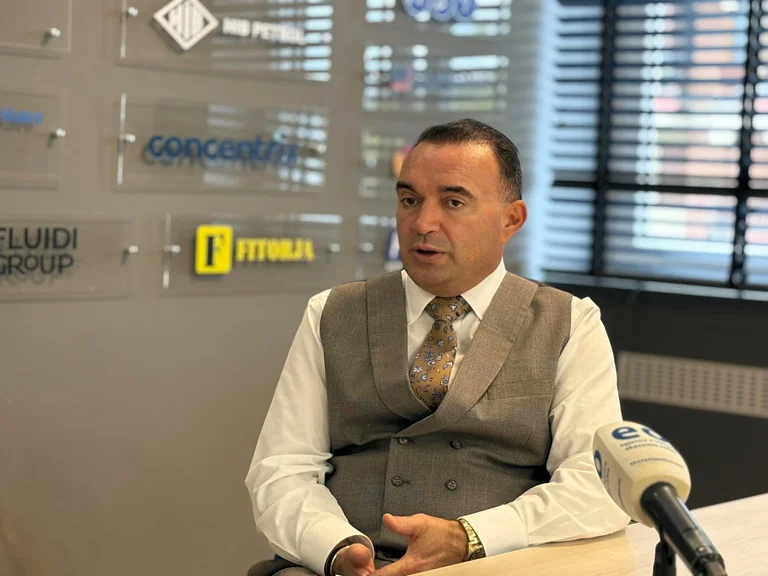
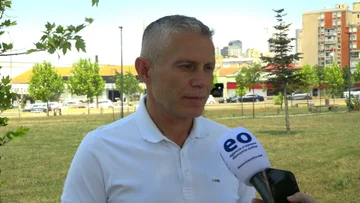
In an interview with Ekonomia Online, the president of the Kosovo Chamber of Commerce, Lulzim Rafuna, said inflation was the result of a combination of domestic and external factors, singling out the price of electricity, the way businesses were moved into the free market, and the rising cost of petroleum products.
“Both external and domestic factors have contributed to such high inflation. The domestic factor is the price of electricity, as well as moving businesses into the free market without a well-designed, carefully considered plan and without an opportunity for a transitional phase, because no business was opposed to entering the free market,” Rafuna said.
He stressed that geopolitical developments and rising prices for petroleum products are directly affecting the domestic economy, while dependence on imports leaves Kosovo more exposed to external inflation.
“Second, there are geopolitical factors, especially the price of petroleum products and the increase in their price. We should also not forget that we import a very large quantity of goods, which is why we have a very high trade deficit, and along with imports, we also import a certain amount of inflation,” he said.
In the face of continuing price increases, Rafuna believes the Government should prepare a concrete package of measures to mitigate the impact of inflation, citing as possible options a reduction in the excise duty or value-added tax on petroleum products.
“This is a concern for us: no one is addressing or redesigning a package that would help reduce inflation, or at least mitigate it, as we call it. It is nothing groundbreaking; many European Union states have now taken measures, and we have asked the Government of the Republic of Kosovo, particularly with regard to petroleum products, to reduce the excise tax or value-added tax, based on the calculations it makes,” Rafuna said.
He said that even if assistance cannot be extended to all citizens, the Government should intervene in sectors that directly affect the prices of essential goods and services.
“But even if it is not possible to help a very large number of citizens, then at least the focus should be on some sectors that are of particular importance and have an impact on the products or daily lives of the citizens of the Republic of Kosovo. For example, we have the agriculture sector, the transport sector, both freight and passenger transport, and so on,” he said.
Rafuna stressed that increases in electricity and petroleum product prices raise businesses’ operating costs, directly affecting the final price of products. He said this could put domestic producers at a disadvantage compared with imported products from countries where businesses receive subsidies.
“For this reason, the Government must prepare a package and help the citizens of the Republic of Kosovo; it must help businesses so that, first of all, our products do not become more expensive than imported products. We must bear in mind that any increase in the price of petroleum products or electricity is an operating cost for businesses and directly affects the cost of the final product. And if other countries subsidize their businesses, then undoubtedly the product imported from those countries is subsidized compared with our production,” Rafuna said.
He added that cooperation between the Government and the private sector is essential to finding solutions that would help businesses cope with costs and prevent citizens from feeling the impact of price increases so acutely.
“For this reason, the Government must stay close to our businesses and, in cooperation with the private sector, prepare a package that will first help businesses and, through them, help the citizens of the Republic of Kosovo, so that they do not feel inflation so deeply. Inflation erodes the citizens of the Republic of Kosovo,” he stressed.
The head of the KCC said that the latter had sent a letter to the prime minister in the first months after petroleum product prices began to rise, but political developments and institutional blockages had made it difficult to address the requests.
“We wrote to the prime minister in the first months after the price of petroleum products began to rise. In the meantime, there were these political blockages in the caretaker Government. Now that both the Government and the Assembly of the Republic of Kosovo have full powers, we will quickly arrange a meeting with the prime minister, as well as with the ministers of the relevant portfolios, to present our requests,” Rafuna said.
He said that inflation and the protection of businesses had also been discussed at a meeting with the Minister of Industry, Entrepreneurship and Trade, Mimoza Kusari-Lila.
“Yes, we discussed it with the minister. It was a very good, constructive meeting. The minister expressed her willingness to assess our letter and request and to make a decision soon on what assistance can be provided, and how, to both businesses and the citizens of the Republic of Kosovo,” Rafuna said.
Speaking about expectations for the coming months, Rafuna said developments in international markets offered no signs of a rapid decline in inflation. He mentioned the prices of electricity, gas and petroleum products, as well as the seasonal increase in demand for energy during the autumn months.
“Looking at the latest developments in both the European Union market and the United States market, there is no expectation that inflation will fall, because the European Central Bank has once again raised interest rates in recent days, seeing indications that inflation will continue to rise during the autumn months due to increases in electricity prices and gas prices,” Rafuna said.
He added that rising demand for energy and gas during this period could put further pressure on prices, while global challenges related to petroleum products remain another contributing factor.
“Demand for energy and gas also increases during this period, so prices will rise further. Add to this the global challenge we face with petroleum products, and the European Central Bank has raised interest rates precisely because of the trend toward rising inflation in the coming months,” he said.
Economist Bashkim Mustafa, also speaking in an interview with Ekonomia Online, said that 2026 had exceeded forecasts in terms of price increases, citing the rising cost of electricity, petroleum products and other goods that affect the entire chain of economic activity.
“Unfortunately, this year has now exceeded all possible forecasts as a result of many factors. One of these factors is the price of electricity, the price of petroleum products and other goods that affect the entire chain of business activity, which are increasing, along with the cost of living and the prices of products, creating even greater difficulties,” Mustafa said.
He criticized the Government for failing to take concrete measures, saying that so far it had not taken sufficient steps to prevent or stabilize price increases.
“The major shortcoming is that the Government is not taking any possible steps or actions to prevent or at least stabilize inflation, which has become an unbearable burden for the citizens of the country,” Mustafa said.
Mustafa said the Government should take measures to support economic activity and businesses’ financial capacity, while also considering indexing incomes for the groups most affected by rising prices.
“The Government has stalled all its capital projects, which affect growth and the flow of payments, as well as businesses’ ability and financial capacity. At the same time, income levels should be indexed, especially for the most affected groups, such as social assistance recipients, pensioners and others,” Mustafa told Ekonomia Online.
He said the impact of external factors on inflation in Kosovo was considerable, given the country’s high dependence on imported products.
“Certainly, indicators and contributing factors also come from the outside world, given that Kosovo’s economy imports around 88 percent of its products. Products arrive along with rising prices. When the prices of petroleum products also rise, this directly increases the cost of transport and other products,” Mustafa said.
According to data from the Kosovo Agency of Statistics (KAS), the Harmonised Index of Consumer Prices in September 2026 was 7.8 percent higher than in September of the previous year, while monthly inflation, compared with August, was 0.2 percent.
Transport recorded the largest annual increase, at 23.9 percent, followed by housing, water, electricity, gas and other fuels, at 11.9 percent.
Increases were also recorded for alcoholic beverages, tobacco and narcotics, at 6.3 percent; restaurants and accommodation services, at 5.2 percent; and health, at 4.5 percent.
Prices for personal care, social protection, and miscellaneous goods and services rose by 3.8 percent, while furniture, household equipment and routine household maintenance rose by 3.5 percent. Clothing and footwear became 3 percent more expensive, while food and non-alcoholic beverages rose by 2.4 percent.
Smaller increases were recorded in recreation, sport and culture, at 1.8 percent; information and communication, at 0.7 percent; and insurance and financial services, at 0.3 percent. Meanwhile, educational services were the only category to record an annual decline in prices, of 0.3 percent.
Related
Economy
Ymeri: Government measures on electricity will not solve the situation
Economy
GAP: 87% of Kosovo’s budget expenditures contributed to the Sustainable Development Goals during 2021–2025
Economy
Government links payroll and human resources systems; €8.9 million from the EU expected to be released
Economy
Government says electricity supply is also at risk due to the failure to complete work on Unit B1 on time; project funded by the EU
Economy
Oil prices fall again on international exchanges; in Kosovo, the decrease is being reflected slowly
Economy
Shahini: Investors are becoming more cautious, while Albania risks postponing new investments
Economy
Hoti: The government has apparently stopped electricity imports from Serbia – can something be stopped that, according to government officials, did not exist?
Economy
Tahiri to the Government: Even after 6 years, do you have a plan to start building a new power plant?
Economy
Hoti: During VV’s government, economic growth was lower and inflation higher

Economy
Kraki slams the Government: So we’ve bought electricity from Serbia and still ended up without power — failure twice over
Economy
Rizvanolli explains reasons for decision to ban energy trading with Serbian companies
Economy
Ramadani: The Government admitted it plundered the budget through electricity trading with Serbia





