
Four businessmen from Serbia, close to the current authorities, have been included on a list of people against whom Republican U.S. Congressman Joe Wilson has called on U.S. Secretary of State Marco Rubio to impose sanctions. The list of people proposed for sanctions includes Ivan Bošnjak and Stojan Vujko of Millennium Team, Davor […]
Rubio urged to impose sanctions on four Serbian businessmen close to Vučić
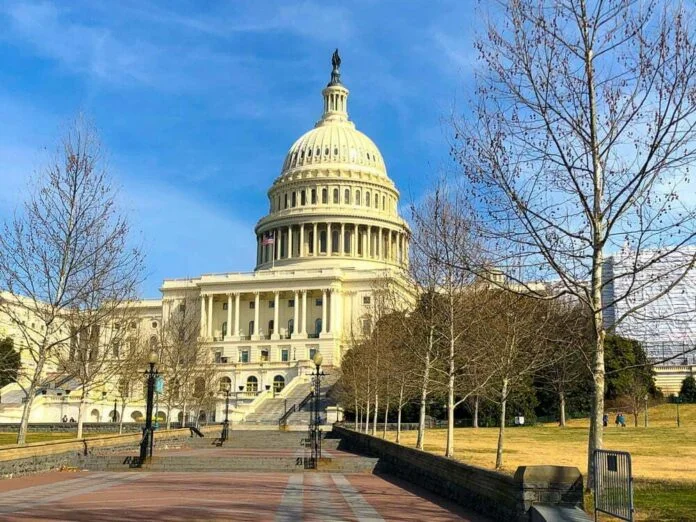
Four businessmen from Serbia, close to the current authorities, have been included on a list of people against whom Republican U.S. Congressman Joe Wilson has called on U.S. Secretary of State Marco Rubio to impose sanctions.
The list of people proposed for sanctions includes Ivan Bošnjak and Stojan Vujko of Millennium Team, Davor Macura of Alta Banka, and Željko Mitrović, owner of Pink television.
According to the letter dated October 14, to which Radio Free Europe has had access, Wilson is calling for these four businessmen to be barred from entering the United States and from using the U.S. financial system.
Wilson addressed the U.S. Secretary of State in his capacity as co-chair of the Commission on Security and Cooperation in Europe, known as the U.S. Helsinki Commission.
In the request, the four businessmen are described as associates of former Serbian President Aleksandar Vučić who exploit public resources for personal enrichment.
“They prop up his corrupt regime, have acted to undermine U.S. interests in Serbia and the region, and have been actively involved in manipulating the October 25 elections,” the letter says.
Millennium Team and Alta Banka rejected these allegations in their responses to Radio Free Europe, describing them as untrue, while Željko Mitrović did not directly respond to the accusations.
None of these three companies is under international sanctions, nor has it been in the past.
Businessmen Ivan Bošnjak, Stojan Vujko and Davor Macura have also never been sanctioned.
The exception is Željko Mitrović, owner of Pink television, who was sanctioned by the United States and the European Union during Slobodan Milošević’s regime.
Vučić’s Serbian Progressive Party did not respond to RFE/RL’s request for comment.
The early parliamentary elections on October 25 in Serbia are seen as one of the biggest electoral challenges for Vučić, who is running for prime minister this time.
He and his Serbian Progressive Party have been in power in Serbia for the past 14 years.
What does the U.S. State Department say?
In a response to Radio Free Europe, the U.S. State Department says it does not comment on its communications with Congress, or on actions related to specific cases, due to the confidentiality of visa data.
“The Trump administration protects our country and our citizens by applying the highest standards of national and public security when reviewing visa applications,” the response says.
The United States imposes sanctions when it determines that a state, company, organization or individual poses a threat to its national security, foreign policy or economy.
However, sanctions are a foreign policy tool, and imposing them does not necessarily mean that the sanctioned person has been convicted of any criminal offense.
What is the justification for the sanctions request?
The request for sanctions says that Ivan Bošnjak and Stojan Vujko of Millennium Team benefit from numerous contracts with the state and Chinese companies that are suspected of being linked to corruption.
According to the request, this practice gradually excludes Western companies—including American ones—from the Serbian market, favoring businesses close to those in power.
Alta Banka is alleged to be involved in money laundering, while Pink television is accused of concentrating control over the media and serving as a propaganda tool for those in power.
Congressman Joe Wilson believes that Vučić has weakened the rule of law and has sought to eliminate democratic competition in Serbia.
“He has made many promises to the United States, but has fulfilled none. Instead, his kleptocratic regime has opened the door to Russian and Chinese influence,” the letter says.
Wilson calls on U.S. Secretary of State Marco Rubio to take the proposed measures “to ensure that Vučić’s regime cannot steal the election.”
The U.S. Helsinki Commission, of which Wilson is co-chair, is an independent commission of the U.S. federal government.
According to its official website, the commission seeks to strengthen security by promoting human rights, democracy, and economic, environmental and military cooperation across the Organization for Security and Cooperation in Europe (OSCE) area, which includes 57 states.
Several days before the elections, a group of U.S. senators from both parties also called on the Serbian authorities to ensure equal conditions for all participants in the October 25 elections, expressing concern about developments ahead of the vote.
They described as “deeply troubling” reports of illegal surveillance of opposition members and
How have the Serbian businessmen responded to the sanctions requests?
In a response to Radio Free Europe, Alta Banka rejected the allegations that Alta Group, Alta Banka or Davor Macura are involved in money laundering, corruption, misuse of public resources or interference in the electoral process.
“No competent authority in any jurisdiction has made any such finding or decision against Alta Banka, Alta Pay Group or Mr. Macura,” the bank spokesperson’s response says.
According to him, Davor Macura is not a politician but a private entrepreneur whose activities include the banking sector, payment services and other areas.
Alta Banka emphasizes that it operates under the supervision of the National Bank of Serbia and applies the highest standards for preventing money laundering and complying with financial regulations.
“The effectiveness of these controls and the compliance system has been confirmed several times through internal and external audits,” the bank spokesperson says.
He adds that the bank remains committed to cooperating with regulatory authorities and law enforcement agencies to combat illicit financial flows.
The response also says that the bank has seen no evidence that the sanctions request was sent to the U.S. State Department and that it will seek clarification from the competent authorities regarding the allegations made.
Millennium Team also says in its response to RFE/RL that it operates “transparently and in accordance with the law.”
“We do not comment on false and unfounded allegations. If they are published, we will protect our rights through the legal means available to us,” the company’s response says.
Meanwhile, Željko Mitrović, owner of Pink Media Group, sent one of his Instagram posts, published on July 2, in which he had wished Americans a happy Independence Day, instead of directly answering RFE/RL’s questions.
“Personally, I am very happy that Serbia and America have entered a new era of rapid development of positive and friendly relations,” he wrote.
In that post, Mitrović also mentioned a “brief interruption in relations” between Serbia and the U.S. in the late 1990s, which he described as a period characterized by “misunderstandings and a lack of understanding.”
In the late 1990s, Mitrović was included on the U.S. sanctions list as a person close to Slobodan Milošević’s regime, whose activities supported that regime.
Milošević, former president of Serbia and the Federal Republic of Yugoslavia, died in the custody of the Hague Tribunal while on trial on war crimes charges.
The sanctions imposed on Mitrović at the time included a ban on entering the United States, as well as a ban on trade and financial dealings with American companies and individuals.
During that period, Mitrović was also sanctioned by the European Union.
Who are the people targeted by the sanctions request?
Ivan Bošnjak and Stojan Vujko are owners of Millennium Team, one of the major companies involved in key infrastructure projects in Serbia.
The company was founded in early 2003 and initially traded in food products and waste.
Two years later, it also began working in construction.
Since then, Millennium Team has been involved in some of Serbia’s largest projects, including the construction of the “Belgrade Waterfront” complex and facilities for the international EXPO 2027 exhibition, which will be held in Belgrade.
According to the company’s public financial documents, previously analyzed by Radio Free Europe, its profit at the end of last year exceeded 21 million euros.
Bošnjak and Vujko also own around 15 other companies in Serbia and the region.
Millennium Team also has a lobbying contract in the United States with the Washington-based law firm Steptoe LLP, according to the U.S. Department of Justice’s foreign agents registry.
In documents submitted to U.S. authorities, the law firm Steptoe has stated that its cooperation with the Serbian company Millennium Team includes media relations, as well as contacts with institutions and officials in the United States, the United Kingdom and the European Union.
“Activities in the U.S. include lobbying Congress, as well as executive branch departments and agencies,” the documents say.
Alta Group owner Davor Macura was in the public spotlight in mid-October after Montenegro’s authorities refused him entry to the country and turned him back at Podgorica Airport.
The company said at the time that Macura had not been given any explanation for the entry ban.
According to the company, the border police report cited “the protection of national security, namely internal security or public health” as the reason.
The company emphasized that the report contained “no reasoning, factual basis or evidence.”
Davor Macura started his business in 2008, when he opened a currency exchange office called Alta in Zemun, Belgrade.
In 2014, he transferred the business to the company Alta d.o.o.
Over the years, the company expanded its activities from currency exchange to payment services.
In 2019, it changed its name to Alta Pay Group, and in 2025 to Alta Group.
In 2024, Alta Pay came under scrutiny by the European Central Bank over how it had acquired shares in the Austrian bank Addiko together with the company Diplomat Pay.
The Financial Times reported at the time that the European Central Bank had investigated Alta Pay for months over suspicions related to anti-money-laundering controls and questions about the origin of Davor Macura’s capital.
Alta Pay said it was unaware of any such investigation, that it had submitted documentation to regulatory authorities on the origin of the funds and internal controls, and that allegations of possible irregularities were unfounded and untrue.
Among Macura’s and his companies’ activities that have drawn public attention is Alta Pay’s cooperation with the Electric Power Industry of Serbia (EPS).
Since November 2023, Alta Pay Group has facilitated electronic payments of electricity bills through EPS’s website and app, “Uvid u račun.”
Since June 2025, residents of Belgrade have no longer paid their electricity bills into EPS’s account at the State Treasury, but into an account opened at Alta Banka.
EPS has said that Alta is just one of the banks with which it successfully cooperates. However, the contracts setting out the details of this cooperation are not public.
From a currency exchange office opened in 2008, Macura has expanded his business into the banking sector through the acquisition of JUBMES Bank, as well as into payment services, real estate and construction.
In 2026, through the company Alta Retail, he also acquired the Idea, Roda and Mercator retail chains in Serbia.
Željko Mitrović runs Pink Media Group, whose main activity is the production of television programs.
He started his business in the late 1990s, during Slobodan Milošević’s regime, when he founded Pink radio and television, and later the record company City Records.
During that period, Mitrović was part of the leadership of the Yugoslav Left (JUL), a party led by Mirjana Marković, Slobodan Milošević’s wife.
Mitrović currently owns or co-owns 18 companies operating in various sectors—from media and film to the production of chocolate, chewing gum and drones.
Relations between Serbia and the U.S.
Serbia has increasingly come to the attention of members of the U.S. Congress in recent months.
In August, Republican Congressman Joe Wilson and Democrat Bill Keating introduced a bill in the House of Representatives calling for measures against Serbia because of its democratic backsliding and ties with Russia and China.
Another bipartisan bill on Serbia was subsequently introduced in the Senate, at the initiative of Republican Senator Chuck Grassley and Democratic Senator Richard Blumenthal.
In addition to financial sanctions and visa restrictions for Serbian officials, the bills also envisage suspending or conditioning the Strategic Dialogue between the U.S. and Serbia.
Serbian authorities did not comment on these legislative initiatives.
Related

Globe
16 people lose their lives after an incident at a factory in Turkey
Globe
Peace talks, US official: Russia and Ukraine are showing flexibility on possible territorial exchange

Globe
France raises minimum wage to over €1,500 from December 1

Globe
Ukraine talks in Abu Dhabi, Germany: Russia must be ready to negotiate seriously

Globe
France accuses Iran of cyberattacks on supermarket refrigerators, warns of sanctions at European level

Globe
13 migrants die after boat sinks near Crete in Greece
Globe
CNN: US and Iran are negotiating quietly; both sides have several key demands

Globe
Europe joins Ukraine talks, meeting to be held next week

Globe
Israel on the brink of a post-Netanyahu era? Eisenkot gets mandate to form government

Globe
US strikes cargo ship in the Gulf of Oman: It attempted to break the blockade on Iran

Globe
Incident in Krakow, Poland – Prosecutors launch investigation

Globe
At least 33 killed in Saudi airstrikes in Yemen, including women and children





