
Rising prices for basic goods and services continue to put pressure on household budgets in Kosovo, significantly reducing their purchasing power.
Economic expert: The household basket in Kosovo became €78 more expensive per month
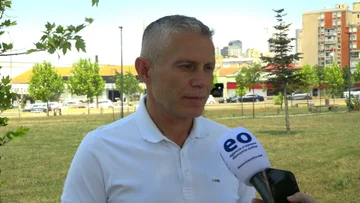
Pëllumb Çollaku, a doctor of economic sciences, said in an interview with Telegrafi that a consumption basket that cost 1,000 euros in September 2025 now costs around 1,078 euros.
“A basket that cost €1,000 in September 2025 now costs around €1,078. For the same consumption, a family pays around €78 more per month, or nearly €940 a year. In other words, €100 in savings is now worth about the same as €92.8 a year ago,” Çollaku said.
He stressed that low-income families are the hardest hit by rising prices, as they spend most of their budgets on food, energy, heating and transport.
“Low-income families are being hit hardest because they spend most of their budgets on food, energy, heating and transport; workers on the minimum wage are better off. Those who have lost purchasing power include pensioners whose benefits are indexed by 2.7%, families whose incomes have not changed, such as employees with frozen wages, informal workers, and those living on social assistance,” he said.
Çollaku also raised concerns about another phenomenon affecting consumers, known as “shrinkflation”, which means reducing the weight or quantity of products without lowering their price.
“In addition to losing purchasing power, Kosovo’s consumers are also facing the phenomenon of ‘shrinkflation’, or the reduction in the weight or quantity of units of a given product without a price reduction. It does not appear to have attracted the attention of policymakers, but it is a growing phenomenon and deserves attention,” Çollaku said.
Meanwhile, according to projections by the International Monetary Fund (IMF), inflation in Kosovo is expected to reach 6.8 percent in 2026, compared with the estimate of 3.9 percent for 2025.
This represents an increase of 2.9 percentage points in one year and places Kosovo first in the Western Balkans in terms of projected inflation.
Related
Economy
Ymeri: Government measures on electricity will not solve the situation
Economy
GAP: 87% of Kosovo’s budget expenditures contributed to the Sustainable Development Goals during 2021–2025
Economy
Government links payroll and human resources systems; €8.9 million from the EU expected to be released
Economy
Government says electricity supply is also at risk due to the failure to complete work on Unit B1 on time; project funded by the EU
Economy
Oil prices fall again on international exchanges; in Kosovo, the decrease is being reflected slowly
Economy
Shahini: Investors are becoming more cautious, while Albania risks postponing new investments
Economy
Hoti: The government has apparently stopped electricity imports from Serbia – can something be stopped that, according to government officials, did not exist?
Economy
Tahiri to the Government: Even after 6 years, do you have a plan to start building a new power plant?
Economy
Hoti: During VV’s government, economic growth was lower and inflation higher
Economy
Kraki slams the Government: So we’ve bought electricity from Serbia and still ended up without power — failure twice over
Economy
Rizvanolli explains reasons for decision to ban energy trading with Serbian companies
Economy
Ramadani: The Government admitted it plundered the budget through electricity trading with Serbia





