
The Central Bank of the Republic of Kosovo (CBK) has welcomed the European Commission’s assessments in the 2026 Kosovo Report, which confirms the resilience of the banking sector and recognizes the progress made in advancing legal, regulatory and institutional reforms in the financial sector, in line with European Union (EU) standards and practices. The report assesses […]
EU assesses progress in financial sector reforms and confirms the resilience of Kosovo’s banking sector
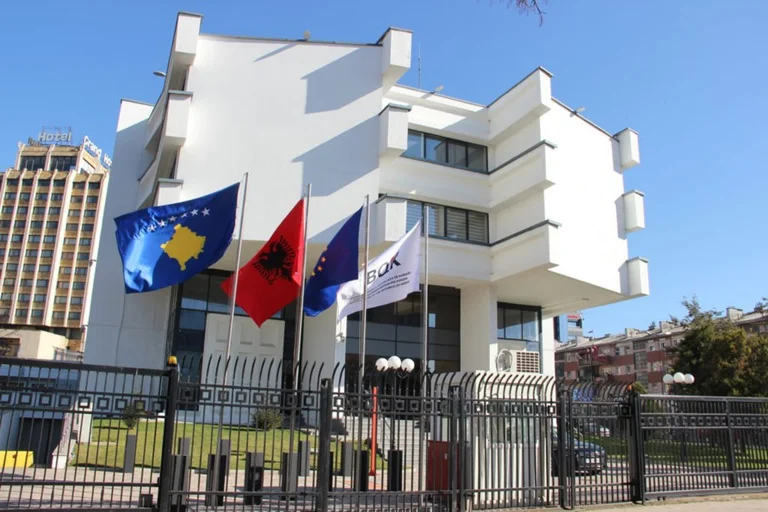
The Central Bank of the Republic of Kosovo (CBK) has welcomed the European Commission’s assessments in the 2026 Kosovo Report, which confirms the resilience of the banking sector and recognizes the progress made in advancing legal, regulatory and institutional reforms in the financial sector, in line with European Union (EU) standards and practices.
The report assesses Kosovo’s good progress in the area of free movement of capital (Chapter 4), highlighting the adoption of legislation on payment services and on the prevention of money laundering and terrorist financing. The inclusion of provisions on Open Banking in the Law on Payment Services has been assessed as positive progress in the digitalization of financial services. The European Commission notes that the previous year’s recommendations in this area have been largely implemented, thereby recognizing progress in aligning the legal framework with EU requirements.
In the area of financial services (Chapter 9), the Report highlights progress in aligning banking legislation with European standards, particularly in relation to capital requirements, bank recovery and resolution. In this regard, developments in the legal and institutional framework are recognized, including the designation of the CBK as the authority responsible for bank resolution and steps towards operationalizing this function.
The European Commission confirms that Kosovo’s banking sector has continued to expand while remaining sound and resilient, with satisfactory indicators for capitalization, asset quality and financial performance. According to the data included in the Report, at the end of June 2026, the capital adequacy ratio was 17.1%, while the level of non-performing loans was 2.0%, demonstrating the resilience of the banking sector and its capacity to support economic activity.
The Report also recognizes progress in implementing the roadmap for the Supervisory Review and Evaluation Process (SREP), as part of the transition towards full risk-based supervision by the end of 2027. This development reflects the CBK’s commitment to advancing supervisory practices and further strengthening the resilience of the financial system.
In the area of payment systems, the European Commission recognizes the progress achieved through the adoption of the Law on Payment Services, which advances alignment with the relevant EU directives and regulations. This reform provides an important basis for developing modern payment services, promoting competition and innovation, and advancing Kosovo’s financial integration into the European market, including preparations for applying to the Single Euro Payments Area (SEPA) and developing fast-payment infrastructure.
In the context of economic and monetary policy (Chapter 17), the Report highlights the CBK’s ongoing efforts to strengthen institutional governance and transparency, with a view to further advancing its institutional framework.
CBK Governor Mr Ahmet Ismaili emphasizes that the European Commission’s assessments constitute important recognition of the progress of the reforms undertaken and of the institutional commitment to maintaining financial stability and aligning with European standards.
“The European Commission’s assessments confirm the resilience of the banking sector and recognize the progress of the reforms we are implementing as part of the CBK’s mandate. Advancing risk-based supervision, modernizing the legal and regulatory framework, developing payment systems and strengthening institutional capacities remain important priorities in our work. We are committed to continuing the implementation of reforms and addressing the European Commission’s recommendations, while preserving institutional independence and contributing to Kosovo’s financial and economic integration into the European Union,” Governor Ismaili emphasized.
The CBK remains committed to implementing its Strategic Plan, further strengthening supervision and financial stability, advancing the framework for bank recovery and resolution, developing the insurance market, modernizing payment systems and strengthening institutional governance.
In this regard, the CBK will continue its cooperation with domestic institutions, the European Commission and international partners to address the Report’s recommendations and advance reforms that support the sustainable development of the financial sector and the country’s European integration.
The full 2026 European Commission Report on Kosovo: https://enlargement.ec.europa.eu/document/download/fbf2d883-1d14-4e09-8aba-c904ba0d5d9b_en?filename=kosovo-report-2026.pdf
Related
Economy
Ymeri: Government measures on electricity will not solve the situation
Economy
GAP: 87% of Kosovo’s budget expenditures contributed to the Sustainable Development Goals during 2021–2025
Economy
Government links payroll and human resources systems; €8.9 million from the EU expected to be released
Economy
Government says electricity supply is also at risk due to the failure to complete work on Unit B1 on time; project funded by the EU
Economy
Oil prices fall again on international exchanges; in Kosovo, the decrease is being reflected slowly
Economy
Shahini: Investors are becoming more cautious, while Albania risks postponing new investments
Economy
Hoti: The government has apparently stopped electricity imports from Serbia – can something be stopped that, according to government officials, did not exist?
Economy
Tahiri to the Government: Even after 6 years, do you have a plan to start building a new power plant?
Economy
Hoti: During VV’s government, economic growth was lower and inflation higher
Economy
Kraki slams the Government: So we’ve bought electricity from Serbia and still ended up without power — failure twice over
Economy
Rizvanolli explains reasons for decision to ban energy trading with Serbian companies
Economy
Ramadani: The Government admitted it plundered the budget through electricity trading with Serbia





