
Economist Safet Gërxhaliu said in an interview with Ekonomia Online that Kosovo’s budget for 2027, although amounting to €4.27 billion, does not necessarily represent real economic growth, since, in his view, its increase is mainly the result of inflation. Gërxhaliu stressed that the €300 million increase, compared with […]
Gërxhaliu on the budget: Kosovo is directing more resources toward survival than economic development
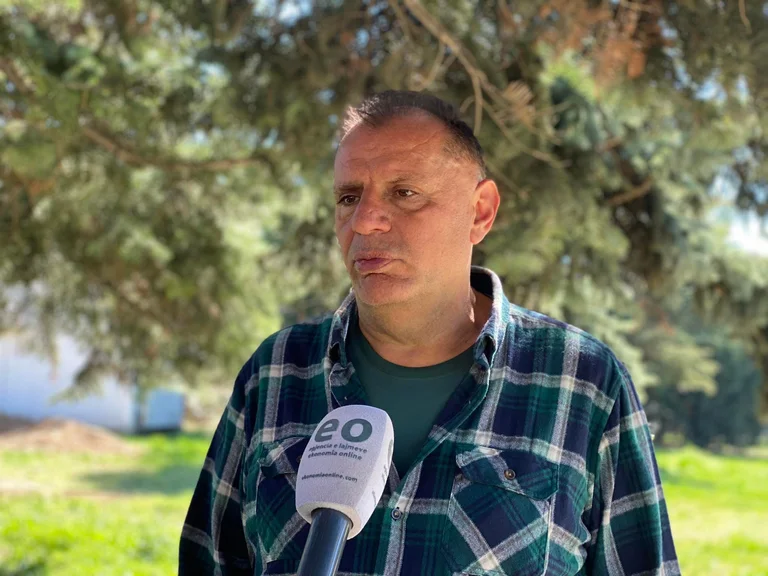
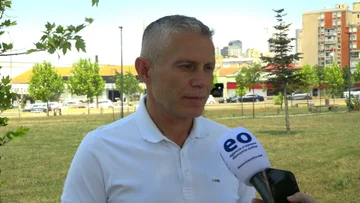
Economist Safet Gërxhaliu said in an interview with Ekonomia Online that Kosovo’s budget for 2027, although amounting to €4.27 billion, does not necessarily represent real economic growth, since, in his view, its increase is mainly the result of inflation.
Gërxhaliu stressed that the €300 million increase compared with the 2026 budget should not create euphoria, since, according to his calculations, the impact of inflation at 7.8 percent amounts to around €311 million.
He said Kosovo needs not merely a numerical increase in the budget, but a substantial increase that is reflected in economic development and improved public welfare.
According to Gërxhaliu, every approved budget should be accompanied by a strategic document that clearly sets out where the funds will be invested, what the benefits for the state will be, and what impact the investments will have on people’s lives.
“We should not be euphoric about the approval of the 2027 budget. It is an increase of €300 million, but if the 2026 budget is analyzed and multiplied by the 7.8% inflation rate Kosovo currently has, then it becomes clear that this is an increase of €311 million. So this increase to €4.27 billion is much more inflation-driven, or based on inflation, than an increase in performance, and all of this should send a clear message: Kosovo does not need a numerical increase; Kosovo needs a substantial increase in its budget. Every approved budget should be accompanied by a strategic document setting out where these funds will be invested, what the benefits for the state will be, and how people’s lives in Kosovo will improve through investments, whether in strategic projects or capital projects,” he said.
Analyzing the budget’s structure, he said the allocation of funds demonstrates a greater focus on social support and routine spending than on economic development.
“The fact that, at first glance, the budget is divided into three categories: one worth €1.45 billion, relating to subsidies and transfers; another amounting to €1.085 billion, which is a quarter of the budget for expenditures; and what is planned to be €1.007 billion for capital investments and €547 million for goods and services, I believe best demonstrates that this budget will be much more a budget for survival than a budget for development or economic sustainability,” Gërxhaliu told Ekonomia Online.
He also stressed that the low implementation rate of the capital projects planned for 2026 remains a concern, calling for the budget’s approval to be accompanied by a concrete implementation strategy and measurable indicators of the impact of investments.
Gërxhaliu also mentioned the challenges Kosovo is facing, including European Union sanctions, the lack of functioning institutions, and lengthy election processes.
“Therefore, under the circumstances Kosovo has faced in recent years, with sanctions from the European Union, a lack of institutions, and marathon elections, this is what could be achieved. However, this budget is much more geared toward social stability than sustainable economic development. This is particularly true given that in 2026 we had plans or projections to invest in capital projects, but they were implemented only to a very small extent. The time has come for the approved law to be accompanied by a vision or implementation strategy, with measurable indicators of the budget’s effects,” Gërxhaliu said, among other things.
Another concern, he said, is that Kosovo is receiving little from the Western Balkans Growth Plan.
He said that Kosovo had lost €43 million because it had failed to meet the stipulated criteria.
“It is true that Kosovo is entering 2027 facing numerous challenges. The biggest challenges are definitely the fact that, in the past, Kosovo received a very small share from the Western Balkans Growth Plan, which had billions of euros accumulated in it. Reports indicate that Kosovo has lost €43 million by failing to meet the criteria stipulated under this plan,” Gërxhaliu said in conclusion.
Related
Economy
Ymeri: Government measures on electricity will not solve the situation
Economy
GAP: 87% of Kosovo’s budget expenditures contributed to the Sustainable Development Goals during 2021–2025
Economy
Government links payroll and human resources systems; €8.9 million from the EU expected to be released
Economy
Government says electricity supply is also at risk due to the failure to complete work on Unit B1 on time; project funded by the EU
Economy
Oil prices fall again on international exchanges; in Kosovo, the decrease is being reflected slowly
Economy
Shahini: Investors are becoming more cautious, while Albania risks postponing new investments
Economy
Hoti: The government has apparently stopped electricity imports from Serbia – can something be stopped that, according to government officials, did not exist?
Economy
Tahiri to the Government: Even after 6 years, do you have a plan to start building a new power plant?
Economy
Hoti: During VV’s government, economic growth was lower and inflation higher
Economy
Kraki slams the Government: So we’ve bought electricity from Serbia and still ended up without power — failure twice over
Economy
Rizvanolli explains reasons for decision to ban energy trading with Serbian companies
Economy
Ramadani: The Government admitted it plundered the budget through electricity trading with Serbia





