
Kosovo risks failing to implement the necessary reforms and losing the opportunity to draw around €130 million from the Western Balkans Growth Plan by the end of this year, former president of the Kosovo Chamber of Commerce Safet Gërxhaliu has assessed. Gërxhaliu told Ekonomia Online that, alongside the approval of the budget […]
Gërxhaliu: Kosovo risks losing another €130 million from the Growth Plan; cooperation between government and opposition is needed
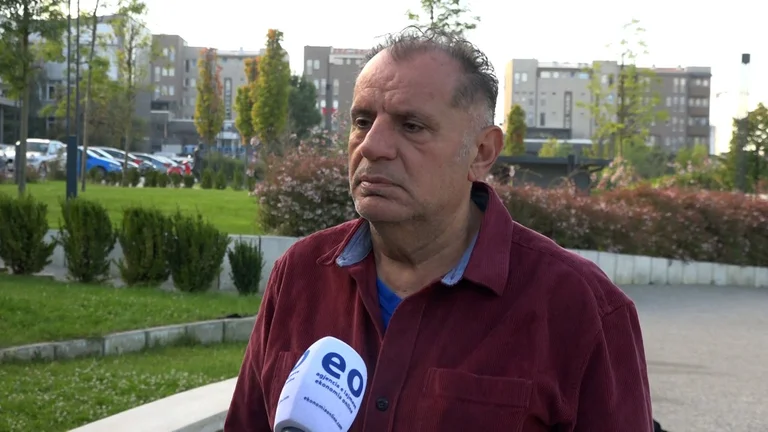
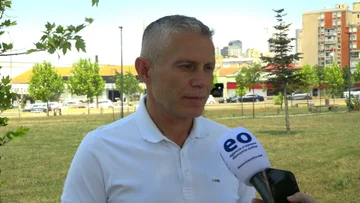
Kosovo risks failing to implement the necessary reforms and losing the opportunity to draw around €130 million from the Western Balkans Growth Plan by the end of this year, former president of the Kosovo Chamber of Commerce Safet Gërxhaliu has assessed.
Gërxhaliu told Ekonomia Online that, alongside approving the 2027 budget, the country needs political stability and cooperation between the government and opposition in order to meet the criteria set by the European Union.
Gërxhaliu recalled that Kosovo has already lost around €43 million from this mechanism, warning that political divisions could make it difficult to meet the obligations within the remaining time.
“By the end of the year, Kosovo needs to take many steps to normalize the current political situation in Kosovo. First, now that the institutions are functional, it is a matter of statehood, given that almost all the elected positions have been filled. Second, many obligations lie ahead of us, first and foremost the approval of the budget law for 2027. And, most importantly, the criteria Kosovo must meet if it does not want to lose yet another sum of funds allocated to it under the Western Balkans Growth Plan must be fulfilled,” Gërxhaliu said.
“We have lost tens of millions, nearly €43 million, in the past, and I believe that such a mistake must not be repeated. Now Kosovo has the opportunity to meet the criteria by the end of the year and absorb, or draw down, €130 million. However, it will be very difficult, given that relations between the government and opposition are marked by a very wide gap. Secondly, what is more, we are seeing a lack of political unity and of political positions in the interests of the state and its citizens; party and political interests dominate instead, and this is truly harming Kosovo,” he said.
According to Gërxhaliu, the reforms to be carried out within a short period include the adoption of laws on energy, bankruptcy, commercial law, public procurement, public-private partnerships and the control of state aid.
“Kosovo needs to carry out numerous reforms to meet these criteria and participate on an equal footing in absorbing these funds. One of the biggest challenges is the package of laws that must be passed within a very short period. The first concerns the energy law; the second concerns the bankruptcy law; there is the package on commercial law; there is the public procurement law; the law on public-private partnerships is missing, as is the law on the promotion and control of state aid,” he said.
He also mentioned the strategy against organized crime, public administration reform, the green transition and human capital development as areas where Kosovo must make progress by the end of the year.
“And what is most interesting is that there are several strategies that must be implemented by the end of the year: the strategy against organized crime, public administration reform, the green transition and human capital development. But the greatest challenge is definitely what is called sui generis, or a bonus for Kosovo that should be linked to the normalization of relations with Serbia through the dialogue mediated or facilitated by the European Union,” he said.
Gërxhaliu stressed that meeting these obligations requires political stability and partnership among the parties, calling for the economy to be an institutional priority.
“Therefore, there are many challenges, but all of them can be met if Kosovo truly has political stability, partnership and cooperation between the government and opposition, and if the economy is definitely the priority, rather than a social orientation as has happened in the past. Social policy across Kosovo equalizes poverty and diverts it from the path to development, and in this time of inflation, it does Kosovo no favors for imports, consumption and remittances from the diaspora to be the main basis of budget growth or economic sustainability,” he said.
Related
Economy
Ymeri: Government measures on electricity will not solve the situation
Economy
GAP: 87% of Kosovo’s budget expenditures contributed to the Sustainable Development Goals during 2021–2025
Economy
Government links payroll and human resources systems; €8.9 million from the EU expected to be released
Economy
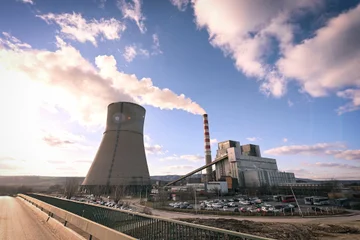
Government says electricity supply is also at risk due to the failure to complete work on Unit B1 on time; project funded by the EU
Economy
Oil prices fall again on international exchanges; in Kosovo, the decrease is being reflected slowly
Economy
Shahini: Investors are becoming more cautious, while Albania risks postponing new investments
Economy
Hoti: The government has apparently stopped electricity imports from Serbia – can something be stopped that, according to government officials, did not exist?
Economy
Tahiri to the Government: Even after 6 years, do you have a plan to start building a new power plant?
Economy
Hoti: During VV’s government, economic growth was lower and inflation higher
Economy
Kraki slams the Government: So we’ve bought electricity from Serbia and still ended up without power — failure twice over
Economy
Rizvanolli explains reasons for decision to ban energy trading with Serbian companies
Economy
Ramadani: The Government admitted it plundered the budget through electricity trading with Serbia





