
The Governor of the Central Bank of the Republic of Kosovo (CBK), Ahmet Ismaili, accompanied by the Deputy Governors, presented recent macroeconomic and financial sector developments, key institutional reforms, and progress toward European financial integration to the heads and representatives of diplomatic missions in Kosovo. Heads and representatives of diplomatic missions, as well as […]
Governor Ismaili briefs heads of diplomatic missions on developments in the financial sector
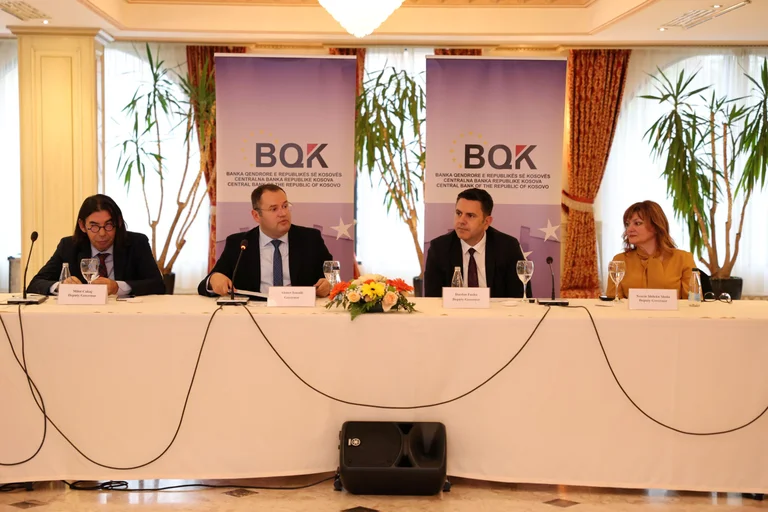
The Governor of the Central Bank of the Republic of Kosovo (CBK), Ahmet Ismaili, accompanied by the Deputy Governors, presented recent macroeconomic and financial sector developments, key institutional reforms, and progress toward European financial integration to the heads and representatives of diplomatic missions in Kosovo.
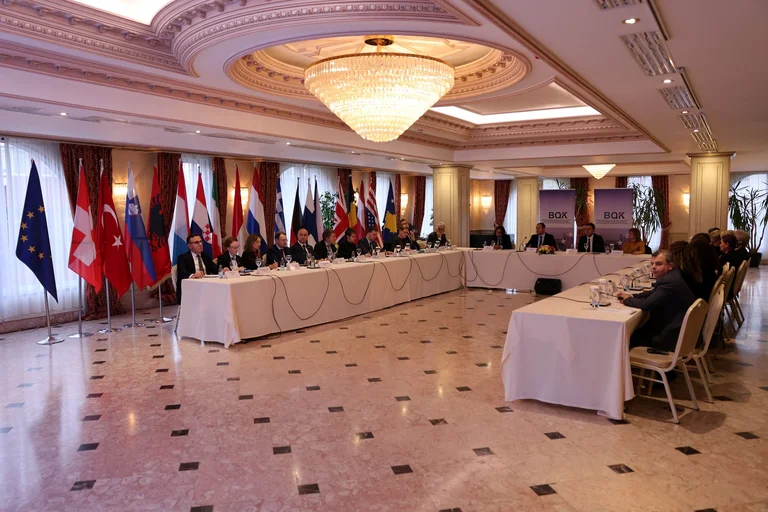
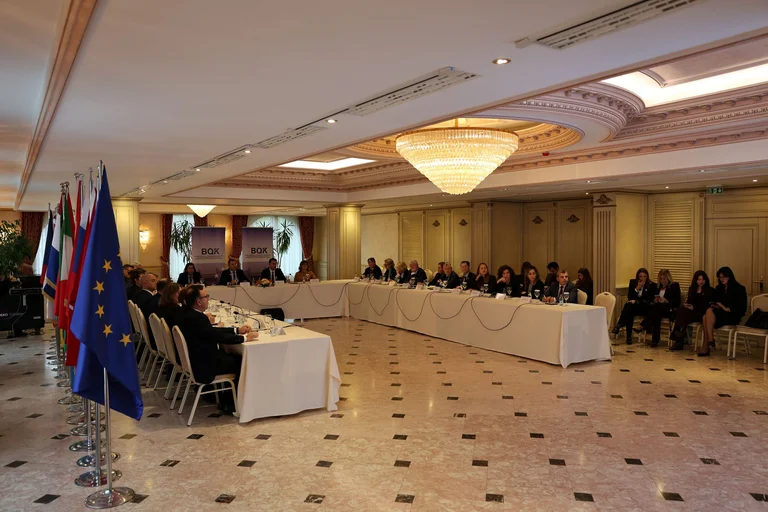
Heads and representatives of diplomatic missions, as well as representatives of the European Union Office in Kosovo, the Council of Europe, EULEX, the European Bank for Reconstruction and Development (EBRD), the World Bank, and the International Monetary Fund (IMF) attended the meeting.
The presentation highlighted the CBK’s strategic commitment to preserving financial stability, strengthening institutional and supervisory capacity, modernizing financial infrastructure, and advancing the alignment of the regulatory framework with European Union standards.
Governor Ismaili emphasized that Kosovo’s financial sector remains stable, resilient, and well-capitalized, providing a sound foundation for sustainable economic development and further financial integration. Banking sector indicators confirm its resilience, with a capital adequacy ratio of 16.4 percent, a liquidity coverage ratio of approximately 300 percent, and a low level of non-performing loans at 2.0 percent.
Building on this foundation, the CBK is continuing to implement comprehensive reforms to strengthen risk-based supervision, advance the macroprudential framework, develop mechanisms for bank recovery and resolution, improve consumer protection, and strengthen financial integrity. Particular emphasis was placed on alignment with the EU regulatory framework, including requirements for the prevention of money laundering and combating the financing of terrorism (AML/CFT), supervisory reporting, insurance sector regulation, and modernization of payment systems.
Integration into European payment systems was highlighted as one of the CBK’s key strategic priorities, with a particular focus on Kosovo’s membership in the Single Euro Payments Area (SEPA). Following the adoption of amendments to AML/CFT legislation, the CBK is completing the remaining internal procedural steps to finalize and formally submit Kosovo’s application to the European Payments Council (EPC).
Kosovo’s participation in SEPA represents an important step toward deeper integration into the European financial market, enabling more efficient, secure, and lower-cost cross-border euro payments. According to CBK estimates, SEPA membership could generate annual savings of more than 55 million euros for citizens, businesses, and the diaspora, while also strengthening economic ties with the European Union.
The CBK Governor also presented progress on the development of the TIPS Clone (TIPS-K) system, Kosovo’s new infrastructure for instant payments, which is being implemented in cooperation with the Bank of Italy (Banca d’Italia). This strategic initiative aims to enable payments to be made within seconds, 24 hours a day, throughout the year, contributing to greater efficiency, financial inclusion, innovation, and competitiveness in the financial sector.
Preparations for TIPS-K are progressing, with the start of the pilot phase targeted by the end of November 2026, subject to the successful completion of technical testing and fulfillment of operational readiness requirements.
Governor Ismaili also emphasized the significant contribution of international cooperation and technical assistance to the CBK’s reform agenda. He appreciated the valuable support provided by the central banks of partner countries, as well as international financial institutions, through technical assistance and institutional capacity development. These partnerships have played an important role in strengthening regulatory and supervisory frameworks, advancing financial sector reforms, and supporting the alignment of Kosovo’s financial system with international and European standards.
“Financial stability, institutional reforms, and European integration are mutually reinforcing priorities in the work of the Central Bank of the Republic of Kosovo. Our objective is to ensure that alignment with European standards translates into tangible benefits for citizens, businesses, and the economy as a whole. SEPA and TIPS-K are transformative initiatives that will strengthen Kosovo’s financial connectivity with Europe and contribute to a more efficient, competitive, and inclusive financial system,” Governor Ismaili stated.
During the concluding discussion, the Governor and Deputy Governors exchanged views with participants on reform priorities and the developments presented.
In closing, Governor Ismaili expressed his sincere appreciation and gratitude to the diplomatic representatives, European institutions, central banks of partner countries, and international financial institutions for their ongoing cooperation, technical assistance, and support for the CBK’s reform agenda. He reaffirmed the CBK’s commitment to strengthening these partnerships, advancing institutional reforms, and further integrating Kosovo into the European financial architecture.
Related
Economy
Ymeri: Government measures on electricity will not solve the situation
Economy
GAP: 87% of Kosovo’s budget expenditures contributed to the Sustainable Development Goals during 2021–2025
Economy
Government links payroll and human resources systems; €8.9 million from the EU expected to be released
Economy
Government says electricity supply is also at risk due to the failure to complete work on Unit B1 on time; project funded by the EU
Economy
Oil prices fall again on international exchanges; in Kosovo, the decrease is being reflected slowly
Economy
Shahini: Investors are becoming more cautious, while Albania risks postponing new investments
Economy
Hoti: The government has apparently stopped electricity imports from Serbia – can something be stopped that, according to government officials, did not exist?
Economy
Tahiri to the Government: Even after 6 years, do you have a plan to start building a new power plant?
Economy
Hoti: During VV’s government, economic growth was lower and inflation higher
Economy
Kraki slams the Government: So we’ve bought electricity from Serbia and still ended up without power — failure twice over
Economy
Rizvanolli explains reasons for decision to ban energy trading with Serbian companies
Economy
Ramadani: The Government admitted it plundered the budget through electricity trading with Serbia





