
Albania has the lowest income level for its poorest population segment compared with all the countries of the Western Balkans.
Kosovo surpasses Albania in the income of its poorest population segment
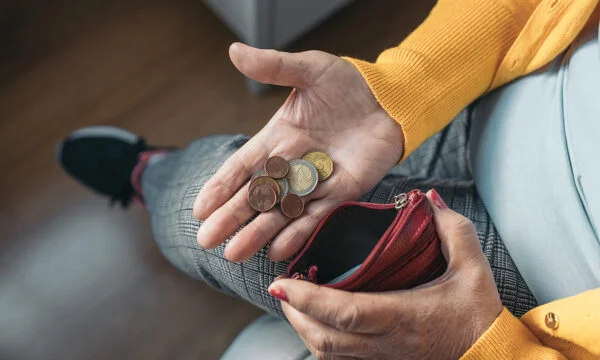
In 2025, the 20% of the population with the lowest incomes received just 3.6% of total after-tax income, according to regional comparative data from the Vienna Institute for International Economic Studies
This is the lowest share in the region and points to a more unequal distribution of income to the detriment of the poorest segment.
The indicator measures what share of the population’s total income goes to one-fifth of individuals with the lowest incomes, after taxes have been deducted and social transfers included. The lower this percentage, the smaller the share of income received by the poorest group compared with the rest of society.
In Albania, for every 100 lek of disposable income earned by the population as a whole, just 3.6 lek goes to the 20% of individuals with the lowest incomes, while the remaining 96.4 lek is distributed among the rest of the population.
The difference is particularly large compared with Kosovo, where one-fifth of the population with the lowest incomes receives 6.6% of total after-tax income. The income share of this segment in Kosovo is almost 1.8 times higher than in Albania.
Other countries in the region also have a more favorable distribution for the lowest-income group. In Montenegro, the poorest 20% of the population receives 4.4% of total income, in Bosnia and Herzegovina 4.3%, in Serbia 4.1%, and in North Macedonia 4%.
Although the differences with some of the countries are smaller than with Kosovo, Albania remains at the bottom of the region in terms of the share of income going to its poorest segment.
The low income share of the poorest 20% of the population is an important indicator of economic inequality and of this segment’s weak financial position compared with the rest of society.
A country may have a lower share of income for its poorest segment, but a higher average income level. To assess actual poverty, the specific incomes of households, the cost of living, and the percentage of the population living below the poverty line must also be taken into account.
For Albania, the 2025 data show that the lowest-income group receives a smaller share of total income than in any other country in the region. This makes this segment particularly vulnerable to rising prices and essential expenses, as low-income households have less financial room to cover the costs of food, housing, and basic services.
The indicator also raises the question of how effective income redistribution policies are, including the tax system and social transfers, since the gap remains large even after these are included in the population’s disposable income. /Monitor
Related
Economy
Ymeri: Government measures on electricity will not solve the situation
Economy
GAP: 87% of Kosovo’s budget expenditures contributed to the Sustainable Development Goals during 2021–2025
Economy
Government links payroll and human resources systems; €8.9 million from the EU expected to be released
Economy
Government says electricity supply is also at risk due to the failure to complete work on Unit B1 on time; project funded by the EU
Economy
Oil prices fall again on international exchanges; in Kosovo, the decrease is being reflected slowly
Economy
Shahini: Investors are becoming more cautious, while Albania risks postponing new investments
Economy
Hoti: The government has apparently stopped electricity imports from Serbia – can something be stopped that, according to government officials, did not exist?
Economy
Tahiri to the Government: Even after 6 years, do you have a plan to start building a new power plant?
Economy
Hoti: During VV’s government, economic growth was lower and inflation higher
Economy
Kraki slams the Government: So we’ve bought electricity from Serbia and still ended up without power — failure twice over
Economy
Rizvanolli explains reasons for decision to ban energy trading with Serbian companies
Economy
Ramadani: The Government admitted it plundered the budget through electricity trading with Serbia





