
At a time when the rising cost of living is weighing on the budgets of Kosovo families, child benefits are expected to increase gradually over the next four years. However, economist Fidan Qerimi believes that although every additional euro is welcome, current support remains far below families’ real needs, as expenses for children, especially newborns, […]
Qerimi on the gradual increase in child benefits: Even one euro is help; current amounts do not cover even a week’s expenses
At a time when the rising cost of living is weighing on the budgets of Kosovo families, child benefits are expected to increase gradually over the next four years. However, economist Fidan Qerimi believes that although every additional euro is welcome, current support remains far below families’ real needs, as expenses for children, especially newborns, can exceed these benefits in just one week.
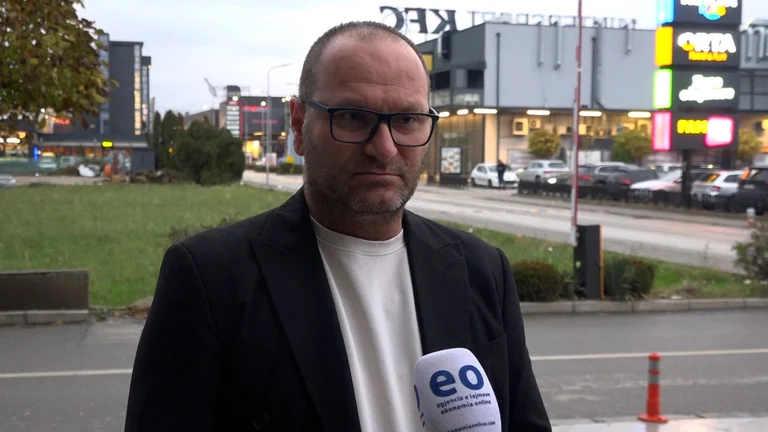
In an interview with Ekonomia Online, Qerimi said the decision was welcome.
“Of course, even one euro is help for families. It is undoubtedly a decision welcomed by all families, but these child benefits are extremely low, and expenses for perhaps three days or, at most, one week are not covered by these child benefits, especially for newborns,” Qerimi said.
He said that institutions had not provided adequate treatment and support for this category, highlighting in particular the difficulties faced by young families and women who are not active in the labor market.
According to him, child benefits should serve as more substantial support for families, so that they have better opportunities to raise their children.
“Unfortunately, as a country, we have not treated this category of children properly, bearing in mind that in the labor market, especially women of childbearing age, who could potentially be young mothers, are not active in the labor market, and this would be support for these families and for this segment of the population, helping them raise their children,” he said.
Qerimi stressed that support for families with children must be significantly improved, particularly at a time when Kosovo is facing a decline in the number of births.
He also mentioned economic factors and young people’s need for professional and academic development, which, he said, affect decisions about starting a family and having children.
“Unfortunately, we have not treated them properly, and I think there is enormous room for improvement and support for this category, bearing in mind that the number of births has fallen dramatically compared with previous years, when things may have been very challenging. Unfortunately, the new circumstances—that is, the need for professional and academic advancement—mean that birth rates are low. When we add this financial problem, it has an even greater negative impact on the decline in the birth rate,” Qerimi said.
Meanwhile, Kosovo Prime Minister Albin Kurti announced during a government meeting at which the draft budget for 2027 was presented that child benefits would be increased gradually in four phases, with the aim of doubling them by January 2030.
Kurti announced that the first increase of 25 percent would take effect on January 1, 2027, while the other three phases would be implemented at the beginning of 2028, 2029 and 2030.
According to the example given by the prime minister, the current benefit for one child is 30 euros per month. With the first increase of 25 percent, this amount will rise to 37.50 euros from January 1, 2027, or 7.50 euros more per month.
“So, from January 1, 2027, child benefits will increase by 25 percent, then by another 25 percent on January 1, 2028, again by 25 percent in January 2029, and in January 2030 the gradual increase will be completed, resulting in child benefits doubling within the term,” Kurti said.
The prime minister also gave specific examples of how the first increase would affect families’ monthly benefits.
A family with two children, which currently receives 60 euros per month, will receive 75 euros from January 2027, while a family with four children, which currently receives 180 euros, will receive 225 euros per month.
According to Kurti, the increase in benefits will continue gradually each year until the current amount is doubled in January 2030.
Related
Economy
Ymeri: Government measures on electricity will not solve the situation
Economy
GAP: 87% of Kosovo’s budget expenditures contributed to the Sustainable Development Goals during 2021–2025
Economy
Government links payroll and human resources systems; €8.9 million from the EU expected to be released

Economy
Government says electricity supply is also at risk due to the failure to complete work on Unit B1 on time; project funded by the EU

Economy
Oil prices fall again on international exchanges; in Kosovo, the decrease is being reflected slowly
Economy
Shahini: Investors are becoming more cautious, while Albania risks postponing new investments
Economy
Hoti: The government has apparently stopped electricity imports from Serbia – can something be stopped that, according to government officials, did not exist?
Economy
Tahiri to the Government: Even after 6 years, do you have a plan to start building a new power plant?
Economy
Hoti: During VV’s government, economic growth was lower and inflation higher
Economy
Kraki slams the Government: So we’ve bought electricity from Serbia and still ended up without power — failure twice over
Economy
Rizvanolli explains reasons for decision to ban energy trading with Serbian companies
Economy
Ramadani: The Government admitted it plundered the budget through electricity trading with Serbia





