
In Wim Wenders’s latest film, Perfect Days [Perfect Days], the main character – a toilet cleaner in Tokyo – spends many of his hours alone: watering plants, thinking, listening to music and reading. Although other characters appear as the film progresses, the early moments – for many viewers – are truly […]
“People need solitude”
In Wim Wenders’s latest film, Perfect Days [Perfect Days], the main character – a toilet cleaner in Tokyo – spends many of his hours alone: watering plants, thinking, listening to music and reading. Although other characters appear as the film progresses, the early moments – for many viewers – are truly perfect; described by the BBC’s Nicholas Barber as a “meditation on the quietness of an existence stripped to its essence,” the film really struck an emotional chord. And that is no surprise. Thoughtful, positive views of solitude are increasingly finding their way onto our screens, bookshelves and phones – from podcasts to viral videos on TikTok. It seems there has never been a better time to be alone.
Several books on the subject have been published in recent years – and a few more are in the works. Solitude: The Science and Power of Being Alone [Solitude: The Science and Power of Being Alone] and Solo: Building a Remarkable Life of Your Own [Solo: Building a Remarkable Life of Your Own] came out in 2024, while Single: Living a Complete Life on Your Own Terms [Single: Living a Complete Life on Your Own Terms], by Nicola Slawson, was published in February. Then, last month, Emma Gannon’s much-anticipated novel, Table For One [Table For One], was released; after making her name with nonfiction books that question traditional ideas about success and productivity, Gannon is now revisiting modern relationships in a love story focused on a young woman who finds fulfillment in being alone – not with a partner.
Two self-help guides are also due out later this year: The Joy of Solitude: How to Reconnect with Yourself in an Overconnected World [The Joy of Solitude: How to Reconnect with Yourself in an Overconnected World] and The Joy of Sleeping Alone [The Joy of Sleeping Alone], as well as a paperback English-language edition of the translation of Daniel Schreiber’s German book, Alone: Reflections on Solitary Living [Alone: Reflections on Solitary Living], first published in 2021.
Full of astute observations and practical advice, this new wave of books aims not only to remove the stigma around solitude, but also to highlight the benefits and pleasures it offers. At first, this burst of publications might seem surprising to anyone who experienced the pandemic and surely heard about – or felt – the so-called “loneliness epidemic,” a term widely popularized in 2023 by U.S. Surgeon General Vivek Murthy. “After the pandemic, there was a major focus on loneliness – for very good reasons,” says Robert Coplan, a professor of psychology at Carleton University in Ottawa and author of The Joy of Solitude: How to Reconnect with Yourself in an Overconnected World. But because of concern about the consequences of loneliness, solitude (as a choice) ended up with a “bad reputation – as it were, we threw the baby out with the bathwater.”
Now, however, the discourse is correcting itself. The distinction between loneliness and chosen solitude, according to Coplan, is very important – and many other authors share this view. “While loneliness is a serious and harmful problem for some people, it is a subjective state, very different from solitude that someone has chosen for positive reasons,” says journalist Heather Hansen. In 2024, she co-authored the book Solitude: The Science and Power of Being Alone with Netta Weinstein and Thuy-vy T. Nguyen. Hansen says the media have long told us that we are too lonely; but in response to that narrative, she adds: “people are reflecting on their lives and realizing that they are choosing solitude for a range of reasons that benefit them.”
“I have a theory that after the pandemic we began to clearly understand the difference between loneliness and chosen solitude,” says Emma Gannon, who is also a big advocate of the concept of “slow living” [slow living]. The extremes of the pandemic – being shut in at home with all your loved ones, or, conversely, spending months without human contact – prepared us, Gannon says, “to have more sensitive conversations about the differences between isolation and the enjoyable time spent alone.”
Closely connected to these current conversations is the reassessment of romantic relationships by Generation Z and millennials, and their enthusiastic embrace of single life, alongside a careful re-evaluation of interpersonal relationships in general. Gannon’s new novel may be an artistic depiction of a young woman rebuilding her relationship with herself, but it will ring true for many readers grappling with what is increasingly seen as an outdated social expectation to “get married.” According to a U.S. survey in 2023, two out of five members of Generation Z and millennials think marriage is an outdated tradition and, in the United Kingdom – according to the Office for National Statistics – it is projected that only just over half of Gen Z men and women will get married.
In April, a viral video on TikTok – with over a million likes and nearly 37,000 comments – presented a man’s perspective on dating women who live alone and love that way of life. Many women praised the analysis as “so accurate” and felt seen. Nicola Slawson, who based her book Single: Living a Complete Life on Your Own Terms on her popular newsletter on Substack [The Single Supplement], is not surprised. “The number of people living alone in the UK has been steadily increasing over the past decade,” Slawson notes, and this has fueled a cultural shift toward accepting single status and an emphasis on “freedom and independence – particularly rejecting domestic life – as women realize they no longer have to put up with things that were expected of previous generations.”
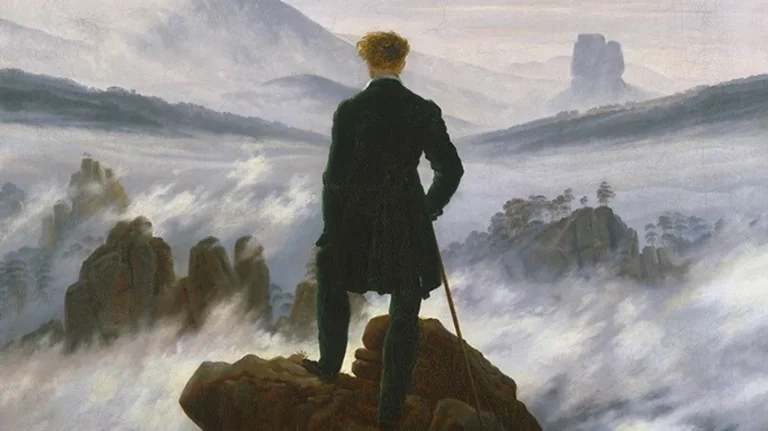
That said, our cultural fascination with being alone is deeply rooted. Capturing the beauty of solitude has been a focus for many artists over the centuries – from the German Romantic Caspar David Friedrich, whose major works include Wanderer above the Sea of Fog (around 1817) – which can be seen in the collection of the Hamburger Kunsthalle in Germany – to the celebrated 20th-century American artist Edward Hopper and his paintings of solitary city dwellers. A New Yorker review of Hopper’s 2022 retrospective at New York’s Whitney Museum noted: “Everything about urban life he shows us is isolated, disconnected from community – and yet his images of apparent solitude seem anything but bleak, instead proud and self-reliant.”
Daniel Schreiber believes the connection between living alone – without a partner – and feeling lonely is traditionally overstated. “Society now better understands that romantic love is not the only model by which to live, or something that must necessarily be desired,” he adds. “There are different ways to live, and it is no longer essential to be in a traditional romantic relationship.”
In Solo: Building a Remarkable Life of Your Own, Peter McGraw – a self-described “single” and professor of marketing and psychology at the University of Colorado – offers a similar perspective. “There is a lot of mythology around single life and a failure to understand why marriage was invented – primarily as a business arrangement,” he says. “Honestly, the message of romantic comedies, love songs and Jane Austen novels” – that we need a partner to feel fulfilled – “is not supported by the data,” he says. “If we look at the long-term data”: many studies cited in Solo show that even if personal happiness increases around marriage, it doesn’t last.
Even within a relationship, traditional routines can be upended to create more time for oneself, as suggested in the book The Joy of Sleeping Alone. The author, yoga and meditation teacher Cynthia Zak, noticed that many women prefer sleeping alone to sharing a bed with their partners, and she decided to write the book – first in Spanish – to support the idea of “more space to express what we need and feel, more opportunities to let go of fears and limiting beliefs, and more freedom to choose.”
If being and doing things alone is becoming increasingly common – and stigma-free – then how can we get the most out of it? Some key factors everyone agrees on are finding a healthy balance between time alone and interacting with others – and having the ability to choose solitude, rather than being forced to experience it. “The biggest indicator of success in the time you spend alone is that a person has chosen that space, believing there is something important and meaningful there,” says Hansen, adding that solitude is “a neutral lump of clay; it can become anything we shape it into.”
Appropriately, according to McGraw, perhaps it is best not to shape that clay into “lying in bed, vaping and ordering food [Uber Eats].” Instead, he suggests directing time spent alone toward creative pursuits and activities that tend to flourish in solitude: going for a walk or a run, people-watching in a café, going to a museum and “taking it all in, as quickly or as slowly as you like.” Or, more specifically, “sitting in the bath listening to Vivaldi,” he adds – or taking an online course?
For those who are single, the advice is to embrace the solitude that can bring happiness – rather than waiting for it to pass, says Slawson. “I used to hold myself back, putting things off until I was ‘settled’ or found a partner, but you have to live the life you have and get as much pleasure out of it as possible, rather than feeling like you’re in a waiting room, waiting for life to begin,” she says. And when social pressure mounts? “Don’t fall back on familiar ways of thinking or some ‘prewritten script,’” McGraw suggests. “The good thing is that now there’s an alternative script.”
More broadly, time spent alone is full of potential and possibility. “I think solitude inspires a wonderful sense of creativity, gets the mind moving and encourages problem-solving,” says Gannon. She suggests treating solitude as an adventure – or as an opportunity to reconnect with yourself through journaling or enjoying your senses: “The soft blanket, the sound of music, the taste of your food. What can you see, smell, touch and feel when you’re alone?”
Turning inward more deeply, Zak says, can also deepen one’s experience of solitude; she suggests paying attention to moments of solitude and turning them into repeated rituals that help with relaxation and reflection through practice. “Ask yourself: what do you most enjoy doing when you’re alone? Make the moment you choose a gem and give yourself the task of cherishing this special space more and more,” she says.
And, most importantly – though it may seem obvious? It’s about mixing things up. “People need social interaction – but I would also say that people need solitude,” says Coplan. “The key is to find the right balance for happiness and well-being. Everyone has a unique balance that works.”
Related
Psychologist
Are We Really Hungrier in Winter: Cold Is Not the Only Reason

Psychologist
10 Negative Consequences of Being Too Kind
Psychologist
Why do two people remember the same event completely differently: Is one of them lying?

Psychologist
10 Traits of Smart People That Have Nothing to Do with Intelligence
Psychologist
Almost Everyone Tends to Walk Left Unconsciously – The Discovery That Is Astonishing Physicists

Psychologist
Symptoms of mental illnesses that look like normal behavior

Psychologist
Are you constantly afraid that you are ill? When concern about your health turns into anxiety

Psychologist
10 Habits That Destroy the Brain

Psychologist
From Struggling to Ask for Help to Self-Doubt: Signs of Being Misunderstood in Childhood
Psychologist
Don’t recognize yourself anymore? Six changes in your behavior may reveal that you’re under major stress
Psychologist
Do you keep saying “I’m fine” while suffering inside? Here’s what happens to your body when you bottle up your emotions

Psychologist
When They Don’t Reply, the Mind Starts Making Up Scenarios: How Anxious Attachment Can Wear Down a Relationship





