Debates about politics often end in arguments, especially during family gatherings or get-togethers with friends. But a new study shows that the problem may not be just differences in opinions, but also our mistaken assumptions about how willing people are—even those who share our beliefs […]
Why Does Every Political Debate End in an Argument? A New Study Reveals the Reason Few Expect

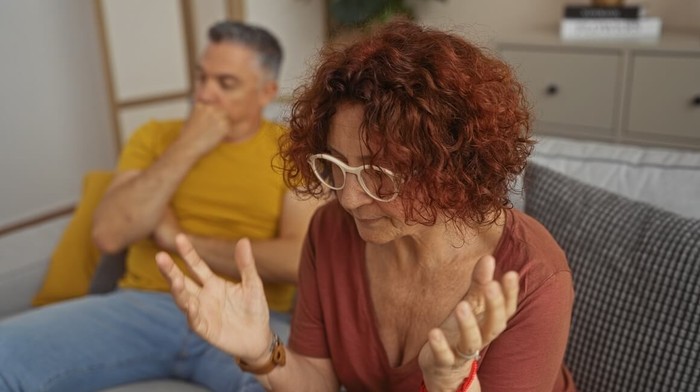
Debates about politics often end in arguments, especially during family gatherings or get-togethers with friends.
But a new study shows that the problem may not be just differences in opinions, but also our mistaken assumptions about how willing people—even those who share our political beliefs—are to listen to different opinions.
Curiosity may be the key to better conversations and greater understanding.
Why do political conversations often seem hopeless?
Many people believe that discussing politics is pointless because it is almost impossible to change someone’s mind. That is why people are often advised to avoid these topics, change the subject or withdraw from the debate entirely.
When political differences arise, it is easy to fall into the trap of dividing people into “us” and “them.” Instead of seeing the person we are talking to as someone with their own experiences and reasons, we start judging them through stereotypes and labels.
This phenomenon is compounded by cognitive biases, such as the tendency to seek information that confirms our beliefs or to feel closer to people who belong to our group.
This way of thinking makes honest dialogue more difficult and deepens divisions even further.
The solution is not persuasion, but curiosity
Psychologists believe that the atmosphere of a conversation does not improve by using more aggressive arguments or constantly trying to prove that we are right.
A much more helpful approach is genuine curiosity.
It starts with ourselves. Although we often think we understand our own motives and beliefs perfectly, studies show that this is not always the case. When we replace absolute certainty with curiosity, we become more open to new information and more willing to build better relationships.
Psychiatrist Irvin Yalom has emphasized that behind many strongly held beliefs may lie deeper fears and human needs, such as the need for security, belonging, freedom or meaning.
Political views can sometimes be only an outward expression of these needs, Telegrafi reports.
What did the new study find?
Psychologist Todd Kashdan and his colleagues conducted three studies examining the link between curiosity and political conversations.
The results showed that people often misjudge even members of their own political group. Many participants believed that people who shared their political beliefs were more closed to differing views than they actually were.
These mistaken beliefs can create a defensive attitude even before a conversation begins, increasing tension and reducing willingness to engage in dialogue.
Meanwhile, people who were more curious showed greater willingness to learn from political conversations, more intellectual humility, fewer defensive reactions and greater openness to different perspectives.
They were also less likely to avoid people with opposing political beliefs.
Openness to other opinions can be encouraged
One of the most interesting findings was that curiosity could also be increased through a simple psychological intervention.
Participants were shown data suggesting that people from their own political group were more open to other opinions than they had thought.
After this, participants expressed a greater desire to learn during political conversations, were more willing to listen to differing views and showed greater social and political curiosity.
In other words, no one had to be persuaded to change their political position. It was enough to change their perception of how people “on our side” think.
Sometimes listening is enough
The need to belong is one of the basic human needs. For this reason, we often unconsciously adopt the attitudes and behaviors of the group we belong to.
If we believe that “our people” think the other side has nothing worthwhile to say, we will be less willing to listen, too.
The next time you find yourself in a political debate with family or friends, try setting aside your need to be right for a moment.
Instead of arguing, ask questions and truly listen to the answers. You may not change anyone’s mind, but you may better understand why someone thinks differently.
Because sometimes the most important thing is not to agree—it is enough to be willing to listen to one another.
Related

Psychologist
Are We Really Hungrier in Winter: Cold Is Not the Only Reason

Psychologist
10 Negative Consequences of Being Too Kind

Psychologist
Why do two people remember the same event completely differently: Is one of them lying?

Psychologist
10 Traits of Smart People That Have Nothing to Do with Intelligence

Psychologist
Almost Everyone Tends to Walk Left Unconsciously – The Discovery That Is Astonishing Physicists

Psychologist
Symptoms of mental illnesses that look like normal behavior

Psychologist
Are you constantly afraid that you are ill? When concern about your health turns into anxiety

Psychologist
10 Habits That Destroy the Brain

Psychologist
From Struggling to Ask for Help to Self-Doubt: Signs of Being Misunderstood in Childhood

Psychologist
Don’t recognize yourself anymore? Six changes in your behavior may reveal that you’re under major stress

Psychologist
Do you keep saying “I’m fine” while suffering inside? Here’s what happens to your body when you bottle up your emotions

Psychologist
When They Don’t Reply, the Mind Starts Making Up Scenarios: How Anxious Attachment Can Wear Down a Relationship