
For Hermann Hesse, one of the most important writers of the 20th century and a Nobel Prize winner in Literature, a full life is defined not only by what we know, but also by our ability to be amazed, to observe, and to experience the world with sensitivity. In one of his reflections, included in […]
Hermann Hesse and the Power of Wonder: Education Should Teach Us to Experience Life
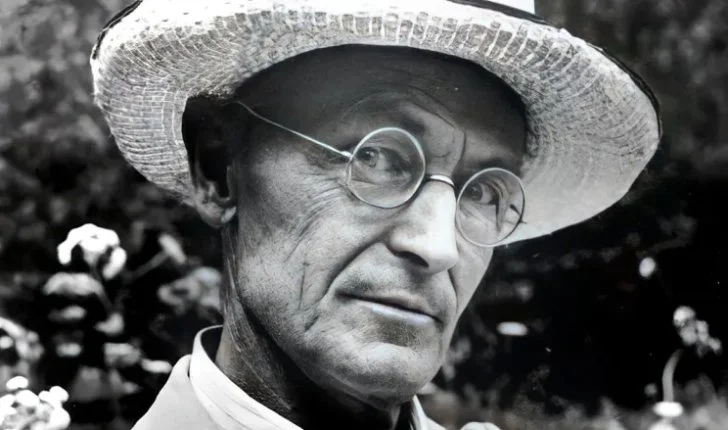
For Hermann Hesse, one of the most important writers of the 20th century and a Nobel Prize winner in Literature, a full life is defined not only by what we know, but also by our ability to be amazed, to observe, and to experience the world with sensitivity.
In one of his reflections, included in the collection Butterflies: Reflections, Tales, and Verse, Hesse places wonder and amazement at the heart of human experience. In his view, this is precisely where the path toward a spiritually richer life begins, KultPlus writes.
For Hesse, wonder does not require anything magnificent. It can be found in a leaf, a flower, a butterfly, a river, the clouds, or a small piece of nature. The moment a person pauses to observe them attentively, they briefly detach themselves from the everyday world of needs, competition, and gain.
In this experience, Hesse also sees a way to feel part of the world rather than separate from it. By admiring nature, a person, in his view, temporarily enters a “world of unity,” where the boundary between the individual and everything around them becomes less distinct.
But Hesse also had a strong critique of the way education is conceived.

He argued that people are born with the ability to experience wonder, but education and social conditioning can dull this sensitivity. Universities, instead of cultivating a sense of amazement and curiosity, often focus on measurement, classification, and the accumulation of information.
According to Hesse, education can teach a great deal about the world, but cannot by itself guarantee the ability to experience it.
He thus distinguished between schools of knowledge and schools of wisdom. Universities, in his view, often teach us to recognize and analyze the separate parts of reality, but do not necessarily teach us to feel the connections between them or to experience the world as a whole.
For the writer, this ability to be moved by what we see and experience is just as important as knowledge. A person can gather endless information, but if they lose the ability to be amazed, they risk losing an important part of life itself.
This idea is closely connected to Hesse’s literary world, where characters often grapple with questions of self-knowledge, spirituality, nature, knowledge, and the meaning of existence. From Siddhartha to Steppenwolf and The Glass Bead Game, the search for a deeper meaning of life remains one of the central themes of his work.
Hesse reminds us that education should not be only a process of learning more, but also a way of seeing more deeply.
Ultimately, the question raised by his reflection is still relevant: Does education teach us only what to know, or also how to marvel at the world we are learning to understand? /KultPlus.com
Related
Arts
José Saramago, the writer who challenged the world with the power of words
Arts
‘Star Wars’ and ‘James Bond’ actress found dead
Arts
The National Theatre of Kosovo’s “Romeo and Juliet” to be presented at the “Moisiu” Albanian Theatre Festival in Skopje
Arts
The film “DUA,” Kosovo’s Oscar submission, presented to the public in New York
Arts
“All About Eve,” the drama that revealed the ambition and rivalry behind the glamour of the stage

Arts
Creative Europe Opens New Calls for Artists and Cultural Professionals

Arts
“Sacrifice” fills theaters at premiere, story of five brothers moves audience to tears

Arts
This Is What the Kosovo Opera and Ballet Theatre Is Expected to Look Like

Arts
Blerta Rugova presents her first book, “RUGOVISM – The quiet revolution that begins within us”

Arts
Johnny Depp turned down the role in “Titanic” because he couldn’t read 15 pages of the script: I struggled
Arts
“Kadare’s Kosovo” exhibition opens on the 90th anniversary of the writer’s birth
Arts
“Kadare’s Kosovo,” an exhibition dedicated to the 90th anniversary of the great writer’s birth





