
As a child, Notting Hill Carnival seemed more like an obligation than a celebration. But when sound systems arrived in the 1970s, everything changed: the event became an annual pilgrimage, a space of freedom and a powerful expression of the identity of a new generation of Caribbean descent. Memories […]
From “Old People’s Music” to Taking Over the Streets: 60 Years of Notting Hill Carnival
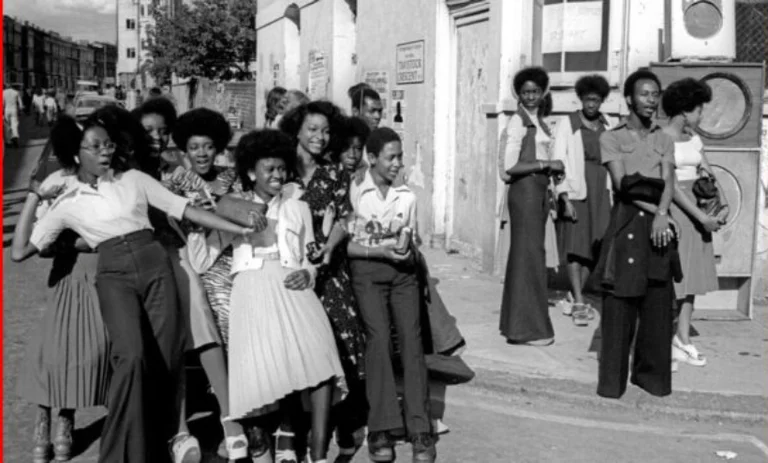
As a child, Notting Hill Carnival seemed more like an obligation than a celebration. But when sound systems arrived in the 1970s, everything changed: the event became an annual pilgrimage, a space of freedom and a powerful expression of the identity of a new generation of Caribbean descent.
To be honest, my earliest memories of Notting Hill Carnival are tinged with a kind of annoyance.
In the 1960s, when the event was still in its early days, Carnival was mainly a Caribbean celebration, brought to Ladbroke Grove with as much authenticity as London at the time would allow.
The aim was clear: to give Caribbean immigrants the opportunity to celebrate their culture and identity, bringing the colours, rhythm and vibrancy of their homeland to the grey streets of the British capital for two days.
This was hugely important to the community.
But for a 10- or 11-year-old who had to walk behind bands with brass instruments, things looked different.
Yes, it was lovely to see so many Black people together in the streets and our parents laughing and having fun. But we thought: do we really have to be here?
We had football to play and bikes to ride, but instead we were forced to walk miles, following what we called “old people’s music”.
Then the sound systems arrived, and everything changed
With the start of the 1970s, Carnival took on another dimension.
The London sound systems that had begun to establish themselves over the previous years – Coxsone Outernational, Jah Shaka, 6X6, Sufferah HiFi, TWJ and others – began to take up more and more space at Carnival, beneath the flyovers and throughout the streets.
They were run by men and women only a little older than us.
They understood very well how the generation born after the Windrush migration wave was forging its identity as Black British.
Roots and cultural heritage were always important, but we no longer needed simply to recreate the Caribbean in London.
We had created something of our own.
The sound systems played the same music we listened to at parties, at dances or from our record collections: reggae, lovers rock, soul and funk.
Suddenly, the music of our lives was there in the streets, in front of bars, cafés and even people’s homes.
Related
Arts
José Saramago, the writer who challenged the world with the power of words
Arts
‘Star Wars’ and ‘James Bond’ actress found dead
Arts
The National Theatre of Kosovo’s “Romeo and Juliet” to be presented at the “Moisiu” Albanian Theatre Festival in Skopje
Arts
The film “DUA,” Kosovo’s Oscar submission, presented to the public in New York
Arts
“All About Eve,” the drama that revealed the ambition and rivalry behind the glamour of the stage
Arts
Creative Europe Opens New Calls for Artists and Cultural Professionals
Arts
“Sacrifice” fills theaters at premiere, story of five brothers moves audience to tears
Arts
This Is What the Kosovo Opera and Ballet Theatre Is Expected to Look Like

Arts
Blerta Rugova presents her first book, “RUGOVISM – The quiet revolution that begins within us”
Arts
Johnny Depp turned down the role in “Titanic” because he couldn’t read 15 pages of the script: I struggled
Arts
“Kadare’s Kosovo” exhibition opens on the 90th anniversary of the writer’s birth
Arts
“Kadare’s Kosovo,” an exhibition dedicated to the 90th anniversary of the great writer’s birth





