
Renowned Hungarian writer Péter Nádas, one of the most important voices in contemporary European literature, has died aged 83. The news was confirmed by his publisher, who said that Nádas died at his home in Gombosszeg, a village in southwestern Hungary, where he had lived in seclusion […]
Peter Nadas, giant of Hungarian literature, dies aged 83
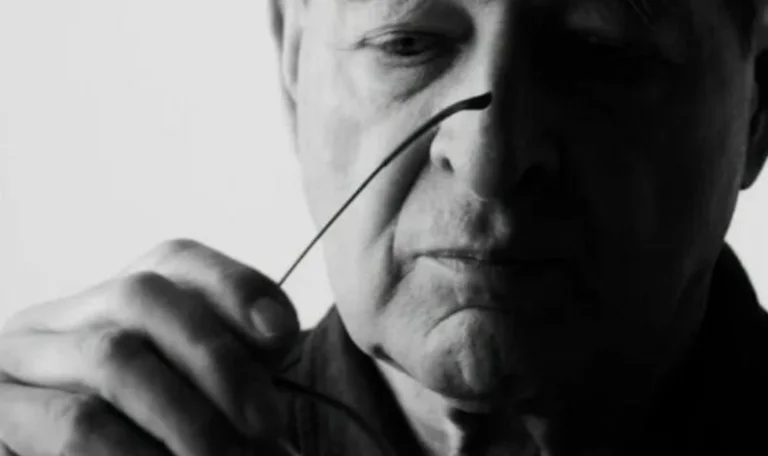
Renowned Hungarian writer Péter Nádas, one of the most important voices in contemporary European literature, has died aged 83.
The news was confirmed by his publisher, who said that Nádas died at his home in Gombosszeg, a village in southwestern Hungary, where he had lived away from public life for decades.
Nádas was born in Budapest on October 14, 1942. He survived the Holocaust with his family by hiding and using forged documents. However, during his childhood, the family’s Jewish heritage was not discussed.
His parents were committed communists, but later became disillusioned with the ideology. Nádas’s mother died of an illness when he was just 13, and three years later, his father took his own life.
Nádas began working as a journalist in 1965 and continued in the profession until 1969, before devoting himself entirely to literature.
He became internationally known with the novel “A Book of Memories,” which took him nearly 12 years to write. The work, around 1,300 pages long, was considered a turning point in his career and one of the most important novels in 20th-century European literature.
Another major work was “Parallel Stories,” which Nádas worked on for 17 years. The novel, more than 1,000 pages long, weaves together characters, events and different historical periods, creating a complex literary universe.
In his works, Nádas explored 20th-century Europe, the traumas of wars and dictatorships, memory, desire and human relationships. The body and people’s physical experiences hold a special place in his writing.
Nádas was also the author of the two-part memoir “Shimmering Details,” a work that represents a profound confrontation with family and collective history and memory.
Since 1984, the writer had lived in Gombosszeg, in a traditional rural house built of clay and wood, with his wife, Magda Salamon.
In recent years, Péter Nádas’s name was often mentioned among contenders for the Nobel Prize in Literature. However, in 2025, the prize was awarded to his compatriot, Hungarian writer László Krasznahorkai.
With his monumental body of work and distinctive narrative style, Péter Nádas leaves behind an important legacy in European literature and one of the most profound literary portraits of the turbulent history of the 20th century.
Related
Arts
José Saramago, the writer who challenged the world with the power of words

Arts
‘Star Wars’ and ‘James Bond’ actress found dead
Arts
The National Theatre of Kosovo’s “Romeo and Juliet” to be presented at the “Moisiu” Albanian Theatre Festival in Skopje

Arts
The film “DUA,” Kosovo’s Oscar submission, presented to the public in New York

Arts
“All About Eve,” the drama that revealed the ambition and rivalry behind the glamour of the stage

Arts
Creative Europe Opens New Calls for Artists and Cultural Professionals

Arts
“Sacrifice” fills theaters at premiere, story of five brothers moves audience to tears

Arts
This Is What the Kosovo Opera and Ballet Theatre Is Expected to Look Like

Arts
Blerta Rugova presents her first book, “RUGOVISM – The quiet revolution that begins within us”

Arts
Johnny Depp turned down the role in “Titanic” because he couldn’t read 15 pages of the script: I struggled

Arts
“Kadare’s Kosovo” exhibition opens on the 90th anniversary of the writer’s birth
Arts
“Kadare’s Kosovo,” an exhibition dedicated to the 90th anniversary of the great writer’s birth





