
Hearing a new pop star in 2026 open a song with the words “I don’t really know how to sing,” while her voice is drenched in Auto-Tune, is certainly an unusual choice. But this is precisely the artistic world Adéla Jergová has chosen to build. The 22-year-old singer from […]
Adéla releases “Prima,” the provocative debut of the Slovak star challenging pop music’s rules
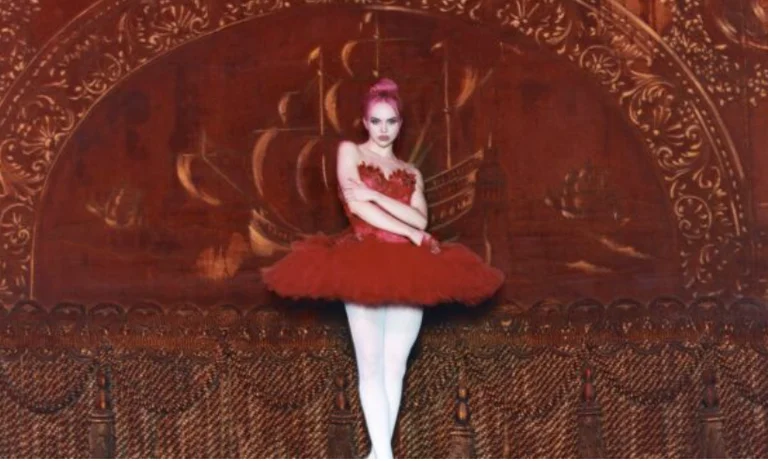
Hearing a new pop star in 2026 open a song with the words “I don’t really know how to sing,” while her voice is drenched in Auto-Tune, is certainly an unusual choice.
But this is precisely the artistic world Adéla Jergová has chosen to build.
The 22-year-old singer from Slovakia does not try to hide the machinery behind the making of a pop star. On the contrary, in her debut album “Prima,” she puts it front and center: Auto-Tune, industry executives, the ambition to become famous, sexuality, hedonism, and the compromises a young artist may be forced to make to achieve success.
At a time when audiences are increasingly aware of how the music industry creates stars, Adéla deliberately breaks the “fourth wall,” speaking openly about the very system she wants to become part of.
From a talent show to a solo career
Adéla began her journey as a contestant on a televised talent show.
She was not selected for the international girl group Katseye, a process also documented in the Netflix production “Pop Star Academy.”
However, failing to join the group did not stop her.
Well-known industry figures began to see her as an artist with the potential for a more alternative solo career. Grimes, for example, co-produced one of her early songs, “Machine Girl.”
In a market where thousands of emerging artists compete for audiences’ attention on streaming platforms, Adéla seems to have understood the importance of creating a distinctive identity.
She combines songs about a wild lifestyle, complicated relationships, and sexual adventures with ironic commentary on what it means to be a young woman trying to become a pop star.
Willing to expose the industry’s cynicism
Her approach was evident from her 2025 debut EP, “The Provocateur.”
Even the cover was designed to provoke, showing Jergová urinating in the street.
But more interesting was the way the songs spoke openly about the cynicism of the music industry and the artist’s willingness to play by its rules in pursuit of fame.
In “Superscar,” she portrayed her body, energy, attitude, and identity almost as elements of a commercial formula designed to generate profit.
The same idea continues in “Prima.”
“Marijuana” blends drugs and a sexual encounter in a car, while “KGB” satirizes the industry’s expectations for the image of a female pop star.
In “Red Bottoms,” a new romance is playfully compared to a pair of Christian Louboutin shoes.
But perhaps the moment that best sums up her approach comes in “Therapy.”
After admitting that Auto-Tune helps her vocals, she also speaks frankly about the people with power in the music industry—the executives she has to negotiate with, even when she does not like them, because they “hold the keys” to her future.
It is a cynical portrayal of the industry, but also an extraordinarily direct one.
From Madonna to ‘N Sync
Of course, the idea of a pop star exposing how the industry works is not new.
The Monkees criticized their manufactured image as early as the 1968 film “Head,” while ‘N Sync appeared as puppets on the cover of their 2000 album “No Strings Attached.”
Still, the historical figure Adéla seems closest to is Madonna in the mid-1980s.
Her name also appears several times in Adéla’s lyrics.
Madonna had no problem using sexuality, provocation, and image to achieve her stated ambition to “rule the world.”
Adéla seems to understand this legacy very well and adapts it for a generation that already knows how the industry works.
Sounds that bring back the 2000s
What makes “Prima” more interesting is that its irony and commentary on the industry are accompanied by well-crafted melodies and production that often evokes the atmosphere of the 2000s.
For a generation that was too young to experience that era, the 2000s seem to have become a kind of golden age of hedonism before the complete dominance of social media.
“Nicole Kidman” is built around a sped-up soul sample that brings to mind Kanye West’s productions during the “The College Dropout” and “Late Registration” era.
The tabla-driven rhythm of “Boys” calls to mind Timbaland’s signature productions for Missy Elliott.
Meanwhile, “KGB” was co-produced by Harrison Smith, known as The Dare, a collaborator of Charli xcx and one of the names associated with the revival of the “indie sleaze” aesthetic.
Not everything works on “Prima”
The album was reportedly made quickly so that Adéla would have enough material to support Demi Lovato on tour.
And at times, that shows.
“Hitachi” is a piano ballad about a relationship nearing its end, but it does not stray far from the classic pop formula.
“Fantasize” also fails to be as interesting as the album’s bolder tracks, despite the use of a trombone in the chorus.
But the fact that “Prima” does not sound like the perfect, fully finished product of an artist who has already found her formula is not necessarily a weakness.
On the contrary, it shows that Adéla still has considerable room to grow.
At just 22, she has already created a distinctive identity: provocative, aware of the industry’s game, willing to mock it and, at the same time, entirely open about wanting to succeed within it.
“Prima” may not be a perfect debut, but at its best it is sharp, entertaining, and bold.
And that is precisely why Adéla Jergová’s continued development may be one of the most interesting stories to follow in pop music. /GazetaExpress/
Related
Arts
José Saramago, the writer who challenged the world with the power of words
Arts
‘Star Wars’ and ‘James Bond’ actress found dead
Arts
The National Theatre of Kosovo’s “Romeo and Juliet” to be presented at the “Moisiu” Albanian Theatre Festival in Skopje
Arts
The film “DUA,” Kosovo’s Oscar submission, presented to the public in New York
Arts
“All About Eve,” the drama that revealed the ambition and rivalry behind the glamour of the stage

Arts
Creative Europe Opens New Calls for Artists and Cultural Professionals
Arts
“Sacrifice” fills theaters at premiere, story of five brothers moves audience to tears

Arts
This Is What the Kosovo Opera and Ballet Theatre Is Expected to Look Like

Arts
Blerta Rugova presents her first book, “RUGOVISM – The quiet revolution that begins within us”

Arts
Johnny Depp turned down the role in “Titanic” because he couldn’t read 15 pages of the script: I struggled
Arts
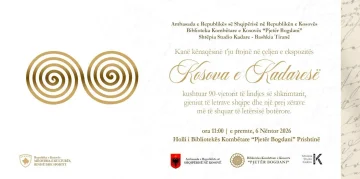
“Kadare’s Kosovo” exhibition opens on the 90th anniversary of the writer’s birth
Arts
“Kadare’s Kosovo,” an exhibition dedicated to the 90th anniversary of the great writer’s birth





