
An important archaeological discovery has been made in Qesarat, Tepelenë, where a joint Albanian-Italian expedition has brought to light the remains of a luxurious Roman-era complex, adorned with colorful mosaics and distinctive artistic elements. During the excavations, archaeologists uncovered floors decorated with mosaics depicting geometric motifs, human figures […]
A luxurious Roman complex discovered in Tepelenë; 1,600-year-old mosaics reveal traces of ancient life
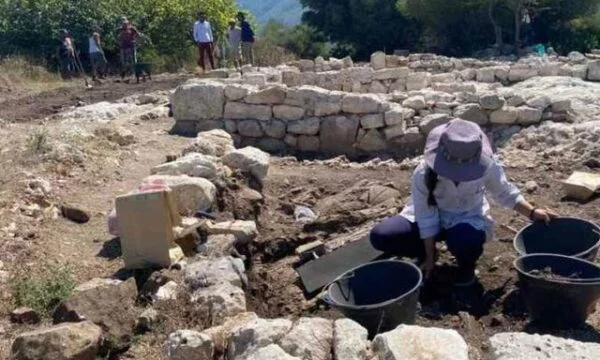
An important archaeological discovery has been made in Qesarat, Tepelenë, where a joint Albanian-Italian expedition has brought to light the remains of a luxurious Roman-era complex, adorned with colorful mosaics and distinctive artistic elements.
During the excavations, archaeologists uncovered floors decorated with mosaics depicting geometric motifs, human figures, and various ornaments. Alongside these, fragments of wall paintings were also found, attesting to the complex’s high artistic and architectural standards.
According to archaeologists’ assessments, the structure dates to the 4th century AD and provides new information about life, culture, and the organization of settlements in this territory during the Roman period.
One of the most distinctive finds is the figure of Eros, the god of love in Greek mythology, preserved in one of the mosaics despite the partial damage the structure has suffered over the centuries.
Archaeologist Silvio Fiorrelli described the discovery as an important achievement in understanding the region’s history, emphasizing that excavations require time, dedication, and ongoing scientific cooperation.
“This is a very important discovery for us. The mosaics and structures we have found provide new information about the history and life in this territory during the Roman period,” Fiorrelli said.
He also stressed the importance of involving Albanian students in archaeological expeditions, as an opportunity to gain practical experience and strengthen cooperation with Italian researchers.
“This is a project that requires time and a great deal of work, so I hope Albanian students will join us on this expedition and in future research. It would be a very good opportunity for them, as well as for the project itself, because cooperation between young Albanian and Italian researchers is very important,” the archaeologist added.
The excavations were conducted as part of the Albanian-Italian project “Landscape Archaeology in the Tepelenë-Memaliaj Area,” carried out by the Academy of Albanological Studies in cooperation with the “Aldo Moro” University of Bari and Italian partners.
The discovery of the Roman complex in Qesarat represents an important contribution to enriching the archaeological heritage of the Tepelenë area, opening up new opportunities to study ancient history and further develop research in this territory.
Related
Arts
José Saramago, the writer who challenged the world with the power of words

Arts
‘Star Wars’ and ‘James Bond’ actress found dead
Arts
The National Theatre of Kosovo’s “Romeo and Juliet” to be presented at the “Moisiu” Albanian Theatre Festival in Skopje
Arts
The film “DUA,” Kosovo’s Oscar submission, presented to the public in New York

Arts
“All About Eve,” the drama that revealed the ambition and rivalry behind the glamour of the stage

Arts
Creative Europe Opens New Calls for Artists and Cultural Professionals

Arts
“Sacrifice” fills theaters at premiere, story of five brothers moves audience to tears
Arts
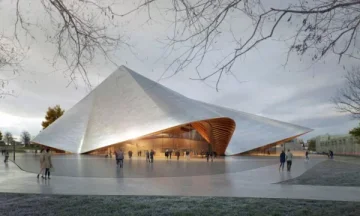
This Is What the Kosovo Opera and Ballet Theatre Is Expected to Look Like

Arts
Blerta Rugova presents her first book, “RUGOVISM – The quiet revolution that begins within us”

Arts
Johnny Depp turned down the role in “Titanic” because he couldn’t read 15 pages of the script: I struggled
Arts
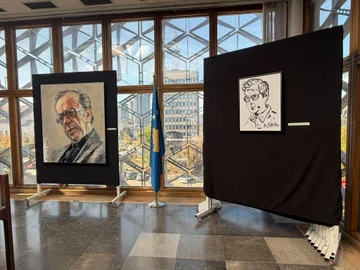
“Kadare’s Kosovo” exhibition opens on the 90th anniversary of the writer’s birth
Arts
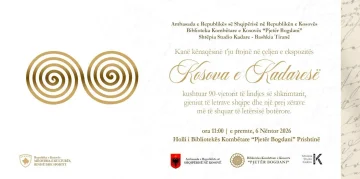
“Kadare’s Kosovo,” an exhibition dedicated to the 90th anniversary of the great writer’s birth





