
Revivals of old TV shows often end in disappointment. The new version of “Malcolm in the Middle” suffers from Dewey’s absence, “Saved by the Bell” failed to recreate the original’s magic, while “And Just Like That…” left many “Sex and the City” fans dissatisfied. So, when Netflix announced two years […]
“A Different World” Returns to Netflix – The Reboot Worth Watching This Year
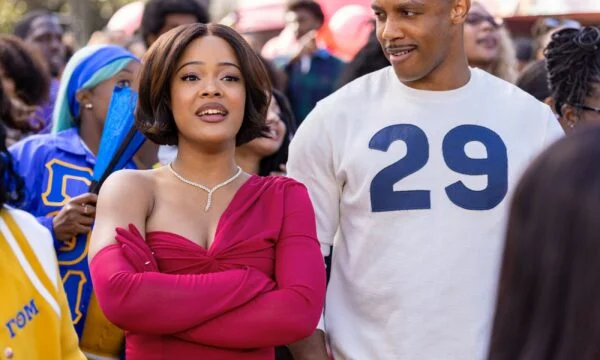
Revivals of old TV shows often end in disappointment.
The new version of “Malcolm in the Middle” suffers from Dewey’s absence, “Saved by the Bell” failed to recreate the original’s magic, while “And Just Like That…” left many “Sex and the City” fans dissatisfied.
So, when Netflix announced two years ago that it would bring back “A Different World,” many fans of the original series had more reason to be skeptical than enthusiastic.
A long time had passed since the show ended in 1992. Hillman College, the fictional university where the story took place, had gained tremendous cultural significance over the years, especially for the African American community.
The series had even influenced interest in historically Black colleges and universities, known as HBCUs.
https://youtube.com/watch?v=W8jMEXwErvk%3Ffeature%3Doembed
Nevertheless, the new version of “A Different World,” released this week on Netflix, achieves something few TV reboots have managed: it respects the original’s legacy while also creating an identity of its own.
A revival that doesn’t rely on nostalgia alone
Bringing back a sitcom may be even harder than continuing a movie or a TV drama.
It isn’t enough just to continue the story or pass the baton to a new generation of characters.
You have to create something that feels both new and familiar.
The original “A Different World” wasn’t just a series for African American audiences.
It was a spin-off of “The Cosby Show,” one of the most influential sitcoms of its time, and put the life, culture, history, and education of the African American community at the center of American television.
At first, the series followed Denise Huxtable, played by Lisa Bonet, as she studied at Hillman College.
However, when Bonet became pregnant with her daughter Zoë Kravitz during the first season, she left the series and returned to “The Cosby Show.”
That change could have sunk “A Different World.”
But in the second season, actress, dancer, and director Debbie Allen took the reins and transformed the series.
Instead of focusing the story on a single character, Allen created a true ensemble and centered it on the relationship between Whitley Gilbert and Dwayne Wayne, played by Jasmine Guy and Kadeem Hardison.
Their love story became one of the series’ best-known elements.

At the same time, “A Different World” became a mirror of African American culture, from fashion and music to social issues such as HIV/AIDS, domestic violence, and discrimination.
A Hillman College for a new generation
Showrunner Felicia Pride brings this legacy into the contemporary world.
The new series uses the visual style of productions such as “Grown-ish” and “Dear White People,” leaving behind the classic multi-camera format of ’80s and ’90s sitcoms.
However, it doesn’t go so far as to become a full-fledged drama.
Humor remains at its core.
One scene, for example, shows several freshmen running an illegal sales scheme during a football game, until a campus police officer on a Segway intervenes.
Amid the humor, it is revealed that one of them is already on probation for another case.
It’s a small but important reminder that students arriving at a university may come from very different realities.
In another moment, Glynn Turman’s character, Colonel Bradford Taylor, talks about surviving cancer and ends his story with the advice: “Get your prostate checked.”
It’s a direct return to the way old sitcoms combined entertainment with social messages.
Filming moves to real universities
One of the most significant changes is that the series was no longer filmed solely on artificial sets in Hollywood.
Pride shot most of the production at the Atlanta University Center, home to Morehouse College, Spelman College, and Clark Atlanta University.
This gives the series a much more authentic feel.
The production doesn’t try to idealize campus conditions and also includes real issues affecting HBCUs, such as chronic underfunding, institutional corruption, enrollment chaos, and bomb threats.
One of the storylines follows Hillman’s star football player, who chooses the historically Black university over larger financial offers from predominantly white institutions.
Another storyline deals with a queer student who competes with his deeply religious friend for romantic interests, touching on debates about religion, sexuality, and tolerance in the African American community.

The series also uses on-screen messages, social media, and appearances by contemporary celebrities, but these elements don’t feel forced.
Old characters return in important roles
One of the reboot’s biggest advantages is the university setting itself.
Hillman College creates a natural reason for old and new characters to meet.
Most of the original series’ main cast members who are still active return and have direct ties to the new generation.
At the center is Deborah, played by Maleah Joi Moon, the third child of Dwayne and Whitley.
Her parents also remain closely connected to Hillman: Whitley is on the board, while Dwayne serves as interim academic dean.
The series continually plays with the original’s legacy.
When Deborah’s roommate, Rashida, calls her mother, the voice on the other end belongs to Tichina Arnold, who is the real-life mother of actress Alijah Kai.
In another episode, Alijah appears in an outfit inspired by Coogi, a clear reference to the original series’ fashion.
Meanwhile, rapper Method Man has joined the cast as Hillman’s football coach.
Singer Summer Walker also appears in an episode, as Deborah and Rashida try to persuade her to perform at the students’ homecoming concert.
These appearances recall the era when the biggest hip-hop and R&B stars regularly appeared on African American sitcoms.
Nostalgia works here
What most distinguishes the new version of “A Different World” is the way it rewards fans who have followed the series for decades.
When Dwayne and his friends reminisce about their college years, their conversations contain references that longtime fans recognize immediately.
When Dwayne reveals that he and Whitley have separated, the news may seem surprising, but at the same time it makes sense given their always turbulent history.
In another scene, Deborah complains to Freddie, once again played by Cree Summer, about her overly controlling mother.
Freddie immediately understands, because longtime viewers remember all too well her difficult relationship with Whitley during their college years.
These aren’t just nostalgic references.
They create the sense that the characters have continued living even after the original series ended.
A rare story about continuity and success
This is also why the reboot works on a deeper level.
American television rarely shows African American characters decades later, after they have achieved their dreams, maintained their friendships, and built families that carry on their legacy.

Many African American cultural stories on screen revolve around trauma, separation, loss, and conflict.
“A Different World” chooses something else: continuity, success, friendship, and joy.
If the series wants to return to the past from time to time, it has earned the right to do so.
The sense of familiarity it creates isn’t simply a television technique.
It is also tied to the importance HBCUs hold for African American students, who may often feel marginalized at other educational institutions.
This was one of the reasons “A Different World” was created in the first place: to portray these spaces as places of community, identity, and opportunity.
The new version not only continues this tradition, but also manages to connect two generations of viewers without seeming to live solely in the past.
In a year full of TV revivals, “A Different World” proves that a reboot can work—if it understands why people loved the original and, at the same time, has something new to say. /GazetaExpress/
Related
Arts
José Saramago, the writer who challenged the world with the power of words
Arts
‘Star Wars’ and ‘James Bond’ actress found dead
Arts
The National Theatre of Kosovo’s “Romeo and Juliet” to be presented at the “Moisiu” Albanian Theatre Festival in Skopje
Arts
The film “DUA,” Kosovo’s Oscar submission, presented to the public in New York
Arts
“All About Eve,” the drama that revealed the ambition and rivalry behind the glamour of the stage
Arts
Creative Europe Opens New Calls for Artists and Cultural Professionals
Arts
“Sacrifice” fills theaters at premiere, story of five brothers moves audience to tears

Arts
This Is What the Kosovo Opera and Ballet Theatre Is Expected to Look Like
Arts
Blerta Rugova presents her first book, “RUGOVISM – The quiet revolution that begins within us”
Arts
Johnny Depp turned down the role in “Titanic” because he couldn’t read 15 pages of the script: I struggled
Arts
“Kadare’s Kosovo” exhibition opens on the 90th anniversary of the writer’s birth
Arts
“Kadare’s Kosovo,” an exhibition dedicated to the 90th anniversary of the great writer’s birth





