
A lack of response does not always mean a lack of empathy – fear, uncertainty and waiting for someone else to intervene often prevent us from taking the first step. A person lies on the sidewalk, appears disoriented or is clearly unwell. Passersby look at them, some slow down, but keep walking. Such scenes create the impression […]
Why Do We Turn Away When Someone Needs Help: Are We Becoming Less Sensitive to Others?
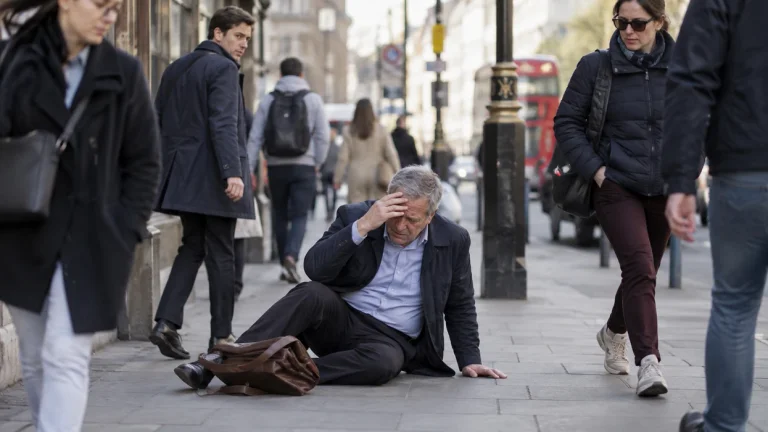
A lack of response does not always mean a lack of empathy – fear, uncertainty and waiting for someone else to intervene often prevent us from taking the first step.
A person lies on the sidewalk, appears disoriented or is clearly unwell. Passersby look at them, some slow down, but keep walking. Such scenes create the impression that people have become colder and less sensitive to the suffering of others.
However, psychology shows that a lack of help is not necessarily evidence of a lack of empathy. Between feeling concern and taking concrete action, fear, uncertainty and the belief that someone else will respond often get in the way.
Although some studies have shown a decline in self-reported empathy in certain groups, these findings cannot be generalized to all people or to contemporary society. The problem often lies not only in whether we feel something, but in whether we turn that feeling into action.
The more people around, the smaller the responsibility may seem
One of the best-known explanations is called the bystander effect. When a situation unfolds in front of many people, each person may think that someone else will approach, call emergency services or know better what to do.
In this way, responsibility is spread across the group and, in the end, no one may respond.
Studies have shown that the presence of others can reduce the likelihood that a person will help. However, this effect is weaker when the danger is clear, the situation appears serious and people can cooperate with one another.
So the passerby does not necessarily think, “I don’t care,” but may think, “Someone has probably called for help” or “The others know better what to do,” Telegrafi reports.

Victoria Jones/PA Wire
We look at others to understand how serious the situation is
When it is unclear what is happening, people observe others’ reactions. If no one approaches, an individual may think that perhaps the situation is not urgent.
A person lying in the street may be under the influence of alcohol, but they may just as well have suffered a stroke, low blood sugar, a head injury, an epileptic seizure or another medical emergency.
The assumption that they are “just drunk” can serve as an excuse not to intervene, even though no one knows for sure what has happened.
The fear of making a mistake also affects the decision: that we will look ridiculous, that the person will refuse help, or that our intervention could make their condition worse.
Constant exposure to suffering can numb us
Images of accidents, wars, illnesses and violence have become part of digital everyday life. When exposure is constant, some people distance themselves emotionally to protect themselves from anxiety and a sense of helplessness.
This does not necessarily mean they have lost their empathy. Emotional withdrawal can be a protective mechanism against overload.
The problem arises when the habit of scrolling past suffering on a screen carries over into real life.
Empathy can also be selective. We often feel sympathy more easily for someone who resembles us or whose story we understand. Prejudice against homeless people, people with addictions or mental health disorders can reduce our willingness to help.
Helping does not mean putting yourself at risk
If the situation is dangerous, for example if there is violence, traffic or a suspected weapon, keep your distance and notify the relevant services.
When it is safe, it is enough to stop, address the person and check whether they respond. If the situation appears serious, call emergency services and follow the operator’s instructions.
If there are many people, it is more effective to address one specific person: “You in the blue jacket, call emergency services,” rather than asking for help in general.
A society without empathy is created not only when we stop feeling. It is also created when we all feel something, but each of us waits for someone else to take the first step.
Related
Psychologist
Are We Really Hungrier in Winter: Cold Is Not the Only Reason
Psychologist
10 Negative Consequences of Being Too Kind

Psychologist
Why do two people remember the same event completely differently: Is one of them lying?

Psychologist
10 Traits of Smart People That Have Nothing to Do with Intelligence
Psychologist
Almost Everyone Tends to Walk Left Unconsciously – The Discovery That Is Astonishing Physicists
Psychologist
Symptoms of mental illnesses that look like normal behavior

Psychologist
Are you constantly afraid that you are ill? When concern about your health turns into anxiety

Psychologist
10 Habits That Destroy the Brain
Psychologist
From Struggling to Ask for Help to Self-Doubt: Signs of Being Misunderstood in Childhood

Psychologist
Don’t recognize yourself anymore? Six changes in your behavior may reveal that you’re under major stress
Psychologist
Do you keep saying “I’m fine” while suffering inside? Here’s what happens to your body when you bottle up your emotions

Psychologist
When They Don’t Reply, the Mind Starts Making Up Scenarios: How Anxious Attachment Can Wear Down a Relationship





