
12 curiosities from around the world you shouldn’t miss:
12 curiosities from around the world you shouldn’t miss
1. The peoples of the Ancient East are known as some of the greatest inventors and discoverers in several scientific fields. Their achievements in astronomy and medicine are considerable. One of the best-known Arab astronomers was Gjilbër Al Tarik. His travels around the world left a significant mark on astronomy. In his honor, the strait separating Europe and North Africa was named the Strait of Gibraltar.
2. The world’s longest alphabet is Chinese, which has 72 letters and a total of 105 symbols. The shortest is the Cambodian alphabet, with just 7 letters.
3. The famous Jewish scientist and physicist Albert Einstein had not spoken by the age of 9, so much so that his teacher had said: “Nothing will come of him.” Today, this genius is the father of physics.
4. It is known as one of the oldest peoples in the world, and its humility is just as great. Israel declared its independence in 1948. Not long after its independence, the state managed to create atmospheric precipitation artificially (snow and rain).
5. The Middle Ages are known as the darkest period in human history. The widespread persecution of philosophers and scientists, as well as the killing of many thinkers by the Catholic Church, imposed a silence on humanity. Pope Gregory (Gregory the Great) made a decision: people were to be tested in reading and singing. Those who could neither read nor sing could not be part of the Church or its choir.
6. Kangaroos first appeared on the continent of Australia. At first they were called “kangaroo,” which in the old Australian language meant a jumping animal. Today, we have kangaroos in different parts of the world.
7. The first academy in the world was Plato’s. His student was Aristotle, who later became a teacher and scientist. Plato founded the Academy in 387 BCE. At its entrance it says: “Let no one enter the Academy who does not know geometry.”
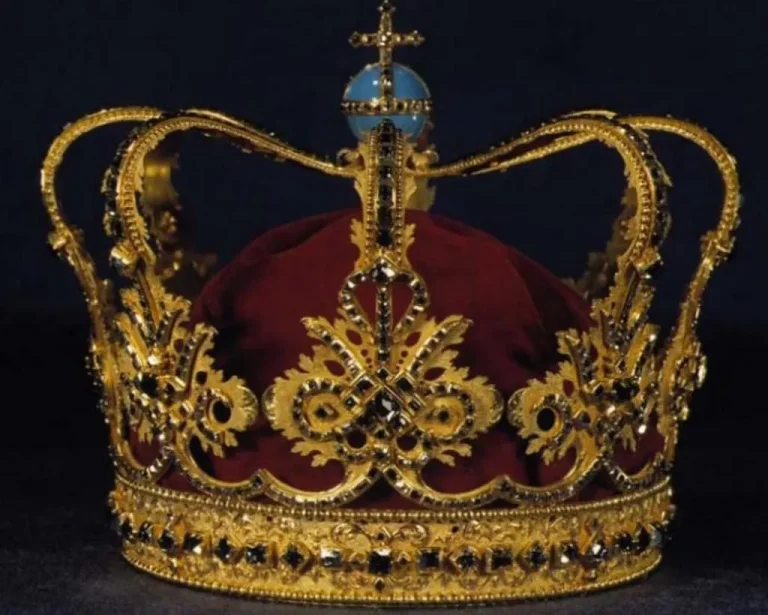
8. The crown is a symbol of the world’s monarchies, worn by queens and passed down from generation to generation in these countries. The crown was first worn by Egypt’s first queen, Nefertiti, the wife of Pharaoh Akhenaten. The couple is also known for building the world’s first monotheistic temple, named AL-AMARNA.
9. The founder of modern Turkey, Kemal Atatürk, was one of the most renowned leaders on earth. His sociocultural and economic development made him the most unique leader in the world. One characteristic of this leader was the construction of a private house on a hill near Ankara. All the achievements of the leader in question are displayed inside the house. His tomb is also located inside this house. Hundreds of thousands of world leaders were present when the modern Turkish leader died.
10. Ancient Egypt was known for its favorable geographical location, as well as for discoveries that were both diverse and mysterious. When people died, items related to their profession were placed beside their graves. A recent study reports the death of a mason who had built one of the pyramids of Giza. Many different hand tools were found beside his grave.
11. When we talk about tobacco, we immediately think of the harm it does to our health. Tobacco was brought from the United States to Europe after the Second World War. Nicotine (a poisonous component of tobacco) was named after a French diplomat, Jean Nicote, who discovered it; it was named in his honor.
12. The ancient Incas (today’s Peruvians) were a polytheistic people. During the reign of Emperor Pachacuti, they paid great honors to the dead. So much so that during festivals, the dead were taken from their graves and celebrated with the living. After the dead were reburied, they were given their most valuable belongings to take with them. However, in the 5th century AD, Catholic Christianity arrived in Peru.
Related

Curiosities
Jordan Blocks Telegram App After Deadly Church Attack to Prevent Extremism

Curiosities
Don’t Rely Only on Mileage: When Should You Change Your Engine Oil?

Curiosities
1979 Porsche 924 returns to the United Arab Emirates Police fleet

Curiosities
Restaurant in Canada bans children under 15, decision sparks debate
Curiosities
Why do mosquitoes prefer some people over others? The reason has been revealed

Curiosities
Father and son break Guinness record playing ‘Hungry Hungry Hippos’ blindfolded

Curiosities
Why Are Highway Direction Signs Green in Some Countries and Blue in Others?

Curiosities
What happens when there is a bomb threat on an aircraft?
Curiosities
NASA Searches for a Secret Underground Cave on the Moon

Curiosities
Wearing boxing gloves and a special costume, this dog became Halloween’s star

Curiosities
After 28 years and 50,000 kilometers, British adventurer Karl Bushby returns home

Curiosities
Considered completely extinct, rare mammal spotted again in the US





