
Bomb threats targeting European air traffic have alarmed authorities in Europe and caused uncertainty among passengers. But what happens on board when there is a bomb threat? Do such bomb threats happen often? The current wave of threats in Europe is considered exceptional. According to the European Organisation for the Safety of Air Navigation (Eurocontrol), on 5 and 6 November bomb threats were recorded against 14 flights on each of those days, while on 3 November there were threats against seven flights.
What happens when there is a bomb threat on an aircraft?
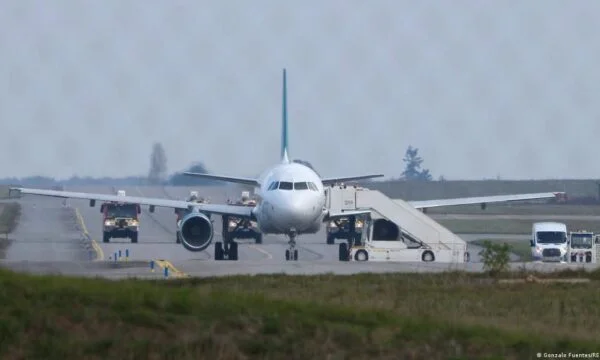
Bomb threats targeting European air traffic have alarmed authorities in Europe and caused uncertainty among passengers. But what happens on board when there is a bomb threat?
Do such bomb threats happen often?
The current wave of threats in Europe is considered exceptional. According to the European Organisation for the Safety of Air Navigation (Eurocontrol), on 5 and 6 November bomb threats were recorded against 14 flights on each of those days, while on 3 November there were threats against seven flights.
Although there are occasional threats against individual flights or airlines, such a large number of incidents within such a short period is unusual. According to German air traffic control, there is no recollection of a case of a similar scale.
According to a summary by the Aerotelegraph portal, in October 2024 several Indian airlines were threatened simultaneously via social media posts. In 2023, meanwhile, Hamburg Airport was the target of a bomb threat, which was nevertheless part of a broader wave of threats against various targets in Germany.
Who verifies these threats?
This depends on the country and how the threat is received. Airlines and airports immediately notify the security authorities and at the same time set up crisis teams to manage the situation.
For a flight that is already airborne, ultimate responsibility lies with the aircraft captain, the German pilots’ professional association Vereinigung Cockpit stresses. They decide whether the flight will continue, be diverted to another destination or make an immediate landing.
However, state authorities can restrict this decision-making, for example by refusing permission to land at a particular airport or requiring the aircraft to head to another airport, even with an escort from military interceptor aircraft.
Who is behind these threats?
This is still unclear. So far, there are only conjectures, while authorities in several European countries are investigating the incidents.
The large number of attacks is so far considered to be a coordinated action, whether by individuals or even by state-directed actors. There is also a risk that copycats will join in, making similar threats.
It also remains unclear whether the recent threats against media outlets in Ireland are connected to the incidents involving air traffic. However, according to the PA news agency, the Irish government has said that the threats against the media came “immediately after ongoing disruptions to European air traffic caused by similar threats”, and that it seems likely that this is a coordinated destabilisation campaign.
What rules apply in the event of a bomb threat on board?
Passenger aircraft crews are also regularly trained for situations involving bomb threats. Emergency plans exist for such cases, which pilots and flight attendants must follow according to established procedures. “It’s about staying calm and drawing up a plan of action,” says experienced Boeing pilot Matthias Baier.
If the aircraft is already airborne, it is usually diverted, depending on the specific threat level, to the nearest suitable airport to evacuate the passengers. This decision is made in coordination with air traffic control and the relevant security authorities.
Are passengers informed in the event of a threat?
Whether and when passengers are informed about the threat depends on the specific situation. The top priority is enabling the crew to implement the necessary safety measures properly and safely.
Depending on the procedures in place, measures such as disabling the internet on board (Wi-Fi) and the ability to charge electronic devices may also be taken.
It may also be possible, under suitable flight conditions, to reduce the pressure differential between the cabin and the outside air, in order to limit the potential effects of an explosion. A sudden equalisation of pressure would worsen the effects of an explosion.
What happens if a suspected explosive device is found on board?
“We are not explosives experts, but naturally we must do everything we can to minimise the consequences of a possible explosion,” says pilot Matthias Baier.
Special procedures exist for handling suspicious objects, and crews are trained in advance on how to follow them. The specific measures taken depend on the particular situation and the aircraft manufacturer’s instructions. The main aim is to limit as much as possible the potential consequences for the people on board and the aircraft itself.
What happens after landing?
As a rule, after landing the aircraft is directed to a special area, separate from the rest of the airport’s operations. In the best-case scenario, fire crews, security forces and specialists for investigating suspicious objects are already there.
Passengers leave the aircraft according to the specific situation and in line with the crew’s instructions. The aircraft is then subjected to a detailed inspection by the responsible experts, who check whether there is any real danger and whether or not the threat was credible.
What rights do passengers have in the event of delays?
According to the air passenger rights portal Flightright, flight cancellations or delays caused by bomb threats are considered extraordinary circumstances. This means that airlines are generally exempt from the obligation to pay financial compensation under European passenger rights rules.
Nevertheless, airlines are still obliged to look after passengers and ensure that they reach their planned destination as soon as possible. /DW
Related

Curiosities
Jordan Blocks Telegram App After Deadly Church Attack to Prevent Extremism

Curiosities
Don’t Rely Only on Mileage: When Should You Change Your Engine Oil?

Curiosities
1979 Porsche 924 returns to the United Arab Emirates Police fleet

Curiosities
Restaurant in Canada bans children under 15, decision sparks debate

Curiosities
12 curiosities from around the world you shouldn’t miss

Curiosities
Why do mosquitoes prefer some people over others? The reason has been revealed

Curiosities
Father and son break Guinness record playing ‘Hungry Hungry Hippos’ blindfolded

Curiosities
Why Are Highway Direction Signs Green in Some Countries and Blue in Others?

Curiosities
NASA Searches for a Secret Underground Cave on the Moon

Curiosities
Wearing boxing gloves and a special costume, this dog became Halloween’s star

Curiosities
After 28 years and 50,000 kilometers, British adventurer Karl Bushby returns home

Curiosities
Considered completely extinct, rare mammal spotted again in the US





