
Kosovar academic Rexhep Qosja gave an interview to journalist Rudina Xhunga for “Dritare” on Vizion Plus. Professor Qosja, what would an exchange of territories mean for Albania, Kosovo, Mitrovica, and Preševo? Qosja: I can say that I first wrote about this issue, namely an exchange of territories, 30 years ago. But later too, […]
Qosja: The process of unification between Kosovo and Albania is inevitable

Kosovar academic Rexhep Qosja gave an interview to journalist Rudina Xhunga for “Dritare” on Vizion Plus.
Professor Qosja, what would an exchange of territories mean for Albania, Kosovo, Mitrovica, and Preševo?
Qosja: I can say that I first wrote about this issue, namely an exchange of territories, 30 years ago. But later too, in 2013, I wrote about it in an interview with “Gazeta Shqiptare,” and now for the last time. Whereas previously there had been no reactions, this time there was a very large number of reactions, unexpected for me and with different content, with certain concepts, politics, ideologies that also revealed things we would not wish to hear or understand. In other words, opinions also emerged that we should think about and engage with. So there were reactions both for and against the idea of an exchange of territories, but most of them were against it.
Before we get to the reactions, Professor, can we pause on this point? The fact that you are proposing this exchange of territories—what does that mean? Are you talking about something that will happen tomorrow, something that will happen along the way, or something that is already happening but we do not understand?
Qosja: I spoke about something that I think will be the best solution for Albanians and the best solution for the region. I think—and it is not only me, but also political officials in the United States of America, and there may be some in Europe as well, and among us Albanians here—that the geopolitical recomposition of the Balkans has not, in reality, come to an end. I think that in the future, though I cannot say how soon or how far off, a geopolitical recomposition of the Balkans will take place; and unlike some of those who reacted, I think this geopolitical recomposition of the Balkans will take place to the benefit of Albanians.
Professor, this is the fear: we may agree to give, but they will take from us and give us nothing. That is the fear: Serbs may agree to take North Mitrovica, as they want, but they will never give us Preševo. There will be no exchange, only a taking.
Qosja: No, because it would be done by agreement in the presence of international actors. So an exchange of territories could only be carried out that way, and in such a case the Serbs could not take without giving; an exchange means giving and taking, and what they would give is greater, more important for Albanians, and important from a historical and political point of view because it brings, in my opinion, a peace, an understanding, a reconciliation that must inevitably happen one day between Albanians and Serbs. I want to tell you that in these reactions there were people who repeatedly mentioned Dobrica Ćosić. He is a major Serbian literary figure, a great writer who was also involved in politics; for a time he was president of Yugoslavia, after Yugoslavia’s breakup. That man spoke a great deal about the Albanian and Serbian questions and the connection between the two. People do not know; they write and speak about him without knowing anything by Ćosić, and they have not even read my nearly 30-page paper on Ćosić’s views. But that man once said that the Albanian and Macedonian questions were the most difficult issues in the Balkans. Then, after the breakup of Yugoslavia, he said Serbia should be ashamed because it had occupied Albania during the First World War for its own aims of reaching the sea, and we know that the Serbs reached Durrës and from there continued by ship toward Europe, but were stopped there too. Secondly, in 2004 he said that the unification of the Albanian people was legitimate and inevitable, whether we liked it or wanted it or not, but that it was legitimate and inevitable. You see, then, that he said very harsh things about us and our cause, in reality, but also expressed these views that other Serbian politicians and intellectuals had not expressed. Those who do not know keep mentioning Ćosić endlessly, even identifying my surname with his. These reactions have brought to light certain views that may be developing, taking shape, and gaining room in our lives—views that I call, using the phrase, national separatism, seized by chauvinistic sentiment within the nation. There were reactions in which I was denied the right to speak about these issues because, supposedly, I was not born in Kosovo; there were people like that, and a newspaper called Bota Sot, whose owner is in Switzerland. If you read that newspaper, you will see how far this separatist ideology within the nation, burdened with internal chauvinism, goes. You see how far they go. Why is this happening now? Because we have people, perhaps even officials, who may have an institution behind them, such as our Academy of Sciences and Arts, who justify this kind of national separatist ideology by invoking the state of Kosovo and the creation of a Kosovar nation. And this Kosovar nation will have its own language, its own nation, and will objectively be another nation, distinct from the Albanian nation. But can these views be acceptable? No.
When you travel, as happened to me, as happens to everyone traveling on the highway toward Pristina, once you pass Kukës, you simply see that there cannot be an Albanian state without Kosovo.
Qosja: People who think and express themselves as I said above may also need to ingratiate themselves with someone, some official or institution, but that is not a real interest. I understand the concern that the citizens of Mitrovica may have about this exchange of territory, and their concern is natural, because no family, no person, no group of people wants these changes. But we must think about what the general interest is. Despite such views, the process of Kosovo’s unification with Albania is inevitable. It is not just me saying this, and I am not saying it for the first time. Adem Demaçi said it 60–70 years ago; foreigners have said it too, as have American and European intellectuals and officials. Perhaps you heard and read what the chairman of the US Congress’s Foreign Affairs Committee said. He said that Serbs and Albanians should exchange territory, and I think he meant North Mitrovica and the Preševo Valley. He went further, speaking about Macedonia too, and of course they also speak about the inevitable unification of Kosovo with Albania. This unification is not only in the interests of Albanians. Think about this unification, objectively and naturally, geographically: how much it would advance and elevate Albanians’ lives, how much it would raise their standard of living. But I say that resolving this issue—that is, Kosovo’s unification with Albania—is also an easier solution for the region itself and for the European Union, if it remains and is preserved and if we become part of it. So it is easier for the European Union’s administration, and easier for the region, to deal administratively, politically, economically, commercially, and culturally with one state rather than two Albanian states. Now, what do these people who oppose an idea that is in Albanians’ interests want?
Marguerite Yourcenar, a great writer, writes: “Wisdom is the most difficult thing.” In other words, thinking wisely is the hardest thing. This is what we want: for people who present ideas based on their intra-national separatism, burdened with intra-national chauvinistic hatred, to begin thinking wisely about this issue.
There is a line in Saint-Exupéry’s “The Little Prince” that says, “If you want to persuade someone to work with you to build a ship, don’t tell them how much wood they will need or how much effort it will take to build it, but show them the horizons, the seas they will sail.” It seems that this is what Albanians need too: for someone to show them what national unification could bring, because listening to talk of division, Mitrovica, Preševo, foreigners, the EU has worn them down and does not help them see the horizons our unification creates.
Qosja: We can no longer justify Kosovo’s unification with Albania, Albanian unification, by appealing to the idea of our tradition or romanticism; we must justify it concretely, with concrete facts. This is precisely what you are asking: what does national unification bring to the Albanian people?! It brings many benefits for their well-being and for raising their living standards. Kosovo has certain natural and geographical features of its own; Albania has certain natural and geographical advantages. When the natural features of Kosovo and Albania are brought together, possibilities are created and expanded for all Albanians to enjoy a better, longer life. When the creative forces of Albanians in general, in Albania and Kosovo, are brought together, those creative forces yield far more and much more important fruits for the lives of all Albanians. For this reason, Kosovo’s unification with Albania, Albania’s unification with Kosovo, Albanian unification, is a natural, historical, existential promise of extraordinary importance for the life of the Albanian people today and in the historical future.
How do you think the dialogue with Serbia is going?
Qosja: I don’t know. I know that the dialogue has not been prepared; I know that when you hold a dialogue on major issues, such as issues concerning a people and issues concerning states, you need a lot of consultation with different people from different professions. We are not short of people; we have people who have completed different university degrees, earned master’s degrees and doctorates. Albania has even more people than we do, with greater preparation on this issue and over a century of state-level experience. The experience and knowledge of these people should have been used. Talks with Serbia began without consulting almost anyone, and it is no coincidence that they ended up signing two agreements, one in Vienna and the other reached in Brussels: the agreement on the association of Serb municipalities and the agreement on demarcation with Montenegro. Those agreements were signed and finalized. It has become clear that both have failed; more than a year has passed, those agreements are being dragged along, and now the politicians are going around in circles about them. Why did this happen? Because they consulted no one, as people who deal with such matters usually do. Now we hear from some of those who work on these matters at various conferences and on television, but they were not involved before, and their views have emerged as they have. Those talks were, and continue to be—I do not want to offend anyone—but if we look at them closely, they were more or less amateur talks that did not deliver what they were supposed to. Did you see what happened in Mitrovica now? On January 4 we had Ramush Haradinaj’s detention in France; we had the construction of the wall near the Ibar from December. South Mitrovica has a municipal administration, but the wall was built right before its eyes, and that administration did not hear that a wall was being built; it only heard about it later, after the wall was completed. Then the train, decorated with saints and devils, set off toward Mitrovica, but was stopped in Raška, which I don’t know how many kilometers from the border it is—perhaps 10, 15, 20 kilometers—but that train was stopped. Our police went to Mitrovica. How did all this happen? How was that wall built before the eyes of the North Mitrovica administration without any reaction from that administration, and now we hear praise for the mayor of South Mitrovica for helping to demolish that wall?! How did that train get stopped there, so far away, while our police went all the way there? I don’t understand. Now I read what foreign European and American news agencies write and say; the internet makes it possible to hear what is being said and written in Belgrade, Tirana, and here in Pristina too. I don’t know how that train was stopped there and the police went there. Who ordered it, how did they order it, was there some kind of agreement there? Some say that the Pristina administration and the Belgrade administration agreed to stage a show. I do not believe that possibility; I believe in the reaction of our officials, and I believe in the reaction of European officials and, naturally, above all, that of the United States of America. Nevertheless, something about this matter remains unclear and unexplained to the end. Those talks with Serbia are not right and they should be discussed; those talks must be prepared with a series of conditions that must be made prerequisites for negotiations.
A few days ago, in a joint interview between President Thaçi and Prime Minister Rama, they spoke about war and peace. Professor, do you see a war anywhere?
Qosja: No. I do not see a war over the problems I spoke about today. Someone is dramatizing this matter to cover up other issues, but I do not think there is a possibility of war. The United States of America is not at Bondsteel for nothing; it did not decisively support our liberation army in liberating Kosovo, it did not decisively help make Kosovo free and independent, only to allow a war to break out now, under no circumstances. Nor will the European Union, because it is not in their interests. But others are talking about this war to cover up some other evils and create tensions that suit someone.
So, more than Prime Minister Rama or Kosovo’s President Thaçi, you believe in President Trump.
Qosja: I believe in the United States of America. I have said it and I repeat it: the United States of America is a great country in terms of territory, population, economic development, military power, and political power in the world. I consider its interest in the global, planetary situation in general legitimate, natural, and necessary. A state made up of all races, nations, and religions has a moral, political, and ethnic right to take an interest, and without it there would be chaos on the planet, without the United States of America. They are the power that creates a balance on this planet. I have confidence in the United States of America that tragedies like the ones that have happened cannot happen in Kosovo.
Hillary Clinton, an important name for Albanians, did not win the election; Donald Trump did. Do you think America will treat Albanians differently now?
Qosja: Donald Trump has now won the election; he is the president of the United States of America. He has expressed some views that many people did not like; he has certain outlooks and concepts that bring many changes to American policy, and those changes have caused some concern in the European Union, China, Mexico, and other countries. Nevertheless, we must wait and see how the policy of the president of the United States of America, Donald Trump, and his team will be implemented. But I believe—and the defense minister, the Pentagon, said so—that the policy toward Albanians, Kosovo, Albania, and Albanians will not change; the same policy of support from the United States of America will remain. We are not people who have fallen from a pear tree and will do everything for us simply because we are who we are, because we are the best in the world; no, they also have certain geostrategic interests. Fortunately for us, our national interests and the interests of the United States of America have converged, and America sees Albanians as its sincere, natural, understandable, and necessary ally.
I believe you have followed the media coverage, which has spoken a lot since President Trump’s election about the way Prime Minister Rama expressed himself about him?
Qosja: Every citizen, intellectual, politician, every person in a political, party, or state position has the right to express views about different policies and politicians. It may be that such views should be more restrained during elections, for those taking part in the elections. Perhaps during campaigns one should not express views, since that shows one’s bias toward one candidate or another; in my opinion, one should be more restrained. Perhaps Albania’s prime minister would have acted better if he had been more restrained and had not made statements about this or that candidate during the campaign. But that does not mean it is unacceptable or impermissible to express a supportive view after the campaign, or regret that the other candidate did not win, does it?! I do not think that the statement made at the time by Albania’s prime minister could have consequences for Albania, certainly not, but nor do I think there will be consequences for Albania’s prime minister himself, I think. I do not want there to be consequences, but I also do not think there will be any.
Because you like Edi Rama, and nothing has changed in how you view Albania’s prime minister.
Qosja: I think Edi Rama—I have even written about this—when he was in Belgrade and a small campaign was organized against him after he spoke and made his appearance, I expressed some views about him. He is a politician, statesman, and intellectual at the same time. To me, he is important first of all because he has begun to reform Albania, make it a modern state and Europeanize it. Albania was as it was, somewhere between autarky and anarchy; that was Albania. Edi Rama wants to reform and modernize Albania, and that is no small thing; it is very important for Albania and Kosovo. The reform being carried out in the justice system is of existential importance, not only politically, not only for Albania’s international status, but of existential importance for the Albanian people themselves. It is a reform that promises to remove, stop, prevent, and curb many of the evils in the lives of the Albanian people in Albania, and I think that we in Kosovo will learn from this reform too.
Nevertheless, despite all the support I have given and continue to give Edi Rama in his efforts to reform Albania in general, not only the justice system but all other fields, there are some of Edi Rama’s actions and views I would not like to see. For example, I would like to see him on television less. Television promotes people for a while, but it can also harm and destroy people if they overdo it. So, moderation—and the principle of moderation was formulated in ancient Greece by Plato and Aristotle—is an element of scientific work, artistic work, ethics, people’s conduct, and their political and state organization.
Moderation is very important; it demands a measure, and I would like Edi Rama to exercise that measure in his public appearances and not appear in place of all his ministers, but let the ministers themselves appear on a range of issues, rather than Albania’s prime minister, not the head of Albania, but the ministers, since these are their areas, and they are listened to with just as much interest—or, when they appear rarely, with even more interest than the main figures.
Secondly, I would like him to prepare himself on some of the issues he is addressing. For example, when it comes to the exchange of territories, I would like him to prepare himself on certain matters that we call scholarly, which he discusses. In the democratic world, senior state and political figures do not deal with history, whereas here everyone is dealing with the history of literature. They are not experts, they do not know the history of literature, but they deal with it anyway, assess writers, assign them grades, declare them great and towering figures, but this is not their field and they are not prepared for it. This happened under communism: Stalin made various creators into eternal authorities. But in a democracy, I do not know whether one hears a European or American statesman making such assessments of creators, writers, composers, actors, directors, painters, sculptors. So I would like Edi Rama not to venture so readily into such scholarly assessments, because it is not his field, he is not qualified, and listeners may think the reasons are not scholarly but something else—political.
Thirdly, I would not like Albania’s prime minister to get involved in religious issues. No. Albania and Kosovo are secular states; religion is separate from the state. We have no right and should not allow ourselves to speak in a way that gives people reason to think that one religion or another is being favored. Politicians should not deal with religious matters. There is the law, there is the Constitution; religious matters are also regulated by law, and the laws and Constitution should be applied to religious matters, but political figures should not speak about religious issues in a way that could be seen as taking sides. For example, Albania’s prime minister spoke about the former president of the Democratic League of Kosovo, saying that he had changed his religion. This cannot be proven, and I think he was wrong to say it because it sounded like propaganda. Until his family has said so—and no one knows except his family; his children and wife have not said whether he changed his religion or not—the rest of us have no right at all to express views on that matter. Therefore, I think Albania’s prime minister should not have, and should not, venture so readily into religious matters.
Another thing: Pope Francis is a great religious, moral, and ethical figure, and he is also seen as a major political figure. Today he may be the world’s most influential ethical figure. He is a figure whom, I do not know, anyone would not feel sympathy and general devotion toward. I feel great devotion toward that religious, ethical, and political figure, toward his words and his influence in the world, but I do not consider it reasonable to erect a statue of the Pope in a secular state. Such things do not happen in Europe, or have happened very rarely. I do not consider this reasonable, and I do not consider it reasonable because, first, Albania is a secular state and we should not attach religious meanings to it; and second, we are a people of three faiths and must take care to preserve the centuries-old harmony that continues and that we want and hope will continue.
What about introducing religious education into schools, Professor?
Qosja: Introducing separate subjects on Christianity, the Orthodox faith, the Catholic faith, or Islam is absolutely out of the question. But teaching the history of religion, the formation and development of religion, yes—as a subject about religion, about the history of religion in general, but not about individual religions. We cannot divide schools, we cannot divide students at school or their views at school. We should teach them what religion is, why religion was created, how it developed, and so on. So I support the history of religion as a school subject, covering the creation, formation, and development of religion, but not individual religions.
You have just listed three important points that, in fact, you had not raised before about Albania’s prime minister, Edi Rama. Meanwhile, have you followed developments in the coalition in Albania, the problems, the clashes between Mr. Meta and Mr. Rama? Have they caused you tension or uncertainty, or is this how politics works?
Qosja: I do not know if it works like that everywhere. It works like that here, and I say without hesitation, with a conviction of my own—though I hope it is only mine—that it works in a way that is abnormal, irregular, unnatural, not beneficial, and contrary to the general interest most of the time. A state alliance between two or three parties is not a party. There can be different views within one party, but not when you have a coalition between two parties. If they do not share positions on different issues, they can do damage. I followed LSI’s reactions during the efforts to reform the justice system, and I must say that at certain moments those reactions did not please me; they did not help the cause, and they greatly prolonged the efforts to implement that reform. At other times too, LSI has reacted against the Socialist Party, its main ally. Could those people not reach an agreement beforehand and come out with one view? In my opinion, they can and should, because it is in Albania’s interests and in the interests of the reforms being carried out in Albania that, as long as they are together, they should stay together.
Do you think they are together? Can these people stay together after what the former justice minister, dismissed by Rama, said?
Qosja: I do not know if they will be able to stay together; I do not know. The Socialist Movement for Integration sits on two chairs; it has little understanding not only for individuals, intellectuals, and politicians, but also for political parties that sit on two chairs. Historical experience has shown that those who sit on two chairs often end up between them. You understand me—they end up on the floor, between two chairs.
So do you foresee this kind of fate for Mr. Meta, or are you simply advising him to be careful?
Qosja: Ilir Meta gives the impression of being an astute, capable politician, but political skill, intelligence, and experience, in my opinion, are always more successful and more beneficial to the common good when they also have a solid ethical foundation. I am not sure LSI has that solid foundation, given how easily it can sit on two chairs.
Meanwhile, the PD is unchanged, or does Berisha’s successor, Basha, show that something has changed and is changing in that party?
Qosja: I think Albania’s Democratic Party is an important party for Albania, necessary and beneficial. Every government needs an opposition, and the Democratic Party, as the largest opposition party today, is very much needed by Albania and by those in power—the Socialist Party and the Socialist Movement for Integration. They need the opposition’s observations, criticisms, reactions, and disagreements. But in my opinion, in my conviction, the reactions of Albania’s Democratic Party are not mature or useful political reactions. I think they are not useful not only for Albania’s general interest, but for the Democratic Party itself either. The leadership of that party terrorizes Albanians in general with lies. I experience the reactions, words, and language of the current chairman of the Democratic Party, Mr. Basha, as a terror of lies. He and his associates, perhaps on the party’s executive committee, constantly talk about Edi Rama’s crimes, that he is connected to crime, works with criminals, has made people into criminals, will turn them into criminals, criminals here, criminals there. Well, if Albania’s prime minister is such a criminal in every field, allied with criminals, serving only criminals, then why is that man not in prison? Why is he free? Why is he Albania’s prime minister? Why is that man, who has been prime minister for almost four years, not in prison? How can anyone speak like that? Where does that language come from, what evidence supports it? The language of Albania’s Democratic Party, the language of the chairman of Albania’s Democratic Party, is not the language of a politician, it is not the language of the head of an opposition party; it is the language of a police officer, prosecutor, and sentencing judge, but not of a politician. That language consists solely of judgments, without data, arguments, or evidence. Well, politics cannot work like that. It is harmful, fruitless, unethical, failed propaganda, and I think he is damaging his own party with that language. You see, then, that our political language is constantly filled with hatred. In my book “The Corrupt Power, Protagonists and Victims,” I wrote about the language of the Albanian political class, a language filled with hatred. How can such language be allowed? It does a great deal of harm; it harms young people, pupils, students, and the people. There is something that holds Albanians together; they would not have stayed together, they would have disappeared and been assimilated, Albania would not have had Albanians, if there had not been something keeping them together: a shared sensibility, a shared culture, a shared history, a shared life, a shared ethic. With that language of hatred, all of these are being overturned, the centuries-old, millennia-old bonds between Albanians are being severed by that language of hatred.
Professor, the opposition is making strong accusations and constantly speaking about the spread of cannabis in society. Is that, for example, hate speech, or is there evidence that Albania has been flooded with cannabis?
Qosja: The problem of drugs, as can be seen, exists; it is a problem that must be solved, that must be brought to an end. It is not easy, when you see where drugs are being grown everywhere; I even heard on television that drugs had been found growing in my own mountainous region. But the opposition also uses this for some of its own political purposes, rather than to solve the drug problem.
I have not heard anyone address another aspect of drugs—the cultivation, processing, and sale of drugs—and that is the ethical aspect. We must deal with the ethical side of drug sales; psychologists and sociologists should address drugs. Drugs do not destroy only one person, one pupil, one student, one girl, one individual; they destroy an entire family. This is a major ethical problem that must be addressed and incorporated into the fight against drugs.
Then these drugs, which our people are taking and selling in European countries, create a poor image, a bad image of us Albanians.
So we must fight drugs for the sake of our national dignity too, and Albanians have shown throughout history that they have a sense of responsibility and conscience, and high ethical principles.
There is a man in Albania who speaks excellent Albanian, the American ambassador Donald Lu, who recently revoked visas for prosecutors and judges and has created an unusual situation in Albania. How have you followed this?
Qosja: I have followed American Ambassador Donald Lu and the EU ambassador, Romana Vlahutin, from the beginning. Despite what has been said and written, I have considered his reactions and appearances—which in some cases may seem a little excessive—beneficial for Albania; he has helped the reform process the government is pursuing in Albania. I just heard what happened and what is happening over the disagreement with the chief prosecutor. I do not know if what I heard is true, that the chief prosecutor sent his wife to America to give birth for health reasons; Europe is also there for health reasons, and it is closer. I have heard that he took his wife to the United States of America to give birth there so that the child could obtain American citizenship. If that is true, Albania’s chief prosecutor loses the confidence Albanians should have in him; in my view, he loses legitimacy as Albania’s prime minister. When I heard this news, I began to think that this chief prosecutor does not deserve to be Albania’s chief prosecutor—unfortunately—and I agreed with Ambassador Donald Lu.
So you have no doubts; you are with Ambassador Lu.
Qosja: No, I have no doubts. The newspaper Tema put it well: “Will Albania declare its support for the United States of America or for the chief prosecutor?” And I think Albania has declared its support for the United States of America.
Meanwhile, the visa ban for several members of the Albanian justice system was an unprecedented act, and it was not received negatively by Albanians; on the contrary, they want this to continue with politicians as well.
Qosja: This is not the first time the United States of America has done this; in addition to revoking visas, it also takes other measures, as I have heard—for example, freezing assets held in banks, and so on. These are measures taken by a state and continue to be taken. We may not understand these measures, but the United States of America surely thinks that such measures help resolve certain issues in the states it is interested in.
Fair treatment and justice for all citizens, all people—those in the highest positions, those with special status, and those who are poorest and most neglected—does justice bring people hope, or does it demoralize them completely?
Qosja: It was not for nothing that wise Europeans said, “Justice and justice alone holds cities and states together.” Without justice, cities and states collapse.
Meanwhile, many things among Albanians have come from abroad, not from within, ever since our independence, Kosovo’s independence, and other developments of ours. This very important reform—the justice reform—is also not internal, not coming from within; it is foreigners who are demanding it and want to implement it. Does it seem that way to you, Professor?
Qosja: It is not good that Albanians’ main initiatives and processes come from abroad, from foreigners, and not from themselves, and this happens because Albanians do not get along well with one another. When I wrote the book “The Albanian Question: History and Politics,” I did not find much material in Albanian. Unfortunately, our writers left us no memoirs, no documents, or very little correspondence; they did not leave us their personal archives. We had no state, no administration through which to have state documents, and no books were published on our political and state affairs. I had to use literature from the languages of the peoples of Yugoslavia, and there I found various writings about Albanians that had been translated by Serbs, Croats, Slovenes, Montenegrins, Macedonians, but especially Serbs and Croats. The records say that Albanians have harmed one another more and suffered more at one another’s hands than at the hands of foreigners. Is this happening today too? When we look at how those in power behave and at the opposition, it seems that this is happening today too, both in Albania and in Kosovo. Albanians cannot act on their own, which is why they have not taken initiatives on their own main historical and existential issues; instead, unfortunately, these have come from others. Yet they should do it themselves. As you have seen, Albanians expect everything to come from Europe and the US, but not because those are their great words, which they utter before their listeners and viewers day and night without pause, covering up their own issues that the people do not want to hear or see. This is a particular kind of demagoguery, a deception of listeners and viewers practiced by those in power in Albania and Kosovo. What we want to see is for them to stand upright, but we are not seeing that. They must do some things themselves instead of asking only for help from the EU, the United States of America, and so on.
You are among those who do not give up: you keep writing, you keep reacting, you are not among those who surrender to the crowd. Meanwhile, is there a hidden disappointment in you that you pass on to your great-granddaughter, for example by secretly wishing she would leave Kosovo and live abroad? Or do you tell Rinesa other things?
Qosja: One day, I heard a young lawyer say, “To fall into the hands of our judiciary in Kosovo is hell, and living here is terrible.” Look, I had never heard this assessment of Kosovo’s judiciary, but it gravely violates human rights, and with it the state of Kosovo’s rights as well. If a complaint you have filed in court is not dealt with for 5 years, 6 years, 10 years, then throughout all those years your human rights as a citizen have been violated, because if you think you have suffered an injustice of one kind or another and have appealed, seeking justice from the judiciary, and they do not resolve it for you, your human rights continue to be violated. They do not think about this. I have never heard a judge address the problem this way. I heard that more than 100,000 court cases are unprocessed in Kosovo. Where do we live? In the Amazon in Brazil, or in a state with judicial institutions? Where do we live, that we have to wait so many years for our case to be dealt with? And who knows why they are not dealt with, who knows who intervenes there—and this makes civic life insecure, without legal or state security. Those people in the state may have security, but not you as a citizen, who is equal to them and thinks, what am I doing here? A great political and moral figure of Kosovo, an orienting, ethical, major name in the life of Albanians, said, “Oh, show me where the farthest place is, so I can go.” You see, then. Anyone who looks at what is going on in our lives sees, on the one hand, corruption, nepotism, organized crime, and extraordinary privileges for those in power, and on the other, the poor, the silent, the scorned. On one side you have those in power demanding supplementary pensions, salaries five times higher than the average salary in Kosovo, demanding special trips whether necessary or not, enjoying extraordinary privileges, eating and drinking, and having phones paid for by the state. So what is a poor citizen looking for there? On one hand, you have what I call pseudo-patriotic rhetoric, constantly invoking the United States of America, the EU, Euro-Atlantic integration, and on the other hand you have despotic, unconstitutional behavior. How would you feel there? What are you looking for there? There are many people who think that way, but we do not express that dissatisfaction, even though they see all of this happening among those in power and disagree with it; they do not come out and protest as people are doing, for example, in Romania now. I have a great-granddaughter who is two and a half years old, and I want her to grow up in Kosovo. I do not know whether I will live to see it, whether life will give me enough time to educate her properly, but I believe that in her education, her commitments, outlook, and sensibility, this one and only asset I leave behind will also have an influence—and that is my library.
Are you afraid of this world that does not understand this treasure, a different world that even frightened Umberto Eco?
Qosja: Yes, I have read Umberto Eco’s letter to his grandson. It made a great impression on me. I have read some of his works, though not all. To me, he was a great literary figure, perhaps Europe’s greatest, and I was very surprised that he died without being awarded the Nobel Prize. Europe’s greatest writer and intellectual passed away without receiving the Nobel Prize. This letter shows the tremendous intellectual and moral power he had. He understood all these changes brought about by extraordinary modern technology, which has changed world civilization—electronics—but he did not lose faith in the book. He tells his grandson, while recommending books he should read, “Do not lose your memory; take care of it.” We have computers, but we create and nourish our memory in life through other people, and especially through books; books create our memory, and that memory keeps us alive, enriches us spiritually, enriches our feelings—a memory that does not come from today’s technology, no, but is received from other people, from life, and especially from books. So, it greatly elevates memory, and with it elevates the book too. I have also read other writings by Eco. He calls the book immortal, yet only with a book can you spend day and night and learn from it. The book is eternal, and we should want it to be eternal. It is no coincidence that the number of books published now, in 2016, is many times greater than the number of books published previously.
You believe in books.
Qosja: Yes, I believe in books.
Professor, I would like to end with faith in books, because we want to believe in books—what else can we believe in? Finally, you were not at Dritëro Agolli’s funeral. Would you have preferred to pay your respects to him while he was alive, rather than see him depart, even though they accompanied him with carnations and roses, and with his work?
Qosja: I would have liked to be there at Dritëro Agolli’s funeral. My physical condition at the time did not allow me that opportunity, and I say this with great regret. I followed the entire tribute to him, from beginning to end, and it was a very dignified farewell, something Albania has a great deal of experience and tradition in and does very well. The tributes paid to Dritëro Agolli were especially well done; he deserved them as a singular, highly original figure in Albanian literature, culture, and social and political life in general. I congratulate those who organized such a beautiful tribute to Dritëro Agolli, and I was glad that something which is not respected today was respected then. Literature was respected, the arts were respected, culture was respected—which, if you look at other days, is not given as much regard as it should be, not even in school curricula. Albanian literature and language are not given as many class hours as they are in Europe. I read that in European secondary schools, the number of hours is 10 per week. I do not know how many it is here. So the number of literature classes is high around the world. Literature and language are two great subjects that preserve our culture and enrich it, our lives and our identity. Language and literature, which are our culture and identity, need special care and commitment from the state, which, unfortunately, they do not receive today.
Not only language and culture, but also linguists, scientists, and artists who are no longer with us. I can now distinguish every new book you have added to your library. I also saw “Prince of Arbër” by Pëllumb Xhufi there; everything people do is done by themselves, everything is private now. The state pays no attention to them except when they die.
Qosja: No, it does not, and that is a major mistake. Today, in the world, these countries that have progressed, that are developed and have a high standard of living—such as France, Germany, Italy, Spain, Great Britain, and so on—make policy based on science. In the United States of America, they do not make amateur policy; they make policy based on scientific data. And if we do not pay attention to science, including in policymaking; if we do not put science, professionalism, and culture at the forefront of our political, social, and state life, then our affairs will go badly, and things will go badly for us.
This interview and the views I expressed may not please some people and some of my friends, whom I have known for many years. Usually I do not take this into account, whether they like it or not; what matters to me is telling the truth. I think that through truth and justice you serve the people you belong to best. There is a Greek writer, Nikos Kazantzakis, who wrote the famous novel “Report to Greco” and asked for this thought to be placed on his grave: “I fear nothing, I hope for nothing, I am free.” I am at an age where there is nothing more I need to seek; at an age where, as much as I can and as my age allows, I wish to enrich my creativity, my work. I am not afraid of the views I express, and thus, by wanting nothing else, fearing nothing, and hoping for no special privileges, I feel completely free. I am free.
Professor, thank you!
Qosja: Thank you too! You are a journalist and publicist, but also a writer. When I speak with you, I know I am speaking not only with a journalist having a conversation with me for television, but with a distinguished writer who will continue to bring ever more valuable new works to Albanian literature, and I wish you well.
Related
Interview
Sabedini: The Hague trial has lost credibility; I expect an acquittal for the accused
Interview
Ukrainian journalist staying in Kosovo: Serbia is helping Russia with fighters and propaganda
Interview
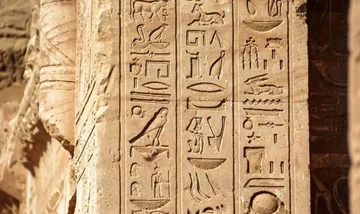
The Ancient Egyptian Alphabet: What Are Hieroglyphs?
Interview
Kuçi after the cameraman’s arrest: They arrest the cameraman more harshly than the woman’s murderer
Interview
Vjosa as an Instrument
Interview
The mysterious murder of Festim Lato: the “Prime Minister of the Republic of Chameria” speaks
Interview
Sejdiu: The President has no mandate to discuss border correction
Interview
Çollaku: Dialogue should bring everyone together
Interview
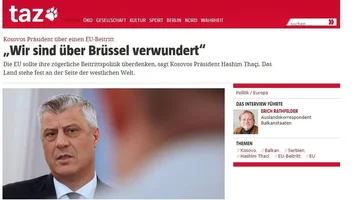
Thaçi to Tageszeitung: Anti-Western ideologies have no chance in Kosovo
Interview
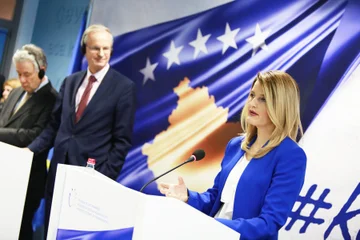
Hoxha: In 2018, we must shift into sixth gear
Interview
“Kosovo cannot progress with this political elite”
Interview
Haradinaj in Tagesspiegel: Kosovo Is Not Yet a Finished Product





