
Before his visit to Albania (20.02), German MEP Knut Fleckenstein, the European Parliament’s rapporteur for Albania, tells Deutsche Welle that the June elections are a key moment for opening negotiations. Mr Fleckenstein, what is the purpose of your visit to Tirana today? Knut Fleckenstein: The purpose is threefold. First, the European Parliament has just adopted the report I prepared […]
How realistic is the opposition’s fear? - Fleckenstein in Tirana

Before his visit to Albania (20.02), German MEP Knut Fleckenstein, the European Parliament’s rapporteur for Albania, tells Deutsche Welle that the June elections are a key moment for opening negotiations.
Mr Fleckenstein, what is the purpose of your visit to Tirana today?
Knut Fleckenstein: The purpose is threefold. First, the European Parliament has just adopted the report I prepared. It is important to me to speak with all the stakeholders there, both civil society and politicians, to discuss what Parliament is saying. This is followed by the second purpose, namely the concrete implementation of the justice reform, which is so important for the country, so that, hopefully, we can begin accession talks in the autumn. The third concerns our expectations regarding the elections, and in this context I will also bring with me the OSCE/ODIHR recommendations.
After your report, the chances seem very good… or are the elections also awaited…
If implementation of the justice reform begins, that is, if the vetting process gets under way, the chances are good, because almost all the parliamentary groups have acknowledged that the Albanian government and parliament have done a great deal lately to move towards the European Union.
…but the opposition in Albania does not see the situation that way. The opposition protests began on Saturday, calling for Rama’s departure and a caretaker government. How do you view these protests? The opposition seems to have no confidence at all in this government when it comes to free elections…
The opposition always has this kind of fear before elections. I want to get an impression of how realistic it is when I am in Albania over the next few days. Of course, I will also meet representatives of the opposition.
The political sides did not find common ground on electoral reform before the elections. Problems with elections have always accompanied democracy in Albania, but this time the opposition is raising major concerns about vote-buying, allegedly with money from drugs and crime. These are very serious accusations…
Yes, but this accusation must first be proven, and it is always difficult to do that before elections. But everyone taking part in these elections should know that if they are not conducted fairly, there will be a problem with opening negotiations with the EU. So much will depend on how far the parties in the elections respect the rules of the game recognized in Europe for free and fair elections.
This claim is as old as democracy in Albania: both sides say they want free elections, both accuse each other of not respecting the rules of the game and of having manipulated the process…
Yes, that is true, but we must say that there have been improvements over the years. This time it is very important, which is why many election observers will be sent, both from within the country and from abroad, to follow very carefully what happens before and on election day.
So the assessment of the elections is a decisive moment…
Of course, this is very important. You cannot begin implementing the justice reform and hold undemocratic elections that do not respect legal criteria. That would be a sign that Albania is not yet ready to begin accession talks. It is important that there are no candidates with criminal backgrounds on the lists and that votes are not bought. I know there is money among those who cultivate drugs, but it must not be used for things like that. But I also doubt that this is a problem on only one side. (DW)
Related
Interview
Sabedini: The Hague trial has lost credibility; I expect an acquittal for the accused
Interview
Ukrainian journalist staying in Kosovo: Serbia is helping Russia with fighters and propaganda
Interview
The Ancient Egyptian Alphabet: What Are Hieroglyphs?
Interview
Kuçi after the cameraman’s arrest: They arrest the cameraman more harshly than the woman’s murderer
Interview
Vjosa as an Instrument
Interview
The mysterious murder of Festim Lato: the “Prime Minister of the Republic of Chameria” speaks
Interview
Sejdiu: The President has no mandate to discuss border correction
Interview
Çollaku: Dialogue should bring everyone together
Interview
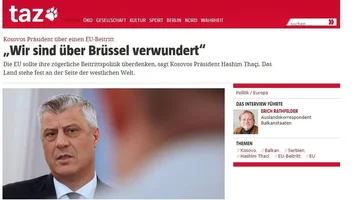
Thaçi to Tageszeitung: Anti-Western ideologies have no chance in Kosovo
Interview
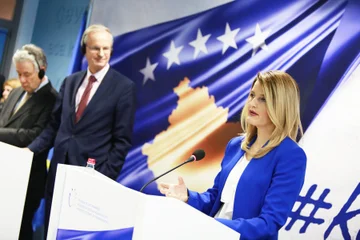
Hoxha: In 2018, we must shift into sixth gear
Interview
“Kosovo cannot progress with this political elite”
Interview
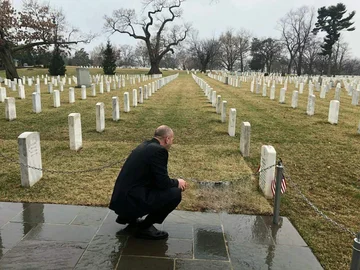
Haradinaj in Tagesspiegel: Kosovo Is Not Yet a Finished Product





