
Economic relations with Serbia should be severed, because the latter continues to lobby all over the world using all its instruments against Kosovo. But that is not all: political talks with this state should also be halted. This is what economics professor Musa Limani said in an interview with Ekonomia Online. […]
Limani: Kosovo should impose an economic blockade on Serbia

Economic relations with Serbia should be severed, because the latter continues to lobby all over the world using all its instruments against Kosovo. But that is not all: political talks with this state should also be halted.
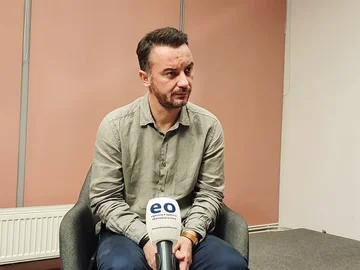
This is what economics professor Musa Limani said in an interview with Ekonomia Online. He even said that an economic blockade should be imposed on Serbia.
“An economic blockade should be imposed on Serbia because, despite Kosovo’s desire and efforts to create an atmosphere in which diplomatic relations with Serbia improve, it lobbies all over the world through all its instruments against Kosovo. Therefore, in this case, I think economic transactions, or rather economic relations, with Serbia should also be halted,” he said.
Limani stressed that the Government of Kosovo should make a decision at the institutional level and conduct an economic analysis. This is so that markets can be researched for all the goods Kosovo imports. According to him, this should happen because Kosovo’s market must not be left without material goods, since consumers are the ones who demand them.
Speaking about the Law on Trepça, he said that the failure to put “Trepça” into operation for 17 years after the war had caused the country great harm to its economic development.
“Trepça” was the driving force behind Kosovo’s economic development; it represented a pole of economic development, and, for political reasons—or, I would say, because of the negligence of the Government of Kosovo—“Trepça” has remained inactive for 16 or 17 years. This has created a void and a very harmful factor, in fact a harmful element, holding back Kosovo’s economic development…,” he said, stressing that every further delay in putting it into operation would itself pose a problem.
Meanwhile, speaking about the privatization process in Kosovo, Limani stressed that it was a failure, carried out without any economic or political analysis.
“It has carried out the greatest plunder of Kosovo’s economy and our country’s population, and, knowing the effects of the privatization process, I can conclude that privatization is a failure and was implemented without any economic or political analysis. It was treated as a process through which socially owned enterprises had to be transferred into private ownership, as if the privatization process had been misunderstood in substantive terms,” Limani said.
“The sale of Kosovo’s state-owned enterprises created just one fund, which reached 770 million, and it is not known where that money is or what its purpose is. I am not aware of a single cent from this fund having been invested in Kosovo’s economic development. So what can we say about the privatization process?” Professor Limani said.
FULL INTERVIEW
EO: Can Kosovo impose an economic blockade on Serbia? If so, how could it do that?
Limani: In principle, I would say that economic relations with a country are also conditioned by political relations. Therefore, our case is an exception: we have not had good relations for centuries, especially now with Serbia, even though our economic transactions with Serbia are substantial. Therefore, economic transactions should be conditioned on diplomatic relations. In this regard, I think an economic blockade should be imposed on Serbia because, despite Kosovo’s desire and efforts to create an atmosphere in which diplomatic relations with Serbia improve, it lobbies all over the world through all its instruments against Kosovo. Therefore, in this case, I think economic transactions, or rather economic relations, with Serbia should also be halted. To do this, the Government should, of course, make a decision at the institutional level and conduct an economic analysis, and research markets outside Serbia for all the goods Kosovo imports, so that Kosovo’s market is not left without material goods, because consumers require material goods that meet their needs. This is possible, and I am firmly convinced of it; we have many reasons. The first is political: we should even halt all talks with Serbia, while its Constitution’s preamble says that Kosovo-Metohija is part of Serbia. So what do we have to discuss with Serbia when it still considers us a province, while around 114 countries in the world have recognized us? Second, there is a lack of safety, because many food products or material goods that come from Serbia arrive past their expiry date, so this is dangerous. There are even production lines in Serbia that make products specifically for Kosovo, and it is very concerning that we may suffer long-term consequences. But whatever the case, I am firmly convinced, and I also believe professionally, that Kosovo has already delayed too long in imposing an economic blockade on Serbia. I am firmly convinced that if we impose an economic blockade on Serbia, Serbian businesses would, within three or four months, force the Serbian Government to recognize Kosovo or dismiss this Government and bring in another one. This is because Serbian businesses regard Kosovo as a very secure market, and, as is known, economic transactions—namely, imports from Serbia—amount to around 400 million a year.
EO: Is the country ready to close its trade borders, given that most imports come from this state?
Limani: Of course not. If it were ready—that is, if the Government were ready—it would do so. Naturally, the large companies that mainly import from Serbia are not interested; they are represented in Kosovo’s political and institutional structures, whether by a minister or a member of parliament. Therefore, the current structure of the Government of Kosovo is not ready to do this, nor is parliament. But I think it should be done for a better future, for the future of Kosovo. This should be pressed for by the opposition, primarily the opposition, so that they make this happen, although the opposition does not have much power, who knows how much, to do so and force the Government. However, all the factors and actions, especially those of Serbia’s political leadership, among others, show that we should impose a blockade. When we chaired CEFTA, Serbia prevented us from exporting our goods through Serbia. Therefore, I have always been a proponent of this, and from a professional point of view it is absolutely right that, with Serbia and also with other countries—especially Serbia—we should have and apply the principle of priority in both politics and the economy. Therefore, given these conditions and Serbia’s conduct, which we also saw at the United Nations Security Council, where they did not hold back their language against Kosovo, I do not know what Kosovo should do or what it should discuss with Serbia when Serbia attacks Kosovo in every way, in every institution and at every level. Therefore, I am convinced that halting political talks and imposing an economic blockade would certainly change Serbia’s course toward Kosovo.
EO: How do you assess the Law on Trepça?
Limani: I have also given my opinions on Trepça. The biggest mistake made by the Government of Kosovo, starting with the provisional government and especially after independence, is that “Trepça” has not been put into operation as a giant and a major economic system. “Trepça” was the driving force behind Kosovo’s economic development; it represented a pole of economic development, and, for political reasons—or, I would say, because of the negligence of the Government of Kosovo—“Trepça” has remained inactive for 16 or 17 years. This has created a void and a very harmful factor, in fact a harmful element, holding back Kosovo’s economic development. Therefore, I have always personally been against privatizing “Trepça,” as have others, of course. Other facilities that are of particular importance to our nation and our state should not be on the privatization list; they should be under state control. Therefore, I think one positive step that has been taken, apart from the fact that it has not been put into operation, was the adoption of the law on Trepça, under which it became a public enterprise and could tomorrow also become a joint-stock company. Its organization now depends on the Government’s approach and what it wants to do with “Trepça,” but the process of putting “Trepça” into operation must be accelerated. It should be considered a complete unit; we cannot divide “Trepça” into the north and south. “Trepça” should exist only as a single, integrated unit, as a mining complex. It may become a joint-stock company tomorrow, or something else, but the terms “northern Trepça” and “southern Trepça” must be removed from our vocabulary, because all natural resources, and also the wealth produced within Kosovo’s borders, have belonged solely to Kosovo and to no one else. Therefore, no one should be asked—not even the Serb-majority municipalities in the north, much less Serbia—about this. The Government of Kosovo must decide, because it is the executive authority and must uphold constitutional matters, territorial protection and Kosovo’s state sovereignty against anyone who challenges them. Therefore, any further delay in putting “Trepça” into operation will itself pose a problem.
EO: Will the Law on Strategic Investments help bring back foreign investment?
Limani: The Law on Strategic Investments could be a double-edged sword: positive and negative. In my view, it will be positive because there will be fairer selection and an assessment of foreign investors, and we will not have investments like those we have had so far, such as the case of Brezovica, and so on. However, this law will not attract foreign investors or diaspora capital, nor will it attract direct foreign investment from the Albanian diaspora. First, the Government must create a political environment of security and an economic environment. Politically, we must bear in mind that foreign investors do not come to a country or invest their capital where there is no security and no economic stability. Naturally, they do not come where there is no economic or macroeconomic stability. Kosovo still has the highest level of corruption; there is organized crime and economic smuggling, we are being squeezed, and the fiscal burdens are very high. All of this shows that Kosovo has not yet created an environment to attract foreign investors and the Albanian diaspora. Bearing these grievances in mind, and also considering corruption, they have withdrawn their capital rather than invest it in Kosovo, and are investing in neighboring countries such as Albania, Macedonia, Montenegro, etc. I think our Government has not done what it should for the Albanian diaspora, bearing in mind that there are very large Albanian businesses in the diaspora, from the United States to Western Europe, Australia, and elsewhere. They would be the main drivers and bearers of economic development if the Government created a political and economic environment to attract them. So far, it has not done so.
EO: A few days ago, Kosovo’s Prime Minister said that 40,000 people had found employment during his government’s term and that, as a result, unemployment had eased. Do you believe these figures are real?
Limani: Unfortunately, not only in this case but also with some other indicators, misinformation is provided at the institutional level. We would be happy if what the Prime Minister says were true—that 40,000 people had found employment during this period. However, according to the data we know, at most 6,000 to 10,000 people could have been employed in a year, taking into account both the private and public sectors. It is not possible that 40,000 people were employed in two years, even though 20,000 would have had to be employed each year. Therefore, the economic structure and level of economic development cannot absorb such a large number of workers, given that around 25,000–30,000 people enter Kosovo’s labor market, while a maximum of 10,000 are employed. Consequently, 50 percent of the active population remains unemployed. It makes no sense for the active population to increase while the unemployment rate falls, and at the same time employment also declines, only for the Government to say that unemployment has gone down. In my view, these are statements signaling that elections are approaching—not only local but also national elections—and this shows that they are political statements, not professional ones at all. I am sorry about the Prime Minister, but he is at the head of the executive and is, of course, aware that the current level of economic development and existing structure cannot do such a thing. I heard him say that we would employ 25,000 people; this is impossible, because Kosovo’s economy does not have the capacity to absorb such a large number. Second, he declared that we would lower the unemployment rate to 20 percent. I and all of Kosovo would be happy if we could do that, but it cannot be done. If the unemployment rate, which is in fact over 45 percent, were to fall now—as the World Bank says, while the Kosovo Agency of Statistics, under political pressure, gives lower figures that are not real—then around 100,000 people would have to be employed, or 100,000 young people who are part of the active population would have to leave Kosovo. It cannot be done in other ways, by opening up capacity, because there is no investment: the private sector is barely surviving, there is no investment in its activities, and we have a very large number of companies shutting down. Although a large number of new companies are established—around 7,000 are registered each year—in 2016, 2,300 companies shut down. If we add to this the lack of foreign investment and other capital investment, it becomes clear that this is not possible; there is no economic logic in employing 25,000 people within a year and lowering the unemployment rate to 20 percent. From a professional point of view, this is unacceptable.
EO: How do you assess the privatization process in Kosovo?
Limani: On privatization, I have been one of the most outspoken people since the formation of the Kosovo Trust Agency in 2002, saying that the privatization process in Kosovo, starting with its models and operational policies, has been an utter failure. The Spin-Off model implemented here, under which the vast majority of socially owned enterprises were privatized, as well as the special spin-off process, produced no results whatsoever. In this context, I would say that the privatization process as implemented by the KTA—and the PAK is something else and is the successor to the KTA—has carried out the greatest plunder of Kosovo’s economy and our country’s population. Knowing the effects of the privatization process, I can conclude that privatization is a failure and was implemented without any economic or political analysis. It was treated as a process through which socially owned enterprises had to be transferred into private ownership, as if the privatization process had been misunderstood in substantive terms. The privatization process represents an economic reform in the sense that, when socially owned enterprises are sold, funds are created—not just one fund, but several—through which revitalization, renewal, changes to the economic structure, and so on are carried out. What happened when Kosovo’s state-owned economic enterprises were sold is that just one fund was created, which reached 770 million, and it is not known where that money is or what its purpose is. I am not aware of a single cent from this fund having been invested in Kosovo’s economic development. So what can we say about the privatization process, especially when we add the change of use of many enterprises, which shifted from production to retail or storage, etc.? In other words, the privatization process, as implemented in Kosovo and as it continues to be implemented, represents the main challenge to the destruction of Kosovo’s existing economy, is the main source of corruption and of people becoming wealthy overnight without lifting a finger, and has increased the ranks of the unemployed. This is because, when buying socially owned enterprises, the new buyer did not take responsibility for retaining the enterprise’s workers, and they ended up on the streets. Personally, from the very beginning I proposed—and opposed the Spin-Off model—the “Voucher” model, meaning the transformation of socially owned enterprises into joint-stock companies. I was firmly convinced, based on my analyses, that in that case today we would have around 50 or 60 percent of existing industry, or rather of the existing economy, as well as of the workforce, with the workers themselves insisting on more successful business operations. This thesis was confirmed for me by several enterprises whose workers, on their own initiative, reactivated their facilities. This was not accepted at the time by the fourth pillar, namely UNMIK, which was joined by our Government, because through Spin-Off they could not get their hands on wealth overnight without breaking a sweat.
Interviewed by: Albulena Misini
Related
Interview
Sabedini: The Hague trial has lost credibility; I expect an acquittal for the accused
Interview
Ukrainian journalist staying in Kosovo: Serbia is helping Russia with fighters and propaganda
Interview
The Ancient Egyptian Alphabet: What Are Hieroglyphs?
Interview
Kuçi after the cameraman’s arrest: They arrest the cameraman more harshly than the woman’s murderer
Interview
Vjosa as an Instrument
Interview
The mysterious murder of Festim Lato: the “Prime Minister of the Republic of Chameria” speaks
Interview
Sejdiu: The President has no mandate to discuss border correction
Interview
Çollaku: Dialogue should bring everyone together
Interview
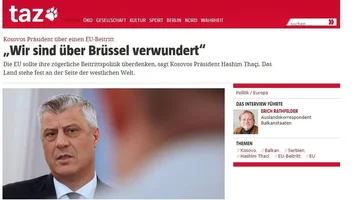
Thaçi to Tageszeitung: Anti-Western ideologies have no chance in Kosovo
Interview
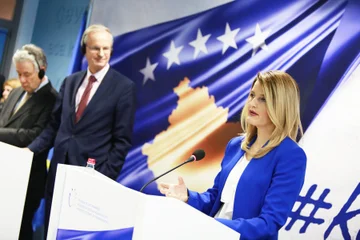
Hoxha: In 2018, we must shift into sixth gear
Interview
“Kosovo cannot progress with this political elite”
Interview
Haradinaj in Tagesspiegel: Kosovo Is Not Yet a Finished Product





