
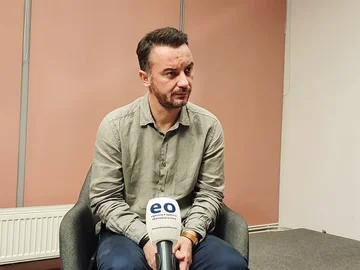
Vetëvendosje Movement MP Rexhep Selimi said in an interview with Ekonomia Online that he is not very optimistic that the draft law on the KSF will be brought before the Kosovo Assembly for a vote. Selimi, a member of the Committee on Internal Affairs, Security and Oversight of the Kosovo Security Force, says he does not […]
Selimi: I Don’t Trust Thaçi on the Army

Vetëvendosje Movement MP Rexhep Selimi said in an interview with Ekonomia Online that he is not very optimistic that the draft law on the KSF will be brought before the Kosovo Assembly for a vote.
Selimi, a member of the Committee on Internal Affairs, Security and Oversight of the Kosovo Security Force, says he does not have much confidence in President Hashim Thaçi’s persistence and determination to see this law through to the end, given the strong opposition from the United States of America.
“As the opposition, we will now have our role in the parliamentary committees. I emphasize that if this law comes before the parliamentary committees, we will have our role, and our vote if such a draft law comes to a session. I say ‘if it comes’ because I do not have much confidence in Thaçi’s persistence and determination on this path, especially when there is such strong opposition from the United States of America, through its Embassy here in Kosovo,” Selimi said.
MP Selimi considers President Thaçi’s initiative to be part of his electoral agenda.
According to him, the government expects Vetëvendosje to oppose the law on the KSF. “But we will disappoint the government and support the changes.”
Selimi further stressed that, through Articles 4 and 5 of the Law on the KSF, President Thaçi had sought “to smuggle in powers that do not belong to him and that are more characteristic of the powers of a president in undemocratic states.”
FULL INTERVIEW:
EO: The country’s president has now launched an initiative and submitted a draft law to transform the KSF into an army. You, as Vetëvendosje, have said you will support this draft law but will analyze it. Have you conducted such an analysis?
Selimi: In fact, as a matter of principle, we have supported advancing the KSF’s mission to a military mission, given the current impossibility of advancing its constitutional role, including through constitutional amendments. In any case, a draft law resulting from more than three years of work by KSF experts appears to have been taken by Thaçi and made part of his own electoral agenda. How he manages these issues is up to him; it is not right, but in any event we support, not out of spite or to please anyone, a change that advances the KSF’s mission, if these changes come before the Kosovo Assembly. In other words, we expect them to go where they belong.
Of course, beforehand he did not involve others in this so-called initiative either. It appears he did not coordinate with any of the relevant parties—not with the experts, the opposition, or local institutions, including the prime minister and the KSF minister. And, judging by the reactions of international actors, especially the US Embassy, and NATO representatives, he has made a very big mistake. In other words, he did not coordinate with our strategic allies, which means he has made a very big mistake that also puts Kosovo’s relations with its strategic partners, as well as the Kosovo Security Force, at risk.
In the meantime, we have completed all the analyses and submitted the draft law to the Vetëvendosje Movement’s security committee. Apart from the provisions in Article 4 and Article 5, as we examined the core of this change, we encountered many problems in the structure of the law—in its framework—problems that do not appear to be accidental, because it seems that Thaçi, in the shadow of the changes in Articles 4 and 5, wanted to smuggle into this law powers that do not belong to him and are more characteristic of the powers of a president in undemocratic states.
EO: As for strategic partners, there is some stagnation and opposition from the US and NATO. Do you think there will be consequences if the Army is formed in the face of such opposition?
Selimi: For this reason, we cannot oppose advancing the KSF’s mission to a military mission, nor will we do so to please anyone.
In any case, our support is based on principle, and our objections are professional. Thus, within the bounds of our principles and professional expertise, we have made and will continue to make our contribution. Of course, as the opposition, our role will now be in the parliamentary committees—I emphasize, if this law comes before the parliamentary committees—and we will also have our role and our vote in a session if such a draft law comes before it.
I say ‘if it comes’ because I do not have much confidence in Thaçi’s persistence and determination on this path, especially when there is such strong opposition from the United States of America, particularly through its Embassy here in Kosovo.
EO: What if the government submits the demarcation agreement to the Assembly on the same day as this draft law?
Selimi: We have opposed packages of this kind; we have opposed such concessions, and we never accept them. So, we will resolutely oppose the Demarcation and, after having given our objections, vote for changing the KSF’s mission to a military mission.
So we do not mix the two, even though they want to, not to get us an army but to secure a harmful agreement, because that is their aim. Our aim, by contrast, is to oppose a harmful agreement and to have military capabilities at the level we should have, because Kosovo needs its own army, needs to build its state, needs to build peace, and also needs to build partnerships with our strategic allies.
EO: So you will vote for the draft law on the KSF, while opposing the Demarcation?
Selimi: Of course. We have not changed our approach, because when the constitutional amendments came in 2014 to advance the KSF into an Armed Force, we supported them, even though then, as now, the government wanted us to oppose them. So we will disappoint the government and support them.

Related
Interview
Sabedini: The Hague trial has lost credibility; I expect an acquittal for the accused
Interview
Ukrainian journalist staying in Kosovo: Serbia is helping Russia with fighters and propaganda
Interview
The Ancient Egyptian Alphabet: What Are Hieroglyphs?
Interview
Kuçi after the cameraman’s arrest: They arrest the cameraman more harshly than the woman’s murderer
Interview
Vjosa as an Instrument
Interview
The mysterious murder of Festim Lato: the “Prime Minister of the Republic of Chameria” speaks
Interview
Sejdiu: The President has no mandate to discuss border correction
Interview
Çollaku: Dialogue should bring everyone together
Interview
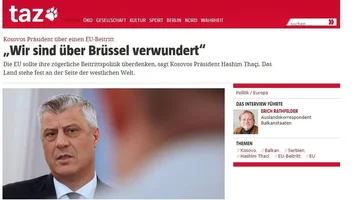
Thaçi to Tageszeitung: Anti-Western ideologies have no chance in Kosovo
Interview
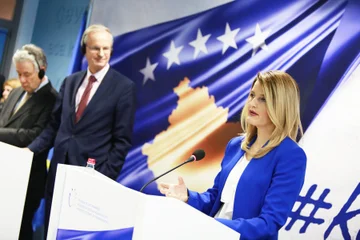
Hoxha: In 2018, we must shift into sixth gear
Interview
“Kosovo cannot progress with this political elite”
Interview
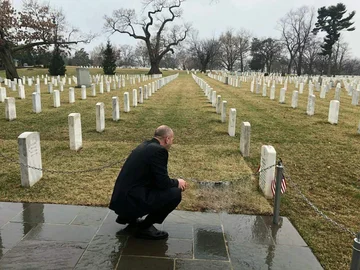
Haradinaj in Tagesspiegel: Kosovo Is Not Yet a Finished Product





